
Why Your Local Gym Might Be the One You Actually Use
When people compare gyms, they usually start with the obvious things. Price. Equipment. Class schedule. Amenities. Hours. Membership options. And one of the biggest factors in whether you actually use your gym is much simpler than most people think. Location.
Is it close enough to your home, work or daily routine that going there feels easy? Does it fit naturally into your week? Can you stop in before work, after work or between errands without having to reorganize your whole day? Does the gym feel like part of your neighbourhood, not another destination you have to force yourself to visit? Because the best gym is not always the one with the most locations across the city.
Sometimes, the best gym is the one you can actually get to. The one that feels easy enough to return to. The one that quietly becomes part of your routine.
Why location matters more than people think
Most people do not stop exercising because they do not care about their health. They stop because the routine becomes too hard to maintain. The gym is too far away. The commute takes too long. Parking feels stressful. The class time does not fit. The workout requires too much planning. After a long day, even an extra 20 minutes of travel can be enough to make the whole thing feel less realistic. Over time, those small barriers add up.
Research has been looking at this for decades. A classic study published in Public Health Reports looked at more than 2,000 residents in San Diego and mapped 385 exercise facilities around participants’ homes. The researchers found that people who exercised three or more times per week had a greater density of paid exercise facilities near their homes than people who reported no exercise sessions, even after adjusting for age, education and income. The study suggested an association between proximity to exercise facilities and exercise frequency. You can read the study here: Distance between homes and exercise facilities related to frequency of exercise among San Diego residents.
A more recent study published in BMC Public Health found a similar pattern. Using data from 7,358 participants in Sweden, researchers found that longer distance from home to paid indoor and outdoor physical activity facilities was associated with a lower frequency of exercise. The study also looked at distance from work, which matters because many people fit movement around their workday, commute or errands. You can read the study here: Distance to sports facilities and low frequency of exercise.
That does not mean living close to a gym guarantees you will work out. But it does suggest something very practical: when exercise is easier to access, it becomes easier to repeat. And repetition is where consistency begins.
Convenience is not laziness
There is sometimes a strange guilt around convenience, as if needing something to be easy makes the goal less serious. But convenience is not laziness.
Convenience is structure.
If your gym is close to home or work, you have fewer excuses to overcome. A 45-minute workout becomes easier to fit in. A yoga class does not require half your day. A quick strength session after work feels more realistic. A weekend workout can happen without turning into a full outing. This matters because most people do not need a perfect fitness plan. They need a plan that survives real life.
The Government of Canada recommends that adults aim for at least 2.5 hours of moderate-to-vigorous physical activity per week and include activities that strengthen muscles and bones at least two days per week. That is not about extreme training. It is about building regular movement into the week in a way that can actually be maintained. You can read the guideline here: Physical Activity Tips for Adults. A local gym can make those recommendations feel more realistic because it removes friction.
Less travel time. Less planning. Less decision fatigue. More chances to show up.
The multi-location advantage is real, but it is not everything
For some people, a multi-location gym makes perfect sense. If you travel across the city often, split your time between different neighbourhoods, work in one area and live in another, or need access to many facilities, a large chain can be useful. There is real value in being able to train in different places.
But not everyone needs that. For many people, the gym they actually use is the one closest to where they already live, work, walk, commute, grocery shop, grab coffee or spend time.
A membership with dozens of locations does not create much value if none of those locations fit naturally into your day. A gym across the city may look great on paper, but if you rarely go, it is not supporting your health in a meaningful way. That is why accessibility should not only be measured by how many locations a gym has. It should also be measured by usability.
Can you use it often? Can you get there easily? Can it become part of your routine? A single-location fitness club can be a strong choice when that one location is the one you are most likely to use.
What the research says about nearby facilities and activity

The connection between location and fitness habits is not just a feeling. It shows up across several areas of research on the built environment, exercise access and physical activity behaviour.
One study published in BMC Public Health looked at 2,037 adults in Sweden and used objective measures for both exercise facility availability and physical activity. The researchers found that participants with four or more exercise facilities within a 1,000-metre road-network buffer around their homes spent more time in moderate-to-vigorous physical activity and were more likely to meet physical activity recommendations compared with people who had no exercise facilities in that area. You can read the study here: Availability of exercise facilities and physical activity in 2,037 adults.
Another 8-year prospective cohort study published in Preventive Medicine looked at whether changes in access to sports facilities were associated with changes in physical activity. The researchers found that when distance to the nearest sports facility increased, physical activity decreased. They also found that a decrease in the number of facilities within 500 metres of home was associated with a decrease in weekly activity. You can read the study here: Is change in availability of sports facilities associated with change in physical activity?.
A study summarized by Columbia University’s Built Environment and Health Research Group looked at commercial physical activity facilities within one kilometre of participants’ homes in New York City. The researchers found that people living near more commercial physical activity facilities were more likely to report having a gym or recreational facility membership. They also found that nearby facility availability was associated with more measured physical activity, especially among people who already had a membership. You can read the summary here: How do gym location and membership interact to impact physical activity?.
The takeaway is not that location is the only thing that matters. It is that location can make healthy behaviour easier to start, easier to repeat and easier to maintain.
Why a neighbourhood gym can support consistency
A local gym has a different kind of advantage. It becomes familiar. You get to know your neighbouthood better, you will know how long it takes to get there. You know where to park your bike or car. You know the class times. You know the team. You know what the space feels like in the morning, after work or on the weekend. You know where you like to stretch, lift, reset or cool down.
That familiarity lowers the mental effort of going. You are not deciding where to train every time. You are not comparing locations or building a new plan from scratch. You are simply returning to a place that already fits into your life. That matters because habit is built through repetition. The easier something is to repeat, the more likely it is to become part of your routine. A good neighbourhood fitness club does not just give you somewhere to work out. It gives your routine a home base.
A gym close to home, work or your regular route can make movement feel less like an event and more like part of normal life. When a gym is local, you can build smaller, more realistic routines. You can stop in for a focused strength session. You can take a Pilates class without needing to travel across the city. You can fit in yoga before work. You can use the gym floor when you have a free hour. You can make movement part of the week instead of waiting for the perfect day. This is especially important for busy people.
The mistake many people make is building a fitness plan around their most motivated self. They imagine the version of themselves who will happily travel 40 minutes, train hard, commute home and do it again three times a week. Sometimes that version shows up. Often, real life gets in the way. A better question is: what routine would still work on a normal week? A local gym answers that question more honestly. It helps fitness fit into the life you actually have.

Why a single-location club can feel more personal
There is another side to the location conversation that people do not always consider. A single-location club can create a more consistent member experience.
The team is in one place. The programming is built around one community. The space has one identity. The members are often from the surrounding neighbourhoods. The feedback loop is shorter because the people running the club can see how the space is being used every day. That can make the experience feel more personal. At a strong neighbourhood fitness club, the team may recognize your name, remember what kind of classes you like, notice when you are trying something new and help guide you when you are unsure what to do next.
That kind of support can be hard to measure on a membership comparison chart, but it matters. For many people, comfort is what turns a gym visit into a habit. A gym does not have to feel anonymous to be professional. It can be polished, premium and still feel warm.
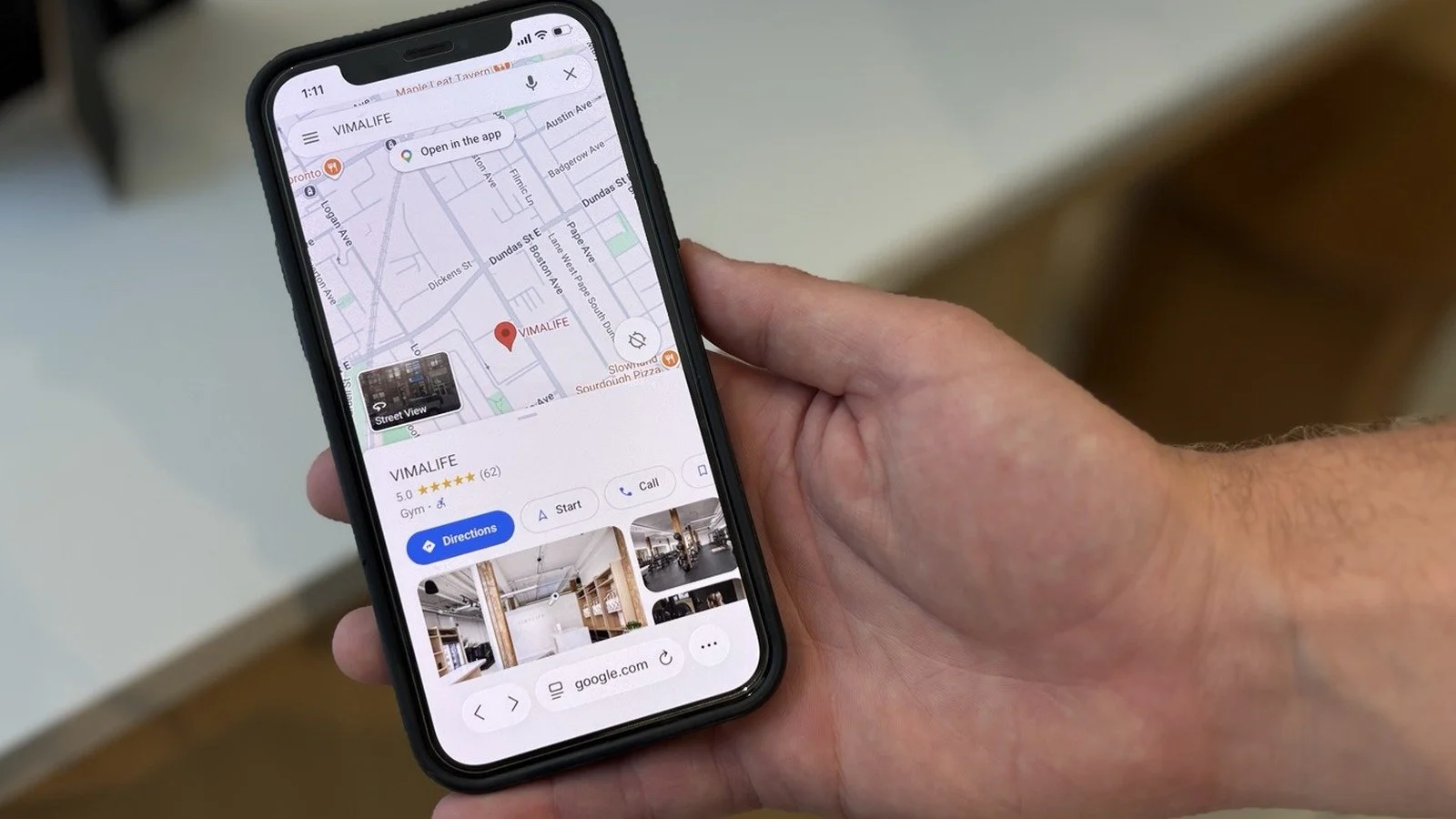
Leslieville is one of those Toronto neighbourhoods where a local fitness routine makes sense. People are often moving between home, work, cafés, shops, errands, school drop-offs, dog walks, transit, bike routes and local businesses. A gym that fits into that rhythm can become more than a place you visit once in a while. It can become part of how you organize your week. That is why a fitness club in Leslieville has a different role than a gym someone has to travel across the city to reach. It can support daily life. For people living or working near Leslieville, Riverside, Riverdale, Corktown, East Harbour, The Beaches or Toronto’s east end, proximity can be a real advantage. The less time it takes to get to the gym, the easier it is to go more often. This is where VIMALIFE in Leslieville fits naturally. Located at 276 Carlaw Avenue, VIMALIFE brings together open gym access, boutique fitness classes, personal training, wellness experiences, premium amenities and hospitality-driven service in one curated space. The point is not that everyone in Toronto needs a Leslieville gym. The point is that if Leslieville is already part of your life, a local fitness club can remove friction and make consistency easier.
The benefit of having everything in one place
Another reason location matters is that most people do not want their wellness routine to feel scattered. A lot of people end up with separate pieces: one gym for strength training, one studio for Pilates, another place for yoga, a trainer somewhere else and occasional drop-in classes when they want variety. That can work. But it can also become complicated. Different locations. Different apps. Different schedules. Different cancellation policies. Different commutes. Different communities. An all-in-one local club can simplify that. At VIMALIFE, the membership options are built around two clear ways to use the club. Foundation is designed for premium open gym access, while Summit offers the full experience with open gym access and unlimited classes across strength, HIIT, conditioning, Pilates, yoga, barre, meditation and recovery. That means members can build a routine around what they need that day. Some days, that may be strength training on the gym floor. Other days, it may be Pilates, yoga, conditioning, mobility or a restorative class. The value is not only variety. It is variety without having to leave the environment you already trust. For someone trying to stay consistent, that simplicity matters.

Why the right local gym saves more than travel time
A local gym can save time, but the benefit goes deeper than that. It can save decision energy. Instead of constantly asking, “Where should I go?” or “What should I book?” or “Is it worth the commute?” you have one place that supports different parts of your routine. That makes fitness feel less like a production. The right local club helps remove the small excuses that build up over time. It makes it easier to stop in when you have a free hour. It makes it easier to try a class. It makes it easier to stay connected. It makes it easier to return after a busy week. That is why location is not just a practical detail. It is part of the member experience. A gym that is close, comfortable and well-run can help people train more often because it fits into their real life.
Local does not mean limited
It is easy to think of one location as a limitation.
Sometimes, it is. If you need to train in different parts of the city every week, a single-location club may not be the most convenient option. But local can also be a strength. A local club can be more focused. More connected to the neighbourhood. More consistent in its service. More intentional about the member experience. More responsive to the community it serves. That is the positive side of choosing a single-location fitness club.
You are not joining a generic place that happens to have a gym floor. You are joining a space designed for a specific community, with programming, amenities and service built around how those members actually use it. The premium fitness club amenities in Leslieville page gives a closer look at how VIMALIFE brings together the open gym floor, VIMAFIT, VIMAZEN, member amenities and wellness-focused spaces under one roof. For people who want their gym to feel like part of their lifestyle, that kind of local focus can be a real advantage.
What to look for in a local gym
Choosing a local gym is not only about choosing the closest building. The right local gym should still support the way you actually want to train. Before joining, ask yourself:
Is it close enough that I can realistically go two or more times per week?
Does it fit into my normal routine?
Do I feel comfortable in the space?
Does it offer the type of training I actually enjoy?
Can I strength train, take classes, do mobility work or recover without needing multiple memberships?
Are the amenities useful to me?
Would staff support, assessments or personal training help me get started?
Does the space feel clean, welcoming and well cared for?
Would I want to come back here on a low-motivation day?
That last question matters. A gym should not only work when you are feeling motivated. It should support you when you are tired, busy, distracted or rebuilding your routine. That is where environment matters.

The role of community in staying consistent
Community does not have to mean forced socializing.
It can simply mean feeling comfortable in the space. It can mean seeing familiar faces. Being greeted by name. Knowing the team cares. Feeling like the club is clean, organized and well looked after. Feeling that the environment supports the kind of person you are trying to become. That is not a small thing. A fitness routine is easier to maintain when the space feels good to return to. This is why a local fitness club can offer something different from a purely transactional gym model. The value is not only in the equipment, classes or amenities. It is in the sense that the space is built with care.
VIMALIFE also connects its members with the broader Leslieville community through local partnerships and member benefits. The VIMALIFE community benefits and local partners page highlights neighbourhood perks, partner offers and local collaborations designed to support life beyond the club. That kind of connection matters because wellness is not only what happens during a workout. It is also the lifestyle and community around it.
So, is one location really a disadvantage?
It depends on the person. If you need gym access across the city, then yes, a multi-location chain may be a better fit. But if you live or work in Toronto’s east end and want a gym that can become part of your weekly routine, one strong local club may be exactly what makes the difference. The best gym is not always the one with the most locations.
It is the one you actually use. It is the one that fits into your day, supports your goals, feels good to return to and makes consistency easier. For people in Leslieville, Riverside, Riverdale, Corktown, East Harbour, The Beaches and surrounding east-end neighbourhoods, VIMALIFE in Leslieville offers a local fitness experience built around open gym access, classes, coaching support, premium amenities, community and care. Not every gym needs to be everywhere. Sometimes, the right gym just needs to be where your life already happens.