
Fascia Training Is Everywhere: What Fascia Is and How to Exercise It
Scroll through fitness or wellness content right now and you will probably encounter someone talking about fascia.
There are fascia stretches, fascia workouts, facial fascia massages, fascia mobility flows and tools promising to “release,” “hydrate,” “detox” or even reshape your fascial system. Some creators describe fascia as the missing explanation for nearly every tight muscle, stubborn pain or movement problem.
Fascia is not a social media invention. It is real connective tissue, it plays an important role in movement, and researchers are continuing to learn more about it. But the internet has also turned a complex part of human anatomy into a catch-all wellness explanation.
So, what is fascia? Can you actually exercise it? Does foam rolling release it? And do you need a specialized fascia workout?
The short answer is that fascia responds to movement and mechanical loading, but it does not operate separately from your muscles, tendons, joints and nervous system. You have probably been “training” your fascia every time you strength train, walk, run, stretch, practice Pilates or move through yoga, even if nobody labelled it fascia training.

What Is Fascia?
Fascia is connective tissue that surrounds, supports, connects and separates structures throughout the body.
Different scientific and medical organizations define fascia slightly differently. In simple terms, it is a collagen-rich connective tissue network found around and within muscles, bones, nerves, blood vessels and organs. The broader “fascial system” includes interconnected tissues that help organize the body and transmit mechanical forces.
According to the National Library of Medicine’s overview of fascia, fascia helps support and protect tissues, reduce friction between structures, form muscular compartments and contribute to force transmission.
Fascia is often described as a three-dimensional web, but that metaphor should not make it sound mystical. It is physical tissue with different densities, layers and functions depending on where it is located.
Common categories include:
Superficial fascia, located beneath the skin
Deep fascia, which surrounds muscles, bones, nerves and blood vessels
Visceral fascia, which supports and surrounds internal organs
Parietal fascia, which lines certain body cavities
Examples you may already recognize include the plantar fascia underneath the foot, the thoracolumbar fascia in the lower back and the fascia lata surrounding the thigh.
What Does Fascia Do?
Fascia was once discussed mainly as packaging around more “important” structures. Modern research recognizes that it is more functionally involved.
Fascia helps:
Give the body structure and support
Separate muscles into compartments
Allow adjacent tissues to glide against one another
Distribute and transmit mechanical force
Contribute to stability and coordinated movement
Carry sensory information related to pressure, tension, position and pain
The Cleveland Clinic’s medical overview describes fascia as a continuous, flexible connective tissue network that supports structures throughout the body. That does not mean every movement or pain experience originates in the fascia. Muscles, tendons, joints, bones, nerves, the brain and the broader nervous system all contribute to how movement feels. Fascia is one important part of an integrated system, not a hidden master switch controlling the entire body.

Why Is Fascia Suddenly Trending?
Fascia sits at the intersection of several major wellness trends: mobility, massage, recovery, posture, longevity, Pilates, somatic movement and nervous-system regulation. It also offers an appealing explanation for common experiences. When someone feels stiff, restricted or sore, being told their fascia is “stuck” sounds more specific than being told their body may be responding to training load, prolonged sitting, stress, sleep, sensitivity, injury history or unfamiliar movement.
Social media rewards simple explanations and dramatic before-and-after demonstrations.
A person performs one release technique, retests a stretch and immediately reaches farther. The change is real, but the explanation may be more complicated than physically breaking apart or lengthening fascia within 30 seconds.
A temporary improvement in range of motion can also reflect:
A change in stretch tolerance
Reduced perception of discomfort
Increased tissue temperature
Familiarity with the movement
Changes in muscle activity
A short-term nervous-system response
Fascia may be part of the picture, but it is rarely the only part.
Can You Actually Exercise Your Fascia?
Not in complete isolation. Fascia is mechanically connected to muscles and other connective tissues. When you load a muscle, land from a jump, hold a stretch, walk uphill or control a weight, the surrounding connective tissue is also exposed to force.
This means fascia can respond to movement, loading and recovery over time. However, calling one exercise a “fascia exercise” and another a “muscle exercise” creates a separation that does not truly exist in the body.
A squat involves muscles, joints, tendons, fascia, bones and the nervous system. The same is true of a yoga pose, Pilates sequence, run or mobility drill.
A 2024 scientific review of the myofascial system and physical exercise discusses the relationship between fascia, mechanical loading, movement and adaptation. This is a developing area of study, and researchers are still working to determine which effects can be attributed specifically to fascia rather than to the entire muscle-tendon-fascia system.
The practical lesson is much simpler: your connective tissues benefit from appropriately progressed, varied movement.
What Might Fascia-Focused Training Look Like
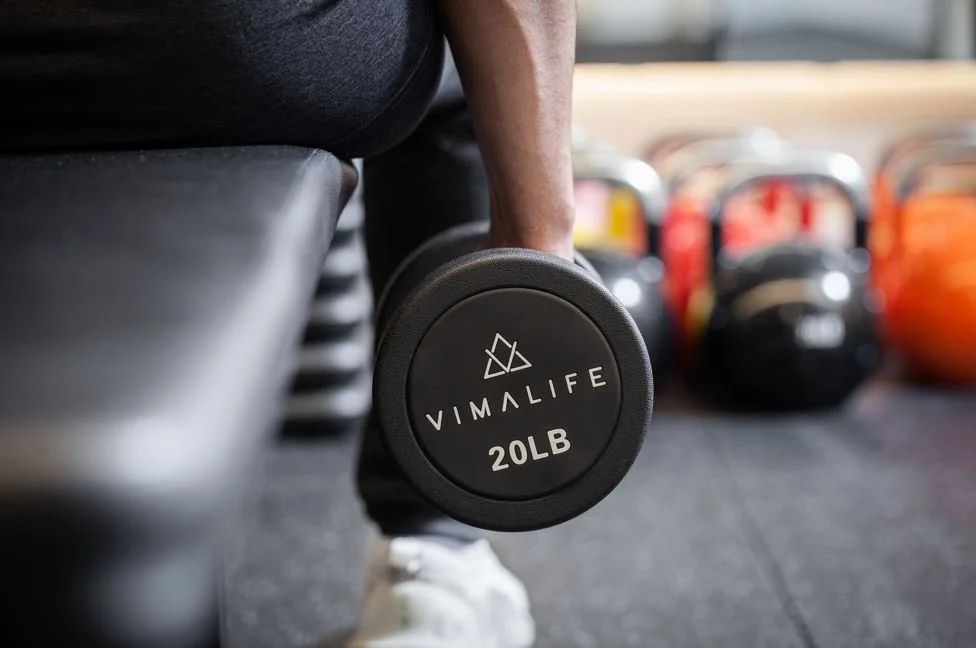
A well-rounded approach does not require a separate hour-long fascia routine. It can be incorporated into the way you already train.
1. Progressive strength training
Resistance training provides mechanical load to muscles and their surrounding connective tissues.
Squats, hinges, rows, presses, carries and controlled single-leg exercises expose the body to different directions and levels of tension. Gradually increasing resistance, volume or complexity gives the musculoskeletal system time to adapt.
The key word is gradually. Connective tissues generally adapt more slowly than the feeling of muscular energy or motivation. Doing too much too quickly is not better fascia training. It is simply a larger spike in training load.
If you are unsure how to progress safely, working with a coach through personal training at VIMALIFE can help you build a program around your current ability, movement history and goals.
2. Movement in different directions
Daily life can become extremely repetitive. We sit, walk forward, reach for the same keyboard and repeat familiar gym exercises.
Adding controlled movement in multiple planes can expose the body to a wider variety of positions. That might include lateral lunges, rotational reaches, crawling patterns, carries, step-ups and multidirectional mobility work.
Variety should still be purposeful. Random movement is not automatically better, and complicated exercises are not inherently more “fascial.”
3. Stretching and mobility work
Stretching affects the broader muscle-fascia unit and can improve range of motion.
A 2024 study investigating static and dynamic stretching and deep fascia stiffness found measurable changes in fascial mechanical properties following stretching. This is interesting evidence that fascia may contribute to some stretching adaptations, although one study does not establish that every flexibility improvement comes from fascia alone.
Yoga, Pilates and mobility sessions can help people explore range of motion, control, breathing and body awareness. VIMALIFE’s Leslieville fitness class schedule includes strength, Pilates, yoga, barre, mobility and recovery-focused movement, allowing members to combine different training qualities throughout the week.
4. Elastic and spring-like movement
Tendons and fascial tissues contribute to how forces are stored, transferred and released during running, hopping and jumping. When appropriate for your body and experience level, progressive elastic exercises might include:
Skipping
Low pogo hops
Light medicine-ball work
Controlled jumping and landing
Running drills
Change-of-direction exercises
These movements should be introduced progressively. Someone recovering from an injury, experiencing pain or returning after a long break may need to begin with strength, balance and lower-impact movement first.
5. Consistent everyday movement
You do not need a specialized tool to give your fascial system movement input.
Walking, changing positions, taking movement breaks and avoiding long periods of complete inactivity all expose tissues to regular motion. One elaborate mobility session cannot fully compensate for an otherwise inactive week. As with most areas of fitness, consistency matters more than finding a secret technique.
Does Foam Rolling Release Fascia?
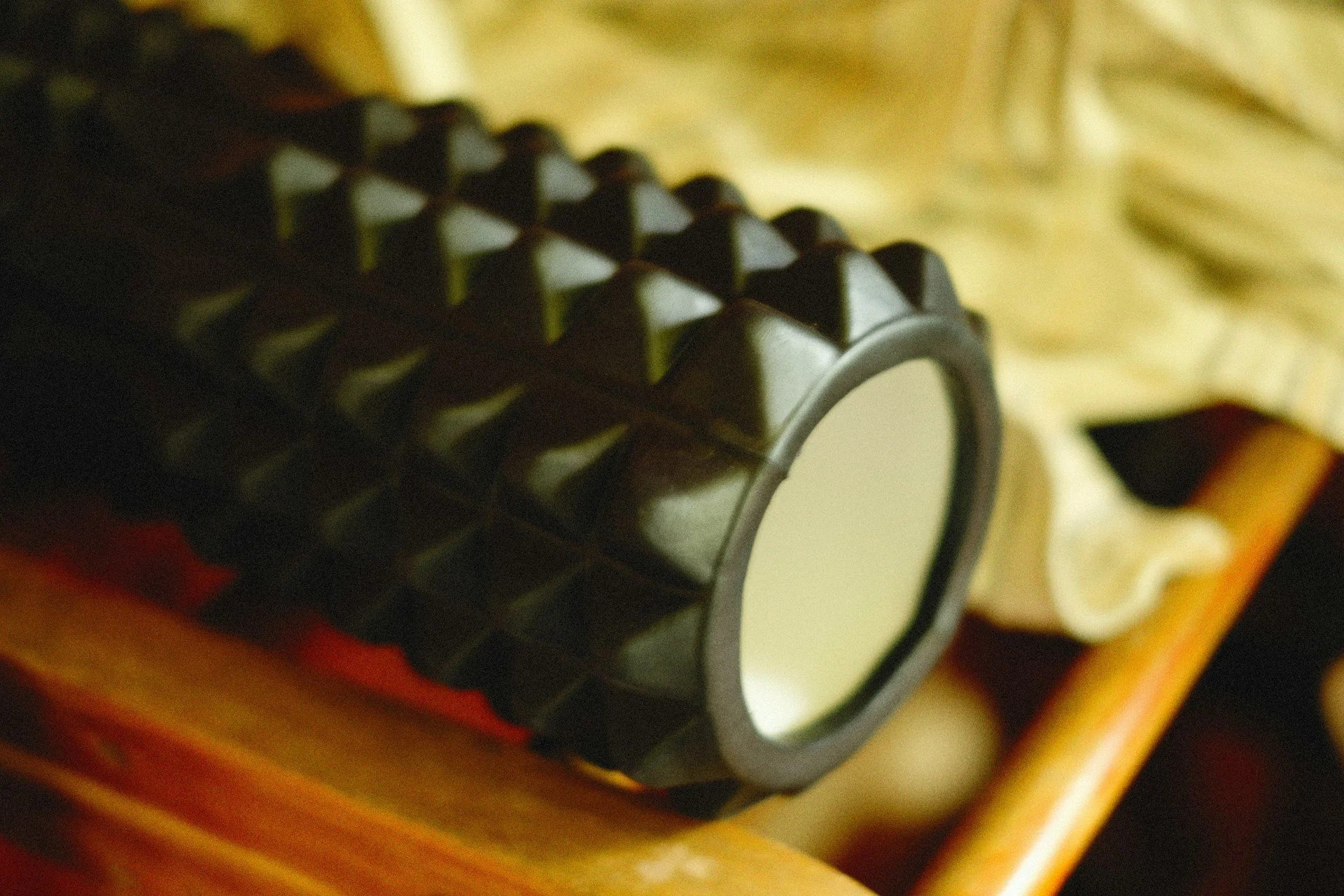
Foam rolling can be useful, but “release” may not mean what social media suggests. A foam roller cannot selectively peel apart fascial layers or permanently break down scar tissue in a few passes. Human connective tissue is stronger and more complex than that.
Research does suggest that foam rolling can temporarily improve range of motion and may support the perception of recovery without necessarily impairing athletic performance. A systematic review examining foam rolling, performance and recovery concluded that it may help reduce stiffness and improve range of motion when combined with an active warm-up. Another 2024 review found that longer-term static stretching and foam-rolling programs could both improve joint range of motion, with neither method universally superior.
Foam rolling may influence several systems at once:
Sensory receptors in the skin and deeper tissues
Stretch and pressure tolerance
Muscle tone
Local circulation and tissue temperature
Perceived soreness or relaxation
Use foam rolling because it helps you feel prepared or comfortable, not because you believe you must crush adhesions or tolerate extreme pain. More pressure is not automatically more effective. Rolling directly over an acute injury, inflamed area, prominent bone, varicose vein or highly sensitive nerve can make symptoms worse.
Can Fascia Become “Stuck” or Dehydrated?
These phrases are commonly used online, but they can oversimplify the biology. Fascial layers contain hyaluronan, which contributes to how tissues glide. Injury, inflammation, aging, surgery and prolonged changes in loading can affect the properties of connective tissue. However, it is not accurate to assume that every stiff morning or restricted stretch means the fascia has literally dried out or glued itself together.
Hydration supports general health and physical performance, but drinking extra water is not a targeted fascial release treatment.
Similarly, movement may help someone feel less stiff, but that does not prove an adhesion was broken. The body can change its perception of a movement quickly, even when structural tissue has not changed.
Can You Break Up Fascia or Scar Tissue?
Not with a foam roller, massage gun or scraping tool during a short self-treatment session.
These tools can apply pressure, change sensation and temporarily influence mobility. They cannot give you precise information about which tissue is responsible for your symptoms, nor can they mechanically remodel mature scar tissue instantly. Longer-term tissue adaptation is possible, but it generally occurs through appropriately dosed movement, loading, healing and time. After surgery or a significant injury, treatment should be guided by an appropriate healthcare professional.
Painful treatment is not proof that fascia is being repaired.
Is Fascia Responsible for Pain?
Fascia contains sensory nerve endings and can contribute to pain. Myofascial pain and conditions involving specific fascial tissues are real. Plantar fasciitis is one familiar example. But pain is rarely explained by one tissue alone. Pain may be influenced by:
Injury or irritation
Training load
Sleep and recovery
Stress
Previous pain experiences
Nerve sensitivity
Inflammation
Joint or muscular conditions
How safe or threatening a movement feels
Self-diagnosing “tight fascia” can delay appropriate care. Persistent, severe, unexplained or worsening pain should be assessed by a qualified healthcare professional.
Do Fascia Exercises Change Your Face or Body Shape?
This is one of the most exaggerated areas of the fascia trend.
Massage and facial movement may temporarily change puffiness, circulation, muscle tension or how the skin appears. But there is not strong evidence that a short fascia routine can permanently sculpt the face, reposition bones, remove body fat or dramatically restructure an adult body.
Exercise can change strength, posture, muscle size, fitness, movement confidence and body composition over time. Those changes require consistent inputs, not a viral scraping technique.
Be particularly cautious when a creator uses anatomical language to sell a tool, supplement or expensive program while promising immediate structural transformation.
What Is the Best Way to Support Healthy Fascia?
You do not need to chase every fascia trend. The fundamentals remain remarkably familiar:
Strength train progressively
Move regularly throughout the day
Include mobility and comfortable range-of-motion work
Introduce running and jumping gradually
Vary your movement without making it random
Eat enough protein and overall nutrients to support recovery
Sleep and recover between challenging sessions
Use foam rolling or massage when it feels helpful
Seek professional support for persistent pain or movement limitations
The best fascia workout is not a single viral routine. It is a sustainable movement practice that exposes your whole body to appropriate, varied and progressively increased demands.

Fascia Training Without the Hype
The growing interest in fascia is not a bad thing. It is encouraging people to think beyond isolated muscles and recognize that the body functions as an interconnected system.
The problem begins when a useful anatomical concept becomes an explanation for everything.
Fascia matters. So do muscles, tendons, joints, bones, nerves, recovery and the brain. You do not need to choose between “muscle training” and “fascia training” because effective movement involves both.
At VIMALIFE, members can combine strength training, Pilates, yoga, barre, mobility and recovery-focused classes with open gym training and personal coaching. That variety offers something far more useful than a miracle fascia routine: a complete approach to moving well, building strength and staying consistent. VIMALIFE is an all-in-one boutique fitness club located at 276 Carlaw Avenue in Leslieville, Toronto. Explore VIMALIFE and discover a more thoughtful way to train.
Frequently Asked Questions About Fascia
What is fascia in simple terms?
Fascia is connective tissue that surrounds, supports and connects muscles, bones, nerves, blood vessels and organs. It also contributes to tissue movement, stability, sensation and force transmission.
Can fascia be exercised?
Fascia responds to movement and mechanical loading, but it cannot be completely isolated from muscles, tendons and joints. Strength training, walking, running, Pilates, yoga, mobility work and jumping can all load the broader fascial system.
What exercises are best for fascia?
There is no single best fascia exercise. Progressive strength training, multidirectional movement, stretching, mobility and appropriately introduced elastic exercises can provide varied mechanical input to connective tissues.
Does foam rolling release fascia?
Foam rolling may temporarily improve range of motion, reduce perceived stiffness and support recovery. It is unlikely to physically break apart or permanently “release” fascia during a short session.
How do you know whether your fascia is tight?
Stiffness alone cannot identify fascia as the cause. Muscles, joints, nerves, recent activity, stress, sleep and injury history can all affect how movement feels. Persistent or painful restrictions should be professionally assessed.
Does drinking water hydrate fascia?
Normal hydration supports overall tissue health and physical performance, but drinking more water is not a targeted treatment for “tight” fascia.