
How Much Protein Do You Need to Build and Maintain Muscle?
Buying yoghurt used to involve choosing a flavour. Now the shelf offers a small competition over protein grams. Coffee, cereal and snack bars have joined in. By lunchtime, it can feel as though every food needs to justify its place with a number on the front of the package. Protein matters for muscle. But the amount you need is easier to understand when you begin with your body, your training and your usual meals.
For many healthy adults who exercise regularly, approximately 1.4–2.0 grams of protein per kilogram of body weight each day is a useful range. Around 1.6 grams per kilogram is a reasonable reference point for someone doing resistance training. Neither number requires you to buy a supplement.
Age, overall food intake and whether you are trying to build muscle or preserve it during weight loss can change the calculation. Here is how to make that calculation useful.

Start by separating basic needs from training goals
The adult Recommended Dietary Allowance for protein is 0.8 grams per kilogram of body weight daily. It is intended to meet the needs of nearly all healthy adults under ordinary conditions. It was not designed as a target for maximising muscle growth from lifting weights.
A review comparing protein intakes at and above the RDA helps explain the difference. Across 18 studies, higher intakes benefited lean-mass outcomes particularly when people were restricting calories or undertaking resistance training. In participants doing neither, higher protein did not clearly improve lean-mass changes.
The International Society of Sports Nutrition's position stand places most exercising adults in the 1.4–2.0 grams-per-kilogram range for building or maintaining muscle.
These recommendations answer different questions. Someone trying to support regular training has a different goal from someone simply checking whether their usual diet meets general requirements.
What the muscle-building studies actually found
One influential meta-analysis of 49 resistance-training studies included 1,863 participants. Adding protein supplementation produced modest additional improvements in strength and muscle-related measurements compared with training without that additional protein. The extra gain in fat-free mass averaged about 0.30 kilograms. Fat-free mass includes muscle and other non-fat tissues, so that figure should not be presented as an exact amount of new muscle.
The researchers also estimated that the average benefit for fat-free mass levelled off around a total daily intake of 1.6 grams per kilogram. That estimate is useful, but it is not a precise biological ceiling for every person. The studies differed, and the estimate had uncertainty. It also refers to total protein from food and supplements combined.
The practical message is to get into a reasonable range and train consistently. Moving from an inadequate intake to an adequate one is a more useful project than trying to make every meal contain the maximum possible protein.

Turn grams per kilogram into an ordinary day
For someone weighing 70 kilograms, the 1.4–2.0 range works out to approximately 98–140 grams of protein daily. Using 1.6 grams per kilogram gives a reference point of 112 grams.
For comparison, that same 1.6 calculation gives 96 grams at 60 kilograms and 128 grams at 80 kilograms.
You do not need to land on the exact number every evening. A day containing about 30 grams at breakfast, 30 at lunch, 35 at dinner and 20 in a snack would provide roughly 115 grams. This is an illustration of distribution, rather than a meal plan everyone needs to follow.
Those amounts refer to grams of protein, not the weight of the food. A 100-gram portion of chicken or tofu does not contain 100 grams of protein.
Check food labels or a reliable nutrient database when estimating your usual portions. A few days of looking can reveal whether there is a meaningful gap, without requiring permanent tracking.
Give breakfast and lunch a fair share
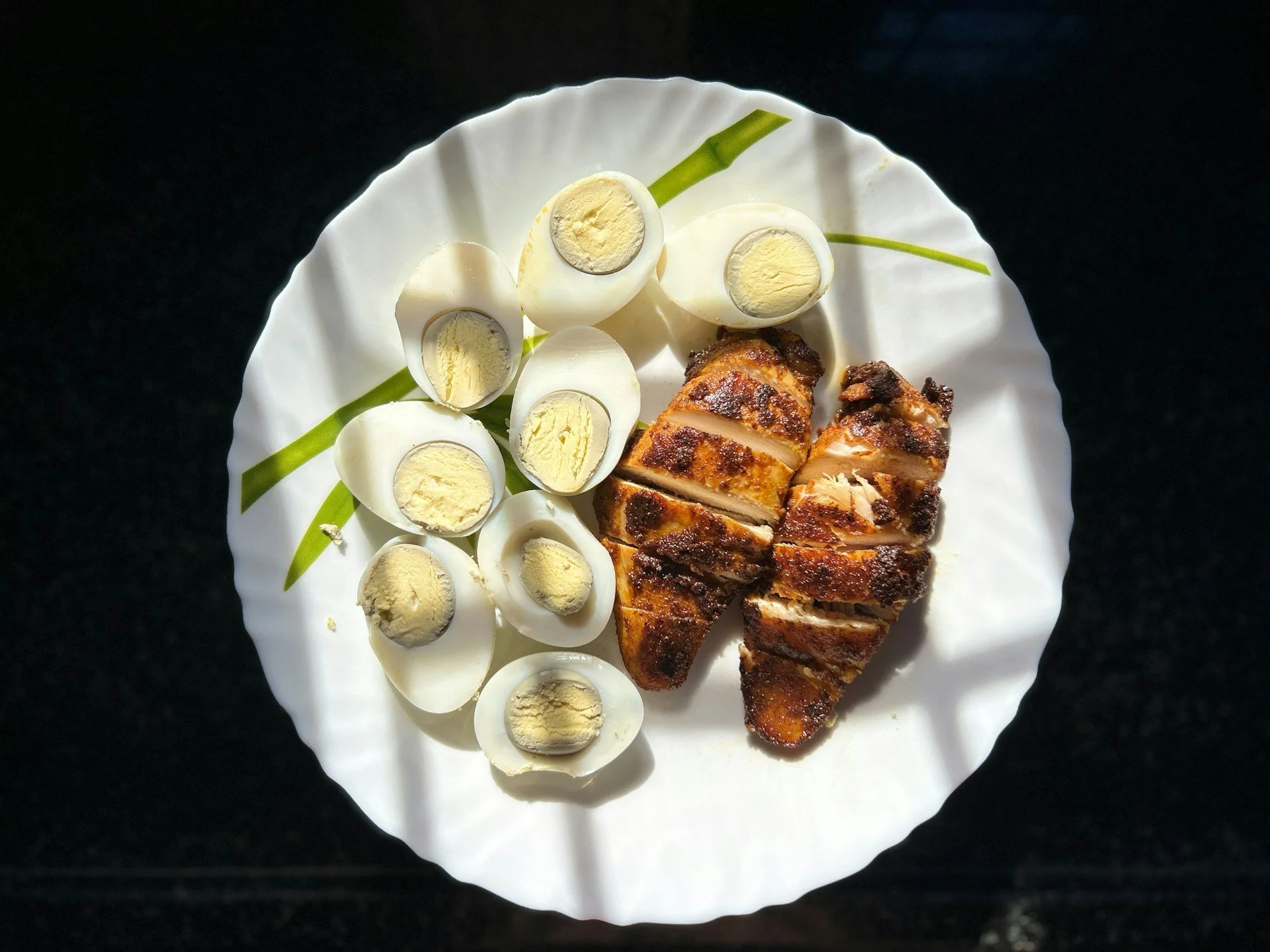
Dinner often contains an obvious protein source. Breakfast and lunch can be less deliberate: toast on the way out, then a salad that turns out to be mostly leaves. Building a more balanced day can start with those meals. Add yoghurt or a suitable higher-protein soy option to breakfast. Put lentils, tofu, fish, chicken or another substantial protein source into lunch. Choose combinations you actually enjoy eating.
For example, someone who already has a protein-rich dinner might get more practical benefit from improving breakfast than from adding a second evening shake. Eggs with toast, yoghurt with oats, or tofu with vegetables can become familiar options that require little daily decision-making.
Compare labels when switching products. Plant-based yoghurts, for instance, vary considerably in protein content.
The aim is a few dependable meals. Protein fits more easily into a routine when those meals also provide enough food to feel satisfying.
You have more flexibility than the post-workout countdown suggests
An older meta-analysis of protein timing found that total protein intake was more important for explaining muscle-growth differences than consuming protein close to the workout. Once relevant factors were accounted for, the timing advantage was no longer significant.
A 2025 review directly comparing protein before and after exercise likewise found no significant difference in lean-mass gains. It included only five studies, and strength findings were less consistent, so it cannot settle every timing question.
You can plan a meal or snack around training without treating the final repetition as the start of an emergency countdown.
If you eat lunch and train later that afternoon, dinner can contribute to recovery. If you train early before eating, breakfast afterwards is a sensible opportunity to get protein and other nutrients. Your next meal should be part of the plan, especially when it has been several hours since you last ate.
Is protein above 30 grams in a meal wasted?
There is no hard 30-gram limit beyond which your body simply stops using protein. In a 2023 study measuring recovery after exercise, consuming 100 grams of protein produced a larger and more prolonged muscle-building response than consuming 25 grams. Researchers followed the response over 12 hours.
This was an acute experiment in healthy young men. It does not prove that 100-gram meals produce superior muscle growth over months, or that everyone should eat that way.
It does undermine the idea that a substantial dinner becomes useless once it passes an arbitrary threshold. For everyday planning, spreading protein across meals can make a daily target easier to reach and leave room for other foods. A larger meal can still contribute. You do not need to split dinner in half simply because an online rule says you have exceeded your allowance.
Plant-based diets can support muscle growth
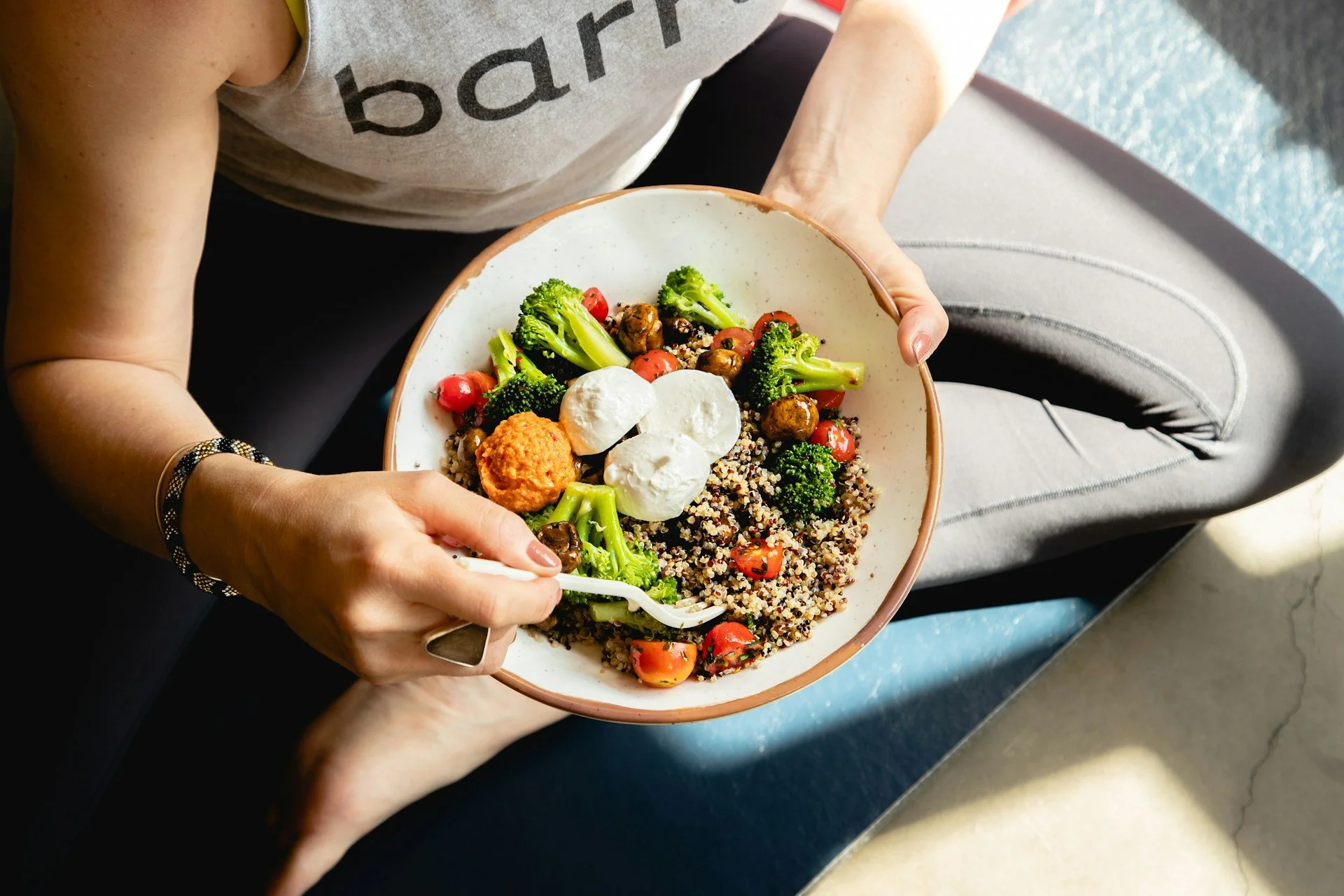
In a 12-week study of habitual vegans and omnivores, 38 young men followed supervised resistance training while consuming approximately 1.6 grams of protein per kilogram daily. The vegan group used soy protein supplementation and the omnivorous group used whey to help reach that intake.
Both groups gained muscle-related measurements and strength, with no significant differences between them. Leg lean mass increased by an average of 1.2 kilograms in each group.
Participants were already following their respective diets, so this was not a random assignment to vegan or omnivorous eating. The findings also do not establish that every plant food is nutritionally interchangeable with every animal food.
They do show that a well-planned plant-based diet with adequate protein can support productive training. Tofu, tempeh, beans, lentils and soy foods can all contribute. Using a variety of sources and checking portions is more useful than assuming that a food labelled plant-based automatically supplies much protein.
Maintaining muscle with age deserves attention too
Protein is relevant to maintaining everyday strength, even when building visibly larger muscles is not the goal.
The PROT-AGE expert group's recommendations suggest at least 1.0–1.2 grams per kilogram daily for adults over 65, with at least 1.2 grams for those who exercise or are otherwise active. Needs can rise during illness, when individual assessment matters.
These are older-adult recommendations, rather than evidence that everyone's requirements suddenly change at the same birthday. Regular resistance exercise remains part of the approach.
When appetite is smaller, including a recognisable protein source at each meal can help avoid leaving most of the day's intake until dinner.
People with kidney disease should discuss their target with their healthcare team. Requirements vary with the condition and its treatment, so a general fitness range is not an individual prescription.
During weight loss, look beyond the smaller number on the scale
Eating less overall can inadvertently mean eating less protein too. Yet preserving muscle becomes particularly relevant when body weight is falling.
The review of protein above the RDA found that higher intakes reduced lean-mass loss during calorie restriction, on average. That supports paying attention to protein during weight loss; it does not identify one ideal target for every diet.
Keep resistance training in the picture, avoid automatically removing the protein source when reducing portions, and consider whether you are eating enough to train productively. More protein cannot make every restrictive diet appropriate.
Decide whether a supplement solves an actual problem
A shake can be convenient when a meeting runs through lunch or your usual meals leave a genuine gap. It is one way to obtain protein, rather than a separate requirement for getting stronger.
Start with three questions: roughly how much are you eating, where is the gap, and what would be easy to repeat? Sometimes the answer is a supplement. Sometimes it is packing lunch.
Keep vegetables, fruit, fibre, carbohydrates and fats in the picture. And pair that food routine with training you can sustain, whether independently or with support at VIMALIFE. A dependable breakfast and a gradually improving strength programme can do more for your goal than another product bought without a plan.