
Should You Train to Failure? What the Science Says
The tenth repetition moves slowly. You finish it, hold the dumbbells at your sides and negotiate with yourself. There might be another rep available. Possibly two. Stopping now feels sensible, although a small part of you wonders whether you are leaving the best part of the workout unfinished. That uncertainty sits behind a common gym question: should you train to failure?
You can build strength and muscle without taking every set to the point where another repetition becomes impossible. For muscle growth, working reasonably close to that point appears useful. Reaching it every time adds fatigue without a reliably greater return. The interesting part is deciding how close to go. Your goal, the exercise and the rest of your training week all matter more than whether the final rep looks dramatic.
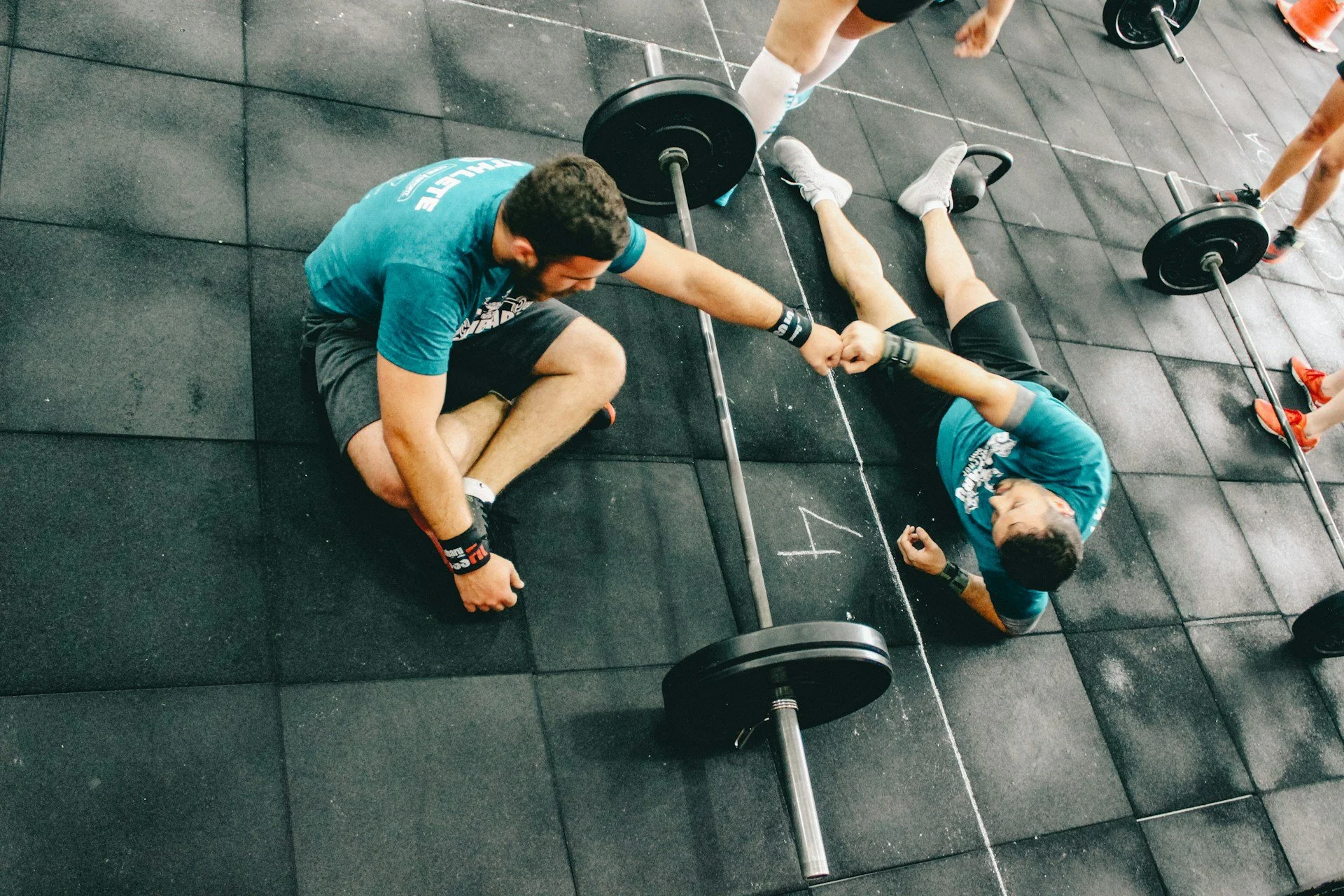
What does training to failure actually mean?
In resistance training, momentary muscular failure generally means you cannot complete another lifting repetition through the intended range of motion with the prescribed technique, despite trying. That is different from stopping because the exercise burns, your breathing is heavy or you have reached the number written in your program. Those are reasons a set might end, but they do not necessarily establish muscular failure. Researchers' definitions vary, which is one reason comparisons require care. A review of proximity to failure and muscle growth examines these distinctions.
Picture a controlled dumbbell curl. Near the end, the weight slows down. Eventually, another clean curl is unavailable. Swinging your torso to launch the dumbbell changes the task; it does not demonstrate that another repetition of the original exercise was there. For everyday training, loss of the technique you intended to use is a sensible stopping point. There is no requirement to keep improvising until the weight moves somehow.
Can you build muscle without reaching failure?
A 2022 systematic review and meta-analysis pooled 15 studies comparing failure and non-failure training. Overall, it found no statistically significant difference in strength or muscle growth between the approaches. All included studies involved young adults, and a small hypertrophy advantage appeared in the subgroup of trained participants. That is evidence against a universal requirement to reach failure. It is also a reminder that an average result can conceal differences between programs and populations.
A later analysis by Robinson and colleagues approached the question as a continuum. Instead of simply sorting sets into failure or non-failure categories, the researchers estimated how many repetitions participants had left when they stopped. Muscle growth tended to improve as sets ended closer to failure. However, the analysis was exploratory, and the number of remaining repetitions often had to be inferred from study descriptions. It could not identify an exact best stopping point for everyone.
Together, these findings support taking effort seriously while leaving room for a set to end before an unsuccessful repetition.

What happened when researchers compared the two legs?
An eight-week trial published in 2024 offers a particularly clear example. Eighteen adults with resistance-training experience trained twice a week. Each participant's legs were assigned to different conditions during leg presses and leg extensions. One leg trained to momentary muscular failure. The other stopped at a perceived two repetitions in reserve on leg presses and one on leg extensions.
Average quadriceps growth was similar between conditions. The failure condition produced greater losses in lifting speed and repetitions during training, signs of greater fatigue. It was a small, short study of specific exercises in trained people. It does not settle every question about every muscle. But the comparison is useful: the researchers observed similar average growth when participants stopped very close to failure and when they went all the way. Finishing with one or two clean repetitions available can still involve substantial effort.
Is failure more useful for strength?
The case for routinely reaching failure is weaker when the priority is increasing the amount of weight you can lift. A 2026 meta-analysis of 20 studies involving 556 participants found a small average advantage for non-failure training in dynamic strength, with no statistically significant difference in muscle growth. The trials lasted four to fourteen weeks, so longer-term comparisons remain important.
In practice, this gives you room to finish demanding sets while you can still control the movement. A set of five squats can be productive without a sixth repetition that stalls halfway up. The next set also deserves consideration. Suppose forcing an extra repetition leaves you unable to repeat the planned work after resting. The decision has changed the whole session, even if the first set feels more impressive. Evaluate it against the program's purpose.
The extra fatigue has to fit somewhere
A systematic review of failure training and acute fatigue found greater immediate fatigue after failure training, including larger declines in performance measures and greater changes in metabolic and muscle-damage markers. Those findings do not mean failure training automatically causes injury or that fatigue is always undesirable. They mean that pushing further has consequences to account for when arranging training and recovery.
Imagine two versions of a Tuesday workout. In one, you finish the main exercises with a little capacity remaining. In the other, every set continues until another rep is impossible. If Thursday includes another demanding session, the recovery demands of Tuesday become relevant. The same applies within a workout. Exhausting your triceps on an early exercise may change what you can do on the presses that follow. The useful question is how the hard set contributes to the work you need across the week.
How many repetitions should you leave in reserve?
Repetitions in reserve, usually shortened to RIR, describes how many more repetitions you estimate you could complete before failure. If you stop a chest press after ten repetitions and believe you could perform two more with the same technique, that set ended at approximately two RIR.
As a practical starting point, many working sets can finish with around one to three controlled repetitions available. This is an application of the research, not a proven universal optimum. Someone learning an exercise may appropriately stop earlier while practising it. The estimate also has limits. A review of how accurately people predict remaining repetitions found that predictions were imperfect and generally improved closer to failure and with lower-repetition sets.
Use RIR as a useful judgement you refine over time. Write down the weight, repetitions and estimated effort. If you repeatedly finish far more easily than expected, adjust the load or repetition target. You do not need a perfect internal calculator to make sensible progress.

What could this look like in a normal workout?
Consider someone training for general strength and muscle development on the gym floor. After warming up, they perform a leg press, seated row, chest press and leg curl as part of their session.
On the leg press, they finish each set with roughly two or three controlled repetitions available. On rows and chest presses, they aim for about two. On the final leg-curl set, they might stop closer to their limit if they are familiar with the machine and can end the movement safely. These are example choices, not a prescription for every member. The important feature is that effort is planned rather than determined by whatever feels most exhausting that day.
Progress can be straightforward. If an exercise calls for eight to twelve repetitions, choose a load that makes that range appropriately challenging. Over subsequent sessions, add repetitions while preserving technique and the intended effort. When the top of the range becomes manageable across the planned sets, a small load increase may be appropriate. Record how the following sessions go, too. More demanding work is useful when you can recover and keep progressing.
When might training to failure make sense?
For an experienced lifter, an occasional set to failure can help calibrate effort: the point they thought was two repetitions from failure may have been considerably farther away. A familiar machine or a simple isolation exercise with an easy, controlled way to finish is often a more practical setting for that experiment than a heavy barbell exercise requiring a spotter or safety setup. This is a coaching consideration, not proof that one exercise has a particular injury rate.
There may also be room for failure in a program designed around a small number of hard sets. The evidence does not require everyone to avoid it. What matters is choosing it deliberately and accounting for the fatigue it produces. Sharp pain, dizziness or a loss of control is a reason to stop. None is a useful test of how committed you are to finishing a set.
Choose effort you can build on
The final repetition belongs within a longer story: the next exercise, the next workout and the progress you can maintain over months. For your next session, choose a stopping point before the set begins. Keep the movement consistent, notice how many clean repetitions seem available and record the result. That gives you something more informative to work with than how exhausted you feel on the way out.
If you would like more structure, explore VIMALIFE's strength classes in Leslieville, including Pure Strength and VIMAFORCE. Let your instructor know your experience and goals, and ask for help choosing an appropriate weight. You can take the work seriously and still finish a set with another good repetition available.