
How Accurate Are Fitness Trackers? What Your Watch Gets Right and Wrong
You wake up feeling surprisingly good. You slept through the night. Your body feels rested. You have enough energy to train, and you are already thinking about the workout ahead. Then you check your watch. Your sleep has been labelled “poor.” Your heart rate variability is down. Your recovery score is glowing red, and your fitness readiness score suggests taking the day off. Within seconds, the way you feel has been replaced by the way your device says you should feel.
Fitness trackers have become remarkably persuasive. Apple Watches, Garmin, Fitbit, WHOOP, Oura, and Samsung smartwatches can count our steps, monitor our heart rate, estimate our sleep stages and assign a precise-looking number to something as personal as recovery. Some of this wearable health data can be genuinely useful. Some of it is a sophisticated estimate. The challenge is knowing the difference.
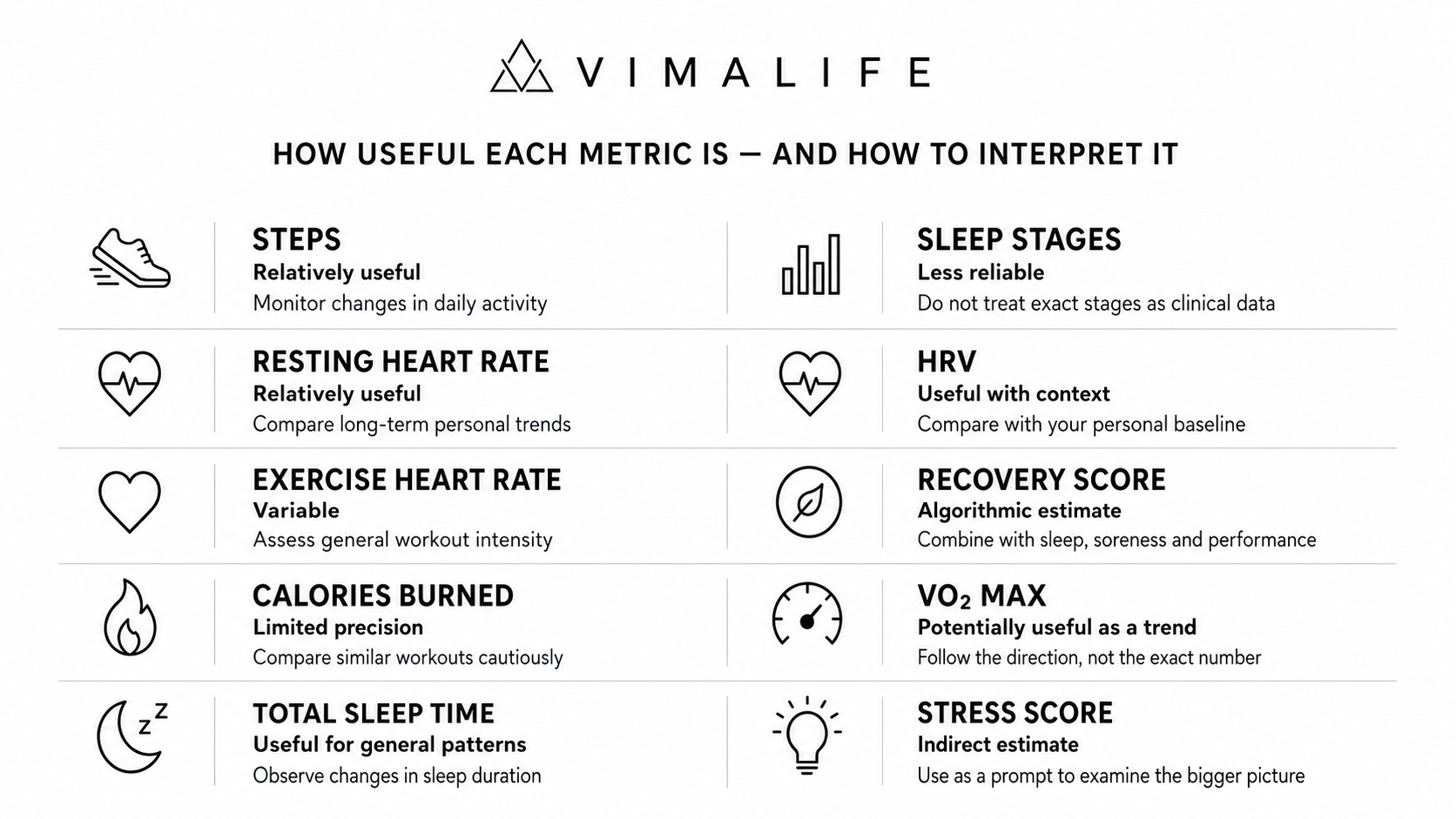
The short answer: Fitness trackers are generally most useful for monitoring steps, resting heart rate and long-term activity patterns. They are less reliable when estimating calories burned, individual sleep stages, stress, recovery and VO₂ max. Accuracy varies by device, activity, fit and individual physiology, so wearable data is best used to identify trends, not as a precise measurement or medical diagnosis.
Fitness tracker accuracy at a glance
How accurate are fitness trackers overall?
Fitness tracker accuracy depends on what the device is trying to tell you. A wearable is relatively close to the source when it detects movement or measures the pulse at your wrist. It moves further from direct measurement when it turns those signals into an estimate of calories, sleep stages, stress or recovery.
A useful distinction is:
Measurements: Signals the device attempts to detect, such as movement and pulse
Estimates: Values calculated from those signals, such as calories burned or VO₂ max
Interpretations: Conclusions such as “high stress,” “poor recovery” or “low readiness”
Even the measurements are not perfect. Sensors can be affected by movement, skin contact, temperature, placement and the type of activity being performed. Estimates introduce more uncertainty because they also rely on formulas and proprietary algorithms. Popular wearables from Apple, Garmin, Fitbit, WHOOP, Oura and Samsung may use different sensors and calculations. The same person can therefore receive different calorie, sleep or recovery estimates from different devices.
This does not make wearable technology useless. It just means that a number displayed to two decimal places is not necessarily accurate to two decimal places.
How accurate are fitness trackers for counting steps?
Fitness tracker step accuracy is generally better than its accuracy for calories, sleep stages or recovery scores. Most fitness watches use an accelerometer to detect patterns of movement that resemble walking. During steady, ordinary walking, many devices can provide a reasonably useful step count. A systematic review of commercially available wearables found that consumer devices were generally capable of measuring steps with acceptable accuracy in laboratory settings, although performance varied between brands and device types.
The problems tend to appear when movement does not resemble conventional walking.
Your watch may miss steps when you:
Push a stroller or shopping cart
Hold the treadmill rails
Carry something that keeps your wrist still
Walk very slowly
Use a walking aid
It may also add steps when you gesture, prepare food, fold laundry or move your hands without actually walking. Step data is therefore most valuable as a pattern.
If your usual average rises from 4,000 steps a day to 7,000, that change is probably meaningful even if the device did not conduct a perfectly audited count. Think of your step total as a useful estimate of daily activity, not a literal accounting of every footfall.
Fitness tracker heart rate accuracy during exercise
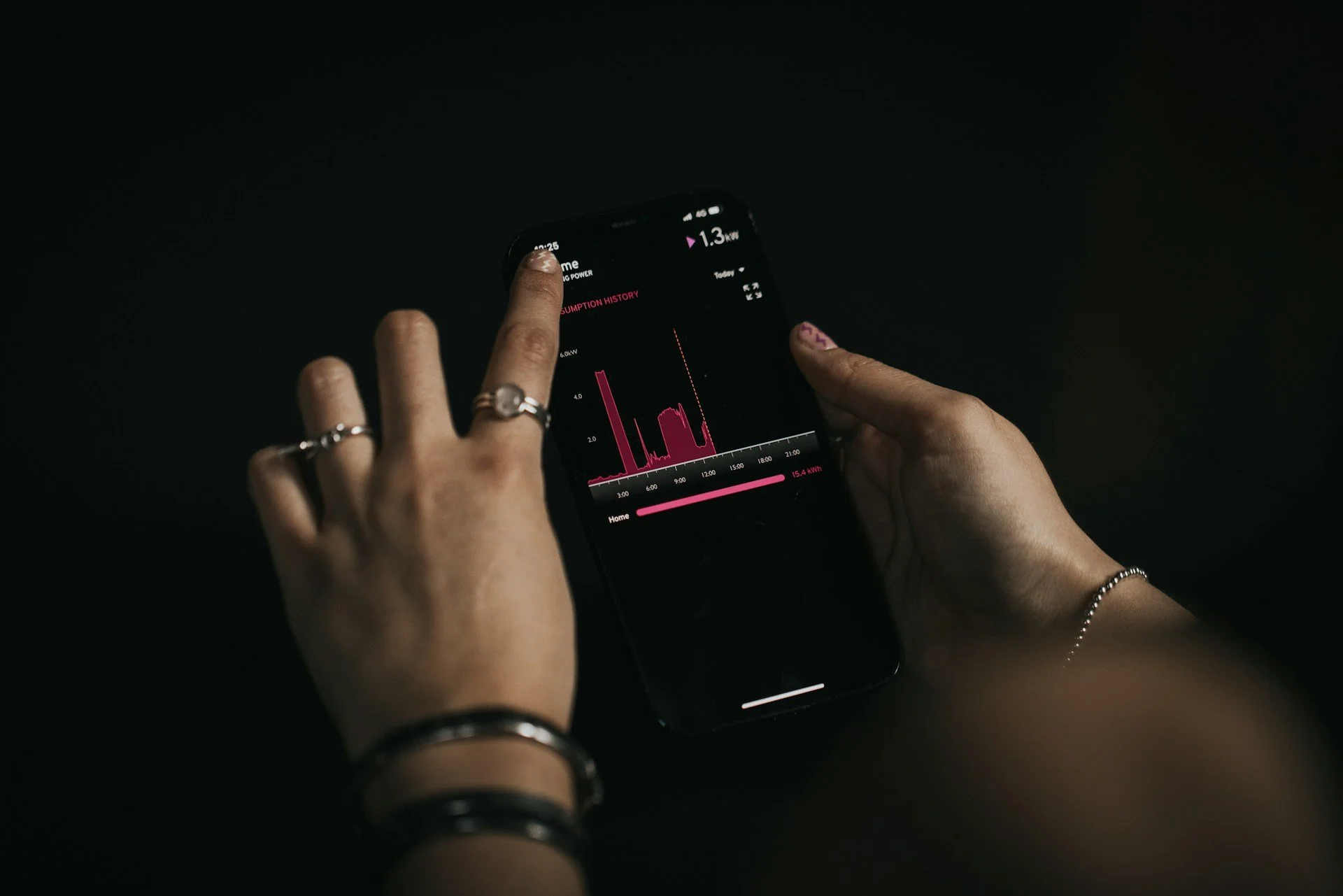
Wrist-based fitness trackers typically measure heart rate through photoplethysmography. The small lights beneath the device shine into the skin, while a sensor detects changes in blood volume as the heart beats. At rest, many modern fitness watches can provide a useful heart-rate reading. Accuracy may also be reasonably good during steady aerobic activity, particularly when the device fits properly and remains stable against the skin.
Exercise creates more challenges. Rapid changes in intensity can produce a delay between what your heart is doing and what appears on the screen. Wrist movement, sweat, cold skin, tattoos, poor circulation and a loose strap can all interfere with the signal.
Are smartwatches accurate for strength training?
Smartwatch accuracy can decline during strength training. Gripping a dumbbell, barbell or kettlebell changes tension through the wrist and forearm. Exercises such as push-ups, front squats and presses can bend the wrist or move the sensor against the skin. These factors make it harder for an optical sensor to maintain a clean signal. Your fitness watch may still provide a broad picture of workout intensity, but brief spikes, drops or delays should be interpreted carefully. A chest-strap heart-rate monitor is often more responsive when precise exercise heart rate matters.
Resting heart rate may be more useful over time. A sustained change from your normal baseline can sometimes reflect training load, illness, disrupted sleep, stress or other changes, although it cannot tell you the cause on its own.
Are smartwatch calories burned accurate?
Calories burned on a smartwatch are among the least precise metrics it provides. A fitness tracker cannot directly observe energy expenditure. It estimates calories using information such as:
Age
Sex
Height and body weight
Movement
Heart rate
Exercise type
The manufacturer’s proprietary algorithm
The difficulty is that two people can complete the same workout at the same heart rate and expend different amounts of energy. Body composition, movement efficiency, fitness level, genetics and the actual work performed all influence energy use.
The systematic review of wearable accuracy found that no examined brand measured energy expenditure accurately across all conditions. This is why fitness tracker calorie accuracy should be approached with particular caution. A watch displaying 700 calories does not mean you have created an exact 700-calorie allowance. Building food choices around that number can become especially misleading because the estimated error may be substantial.
Calorie data may be useful for rough comparisons between similar workouts completed under similar conditions with the same device. It should not determine whether a workout “counted.” A fitness watch also cannot quantify every benefit of training. It cannot place an accurate calorie value on improved strength, coordination, bone-loading stimulus, mobility, exercise technique or confidence.
How accurate are sleep trackers and sleep stages?
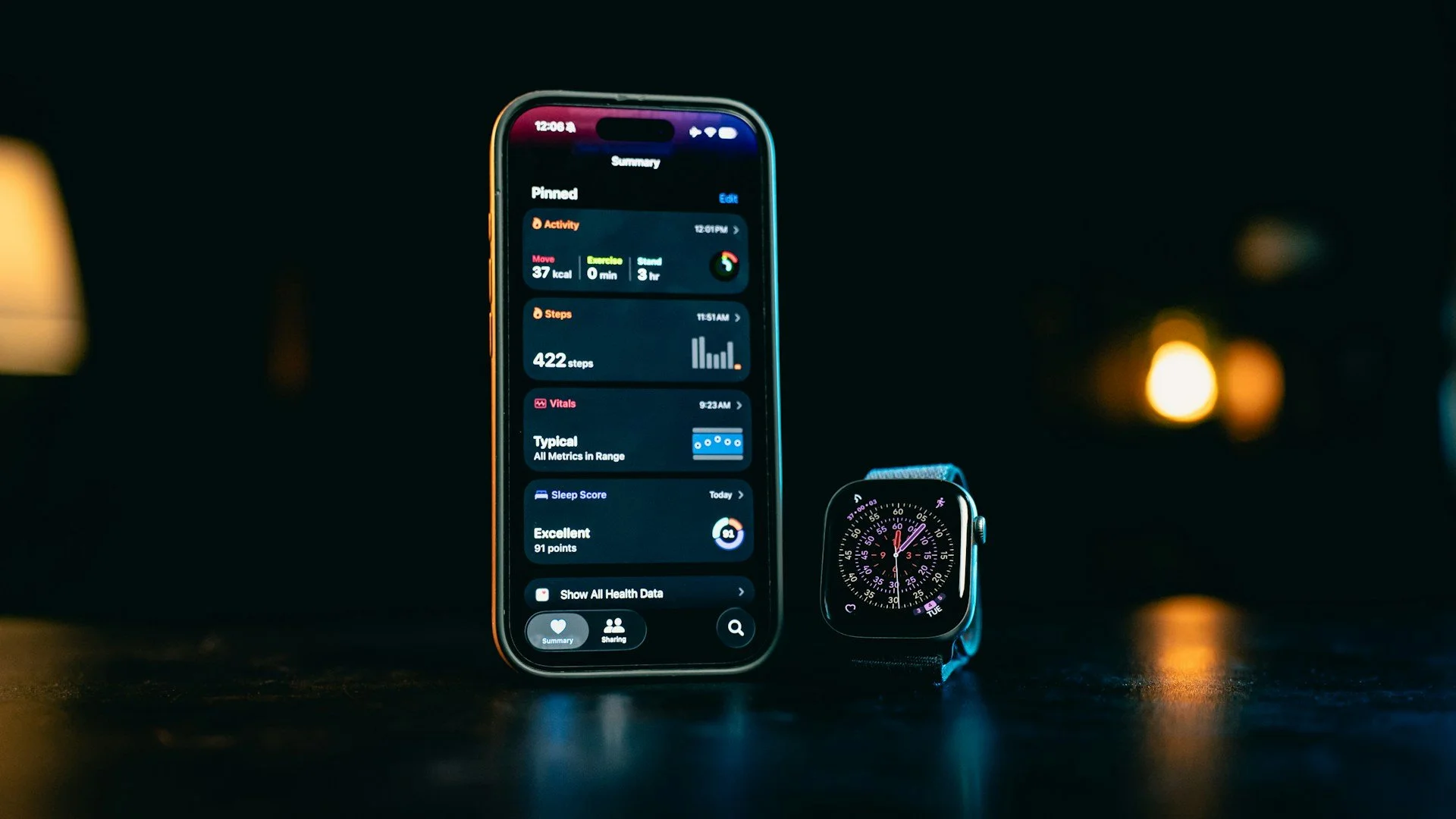
A sleep tracker does not observe sleep in the same way a clinical sleep study does. Polysomnography, the standard assessment used in a sleep laboratory, can measure brain activity, eye movement, muscle activity, breathing, oxygen levels and heart rhythm. Most consumer wearables rely primarily on movement and heart rate, sometimes supplemented by temperature or blood-oxygen information.
The device then uses an algorithm to infer when you fell asleep, how long you slept and how much time you spent in light, deep or REM sleep. This distinction explains why smartwatch sleep tracking accuracy is generally stronger for total sleep duration than for individual sleep stages.
A review of wearable sleep technology found that consumer devices can offer useful information but do not reproduce all the measurements collected through polysomnography. Validation research also shows that performance can vary considerably by device, population and sleep metric. Quiet wakefulness is particularly difficult. If you lie still in bed reading, meditating or trying to fall asleep, your tracker may decide that you are already asleep.
Sleep tracker data is best used to explore broader patterns:
Are you giving yourself enough opportunity to sleep?
Is your sleep schedule relatively consistent?
Does your sleep change after alcohol or a late meal?
Do harder training days seem to affect your night?
Has your sleep duration shifted over several weeks?
It is less useful to become preoccupied with obtaining an exact number of minutes in each stage.
Orthosomnia and sleep-tracker anxiety
Sleep data can become counterproductive when the pursuit of a perfect score creates more anxiety than insight.
Researchers use the term orthosomnia to describe an unhealthy preoccupation with achieving ideal sleep according to a tracking device. The original clinical report on orthosomnia described cases in which sleep-tracker information reinforced anxiety or perfectionism, even when the person’s subjective sleep was beginning to improve. If your watch regularly makes you feel anxious about sleep, hiding the sleep score for a while may be more helpful than collecting additional data. Rest is not a test you pass or fail each morning.
Is smartwatch HRV accurate enough to measure recovery?
Heart rate variability, or HRV, describes the small changes in time between consecutive heartbeats. A healthy heart does not beat with perfect mechanical regularity. The intervals change as the autonomic nervous system responds to breathing, training, sleep, illness, alcohol, hydration, travel, psychological stress and many other influences.
Portable devices may capture useful HRV measurements under controlled resting conditions. A systematic review comparing portable HRV technology with electrocardiography found encouraging results for some devices and measurement conditions. However, collecting an HRV value and interpreting what it means are two different tasks.
HRV varies considerably between individuals. Comparing your number with a friend’s is rarely helpful. The time of measurement, body position, breathing pattern and device used can also affect the result.
HRV is most useful when you:
Use the same device consistently
Measure under similar conditions
Compare the result with your own baseline
Look at several days rather than one isolated reading
Consider your sleep, soreness, stress and recent training
A low HRV reading does not automatically mean you should cancel your workout. It is context, not a command.
How accurate are smartwatch recovery and fitness readiness scores?
Your smartwatch recovery score is not a direct measurement of recovery.
It is an algorithmic interpretation built from signals that may include:
HRV
Resting heart rate
Sleep duration
Sleep stages
Recent exercise
Skin temperature
Respiratory rate
Different manufacturers weight those signals differently. Because many of the algorithms are proprietary, two devices can look at similar information and produce different readiness scores. This is why WHOOP recovery scores, Garmin Body Battery or Training Readiness, Oura Readiness and similar metrics should not be treated as interchangeable medical assessments.
Recovery also includes information your watch cannot fully observe:
Muscle soreness
Joint discomfort
Motivation
Coordination
Mood
Fuel intake
Technique
How you respond during a warm-up
Whether your usual training loads feel unusually heavy
A readiness score can start a useful conversation with yourself. It should not be the only voice in that conversation.
Can a smartwatch accurately measure stress?
Most fitness watches do not measure psychological stress directly.
They infer stress from physical signals such as HRV, heart rate, movement, breathing patterns, skin temperature or electrodermal activity. Those signals may change during emotional stress, but they can also change after exercise, caffeine, dehydration, illness, heat, digestion or insufficient sleep. Your watch may therefore report “high stress” during an exciting conversation, after climbing stairs or while digesting a large meal. It recognizes a physiological change but may not understand why it occurred.
Stress scores are most helpful when they encourage you to examine the larger pattern:
Has your resting heart rate been elevated for several days?
Have you been sleeping less?
Has your training load increased?
Are you feeling mentally overwhelmed?
Are you beginning to feel unwell?
The number can prompt reflection. It cannot describe the full emotional context of your life.
How accurate is VO₂ max on a fitness watch?
VO₂ max represents the maximum amount of oxygen your body can use during intense exercise. It is an important measure of cardiorespiratory fitness.
A laboratory measures VO₂ max during a progressive exercise test while analyzing the gases you breathe in and out. Your watch does not collect respiratory gases. Instead, it estimates VO₂ max using information such as heart rate, pace, speed, age, sex and body size.
A systematic review and meta-analysis of wearable VO₂ max estimates found that exercise-based algorithms tended to perform better than estimates derived from resting information. More recent research continues to show that VO₂ max watch accuracy varies according to the device, testing method and person being assessed.
Consumer wearables can still provide a useful trend. If you consistently use the same device and its estimate gradually improves alongside your running pace or aerobic performance, the direction may be meaningful.
The exact number is not equivalent to laboratory testing. Treat it as a trend line, not a clinical verdict on your fitness.
Are fitness trackers considered medical devices?
Most fitness-tracker features are designed for general wellness and are not medical devices.
A step count, sleep score, calorie estimate or fitness readiness score should not be used to diagnose a condition. Some smartwatches do include specific features, such as an ECG application or irregular-rhythm notification, that have received regulatory clearance.
That clearance applies to the particular feature, not to every health metric produced by the watch.
The FDA’s authorization documentation for an irregular-rhythm notification feature notes important limitations: the feature is not a continuous monitor, may not identify every episode and is not intended to detect a heart attack.
Can a smartwatch detect heart problems?
A smartwatch may identify a pattern that deserves further attention, but it cannot rule every heart problem in or out.
Repeated irregular-rhythm alerts or unusual heart-rate patterns should be discussed with a qualified healthcare professional. Seek prompt medical care for symptoms such as chest pain, fainting, severe or unusual shortness of breath, or persistent palpitations, regardless of what your watch reports.
A reassuring smartwatch screen should never override concerning symptoms.
What should you do when your recovery score feels wrong?
First, look at the circumstances behind the reading.
Was the device fitted properly? Did you wear it for the whole night? Is this one unusual score or part of a longer pattern? Did you travel, drink alcohol, eat unusually late, train harder than normal or have an especially stressful day?
Then look at the information the device cannot collect.
Ask yourself:
How does my body feel?
Am I unusually sore or uncomfortable?
Do I feel alert and coordinated?
How does my normal warm-up feel?
Are familiar weights moving normally?
Has my performance declined for several sessions?
Am I experiencing symptoms that require medical attention?
Sometimes the best response is to begin the planned workout and reassess after ten minutes. You may feel strong once you start moving. You may instead realize that a lighter session is the smarter choice.
Training does not have to become an all-or-nothing decision. You can reduce the load, adjust the number of sets, practise technique, walk, work on mobility or choose a more restorative class.
How VIMALIFE coaches look beyond wearable health data
At VIMALIFE, wearable data can contribute to the conversation, but it does not replace observation, communication or coaching.
A recovery score cannot show how someone moves through a warm-up. It cannot see whether their balance is different, whether a familiar weight looks unusually demanding or whether their breathing and coordination suggest that the planned intensity should be adjusted.
That is why a useful training decision combines several forms of information:
How the person feels
Recent sleep and training history
Movement quality
Warm-up performance
Strength and conditioning progress
Any pain, symptoms or unusual fatigue
Members at our fitness club in Leslieville can choose from open-gym training and a varied schedule of fitness classes in Leslieville, including strength, conditioning, Pilates, yoga, barre and recovery-focused movement. That flexibility makes it easier to respond to the day you are actually having.
Your watch may know your resting heart rate. A good coach also notices how you move.
How to use a fitness tracker without letting it control you
The healthiest relationship with wearable technology is curious rather than obedient.
Look for trends, not isolated numbers. One poor sleep score or low HRV reading may not mean very much. A consistent change over several days or weeks is more informative.
Compare yourself with yourself. HRV, calorie estimates and recovery scores vary by person and device. Your own baseline is generally more useful than someone else’s number.
Keep the device consistent. Switching between brands can create apparent changes caused by different sensors and algorithms rather than changes in your health.
Question false precision. A calorie estimate of 627 is not necessarily more trustworthy than an estimate of “approximately 600.” Precise presentation does not guarantee precise measurement.
Include subjective information. Record how you slept, how sore you feel and how the workout performed. Your lived experience is data too.
Hide metrics that cause anxiety. More information is not automatically better information. If a particular score encourages compulsive checking, food restriction or sleep anxiety, you do not have to keep looking at it.
Use symptoms, not your watch, to decide when to seek care. Wearable alerts can be helpful, but they are not a substitute for medical evaluation. Concerning or persistent symptoms deserve professional attention even when the device shows a normal reading.
Frequently asked questions about fitness tracker accuracy
How accurate are fitness trackers?
Fitness trackers are generally most useful for monitoring step patterns, resting heart rate and changes in activity over time. Their estimates of calories, sleep stages, stress, recovery and VO₂ max are less precise. Accuracy varies by device, activity, fit and individual physiology.
Which fitness tracker metric is most accurate?
Step counts and resting heart rate tend to be among the more useful consumer wearable metrics. However, no metric is perfectly accurate across every person, activity and device.
Are Apple Watch, Fitbit, Garmin, WHOOP and Oura equally accurate?
No. Each company uses different sensors, algorithms and scoring systems. Accuracy may also vary between models from the same company. Device-specific claims should be based on validation research for the exact model and metric being considered
Are smartwatch calories burned accurate?
Smartwatch calorie estimates have limited precision because the device cannot measure energy expenditure directly. Use them as rough comparisons rather than exact instructions for how much to eat.
Can a fitness tracker accurately measure sleep?
A tracker may provide a useful estimate of total sleep time, but sleep-stage accuracy is more variable. Consumer devices do not collect all the brain, eye, muscle and respiratory measurements used in a clinical sleep study.
Is smartwatch HRV accurate?
Some wearables can capture useful HRV measurements under consistent resting conditions. HRV is best compared with your personal baseline and interpreted alongside sleep, illness, stress and recent training.
Should I skip a workout if my fitness readiness score is low?
Not automatically. Consider the longer-term pattern, your symptoms, soreness, recent training and how you respond during the warm-up. You may proceed as planned, reduce the intensity or choose a lighter session.
Can a smartwatch diagnose a medical condition?
Most smartwatch metrics are intended for general wellness, not diagnosis. Certain ECG or rhythm-notification features may have regulatory clearance, but they still have limitations. Consult a healthcare professional about repeated alerts, unusual patterns or concerning symptoms.