Yoga Classes in Leslieville: Which Yoga Style Is Right for You?
At 6:00pm on a Wednesday, you may have spent the day folded over a laptop, your shoulders are somewhere near your ears, you want to move, but not necessarily be timed or asked to do another burpee. So you open a class schedule and encounter a dictionary of possibilities. Vinyasa. Power. Sculpt. Yin. Restore. One promises energy. Another promises stillness. A third appears to involve dumbbells.
How are you supposed to know what your body needs before the class has even begun? The secret is that you only need to choose a class for the version of you who is showing up today.
At VIMALIFE in Leslieville, that could mean Vinyasa Yoga when you want to get out of your head, Power Yoga when you want to feel strong, or Meditative Yin Yoga when the most ambitious thing you can imagine doing is lying on a mat, and doing it beautifully. The right practice is not always the hardest one. Often, it is the one you are willing to return to.
The Short Answer: Which Yoga Class Should You Choose?
If you are searching for yoga classes in Leslieville and want a quick answer:
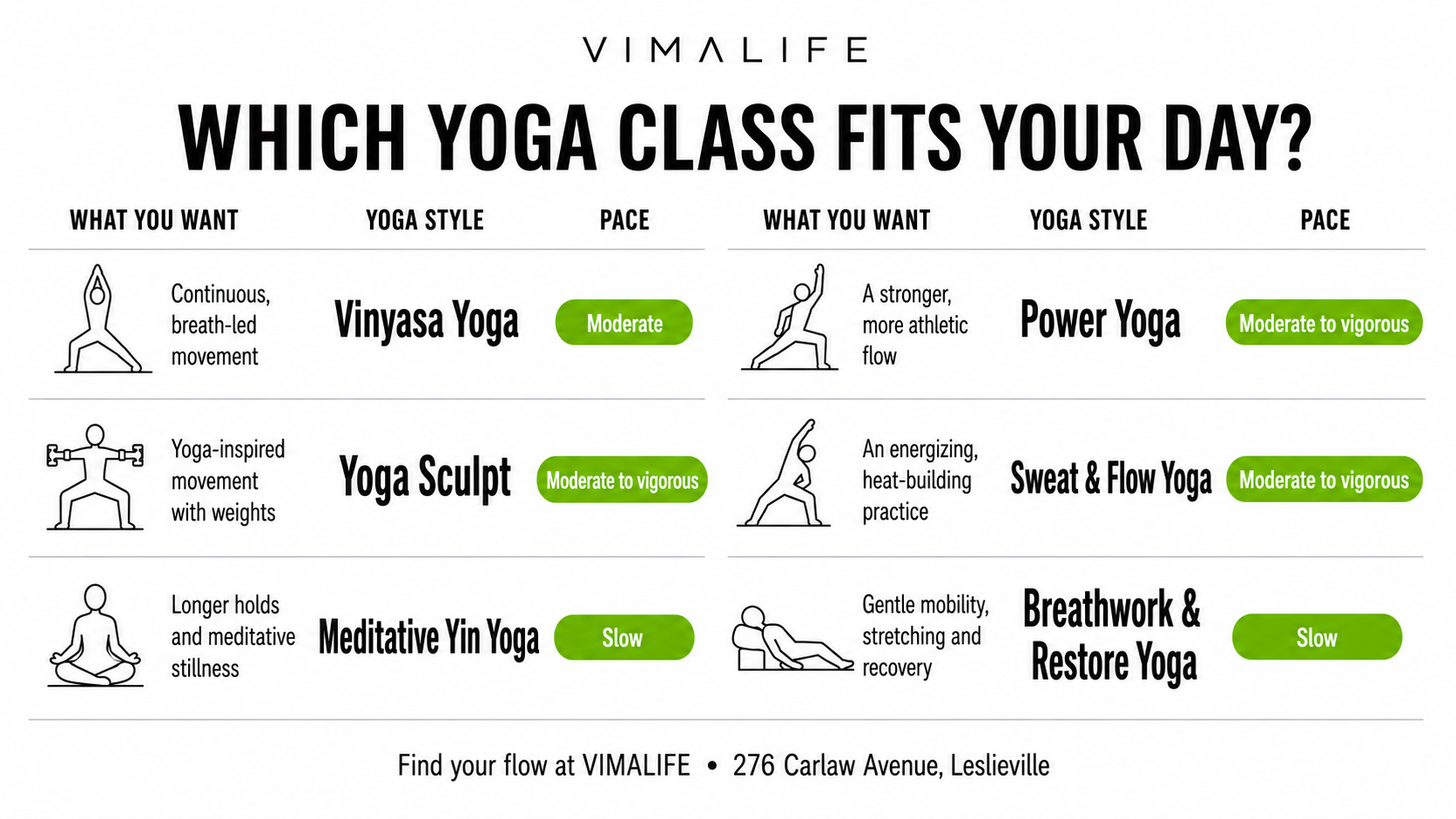
Choose Vinyasa Yoga for continuous, breath-led movement.
Choose Power Yoga for a faster and more strength-focused practice.
Choose Yoga Sculpt for yoga-inspired movement with light weights.
Choose Sweat & Flow Yoga for an energizing, heat-building flow.
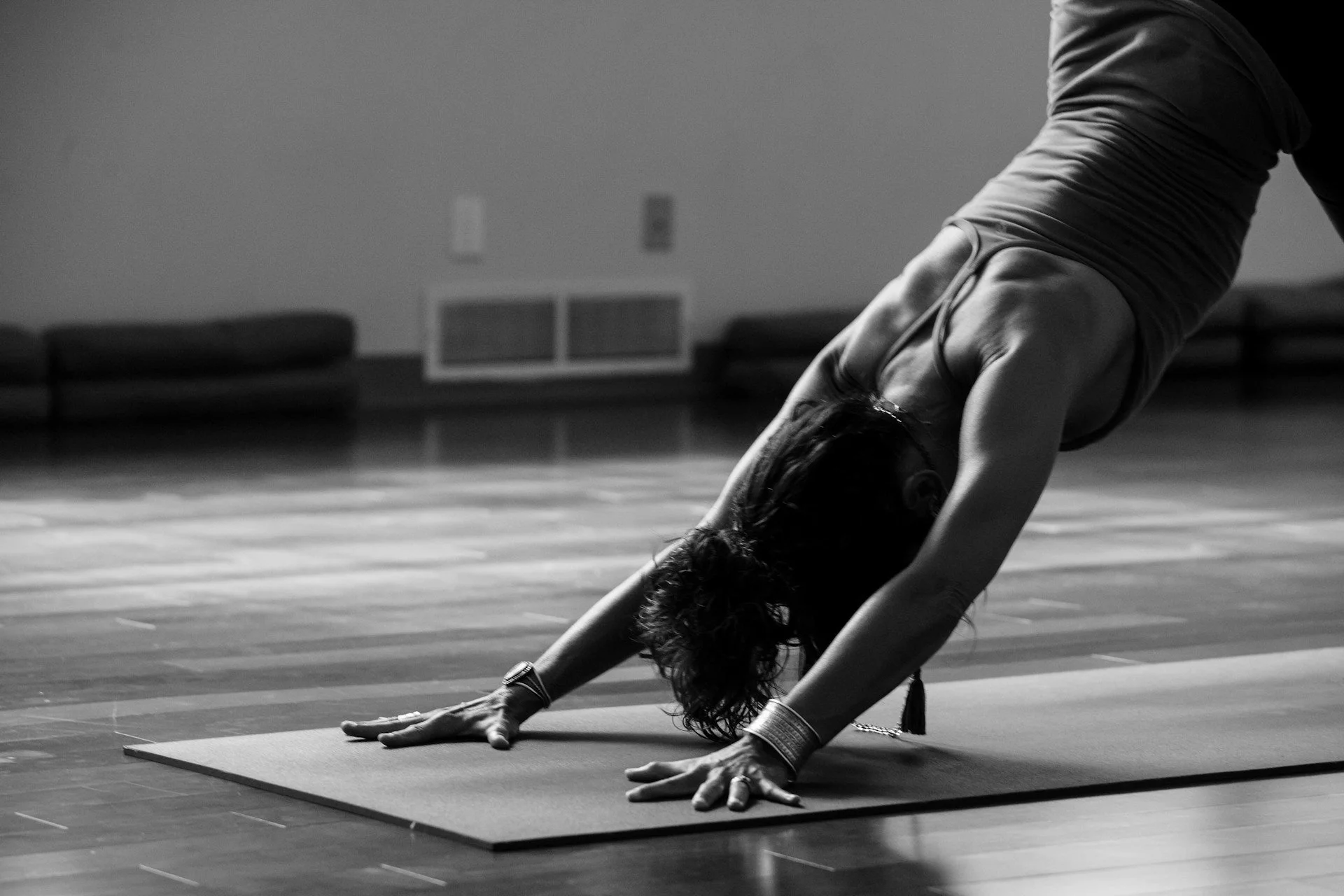
Choose Meditative Yin Yoga for stillness and longer supported holds.
Choose Breathwork & Restore Yoga for gentle mobility, stretching and recovery.
Beginners may feel most comfortable starting with Vinyasa, Meditative Yin or Breathwork & Restore, although the best choice depends on personal fitness, mobility, health and comfort level. Now for the more interesting answer.
Yoga Is Not One Thing
The word yoga has become remarkably good at containing contradictions. A yoga class can be slow enough to make five minutes feel enormous. It can also move quickly enough to leave sweat gathering at the edge of your mat. It can ask for strength, balance, patience or very little movement at all. Most modern group yoga classes combine physical postures, breathing and focused attention. What changes is the pace, sequencing, intensity and purpose of the practice.
That variety is one reason people turn to yoga for so many different things. According to the National Center for Complementary and Integrative Health, research suggests yoga may support general wellness, stress management, sleep, balance and mental and emotional health. A systematic review and meta-analysis on yoga and physical fitness also found improvements across measures including strength, balance, mobility and lower-body flexibility.
None of this means yoga is a cure-all or that every class produces the same result. It means yoga can be one useful part of a broader approach to movement and well-being. It also means that you do not need to be flexible before you begin. Saying you are too inflexible for yoga is a little like saying you are too hungry for dinner. You are allowed to arrive as you are.
Vinyasa Yoga: When Your Mind Needs Your Body to Take Over
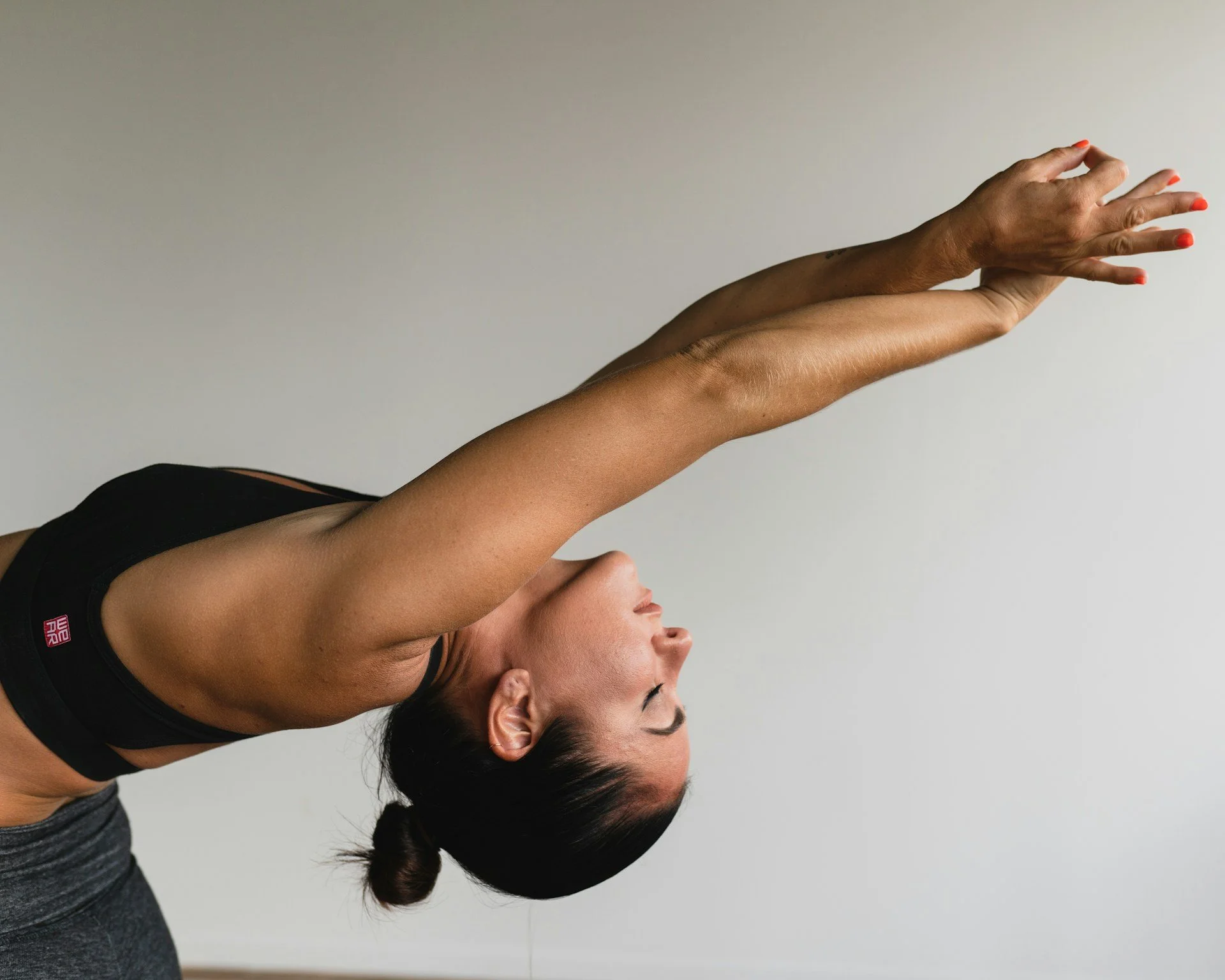
Vinyasa is commonly described as “flow” yoga because one pose moves into the next. Breath provides the rhythm, transitions become part of the practice and the sequence gradually carries your attention away from whatever was occupying it before class. That last part may be the real appeal. It is difficult to revise tomorrow’s to-do list while balancing on one leg and remembering which hand is supposed to reach for the ceiling. For an hour, the body gives the mind something immediate to do.
Vinyasa Yoga at VIMALIFE combines breath-led sequences with strength, mobility, balance and a grounded finish. A class may travel through standing postures, lunges, balances and floor-based movement, but it does not require everyone in the room to look identical. In fact, they should not. Bodies have different proportions, histories, ranges of motion and energy levels. A thoughtful Vinyasa practice leaves room for that.
Vinyasa may be a good choice when you want to:
Move continuously without attending a traditional cardio class
Improve balance and body awareness
Explore mobility through active movement
Learn how breath can guide pace
Finish feeling both physically engaged and mentally quieter
For someone looking for beginner yoga classes in Leslieville, Vinyasa can be a welcoming introduction. Let the instructor know you are new, choose the variations you can control and take a resting position whenever you need one. Resting is not leaving the class. It is part of knowing how to participate in it.
Power Yoga: When You Want Yoga to Feel Like Training
Power Yoga has some of Vinyasa’s vocabulary, but it speaks more loudly. The practice still connects breath with movement, although the sequences tend to be stronger, faster and more athletic. Standing poses may be held longer. Transitions may repeat. Your legs may begin negotiating with you halfway through a sequence.
Power Yoga is likely to appeal to people who enjoy the focused atmosphere of yoga but also want to feel that they have trained.
At VIMALIFE, Power Yoga classes in Leslieville use dynamic sequences, challenging poses and breath-led movement to build strength and stamina. That does not mean you must perform every advanced variation. A challenging class should still allow you to adjust the challenge.
Power Yoga may fit your day when you want to:
Build muscular endurance
Practise balance under fatigue
Move at a more energetic pace
Challenge your core, legs and upper body
Add an athletic yoga session to your weekly routine
Can Power Yoga replace strength training? Not exactly. Yoga can develop body control, balance and muscular endurance, but it does not reproduce every benefit of progressive resistance training. Someone who wants to become stronger over time may benefit from combining yoga with structured workouts using dumbbells, cables, machines or barbells. This is one reason practising at an all-in-one fitness club can be useful. At VIMALIFE, a Power Yoga class does not have to carry the entire burden of your fitness routine. It can live alongside strength and conditioning classes, personal training and independent gym-floor workouts.
Yoga gets to be yoga. Strength training gets to be strength training. Your week gets to include both.
Yoga Sculpt: The One With the Dumbbells
Yoga Sculpt is what happens when yoga-inspired movement wanders into a fitness class and decides to stay. You will recognize elements of a flow, but you may also encounter light weights, squats, lunges, presses, pulses and higher-repetition exercises. It is more workout-driven than a traditional Vinyasa class and considerably less interested in pretending your shoulders are not working.
At VIMALIFE, Yoga Sculpt combines flowing sequences with light resistance and targeted toning work. It may appeal to someone who likes the concentration and movement of yoga but wants a little more external load.
Yoga Sculpt may be right for you if:
You enjoy upbeat, full-body classes
You want to combine mobility and light resistance
You like higher-repetition strength work
You are curious about weights but prefer an instructor-led setting
Traditional yoga sometimes feels quieter than what you want that day.
The word light matters. The goal is not to collect the heaviest dumbbells in the room as though they are limited-edition merchandise. Choose a weight you can control, and put it down when control begins to disappear. Yoga Sculpt is yoga-inspired fitness. It is not the same experience as Vinyasa, Yin or restorative yoga, and that is precisely why some people love it.
Sweat & Flow Yoga: When You Want to Build Heat
Some mornings call for a gentle return to consciousness. Others call for movement before your brain has time to propose a meeting about it.
Sweat & Flow Yoga belongs to the second category. The class combines intentional flow with strength, mobility and breathwork, using continuous movement to create an energizing practice. The “sweat” comes from the pace and physical effort. It should not be confused with hot yoga unless the class is specifically described as taking place in an intentionally heated room.
Sweat & Flow may suit someone who wants:
A dynamic morning or weekend yoga class
More energy than a slow practice provides
A fitness-forward introduction to yoga
Strength and mobility in the same session
An alternative to a conventional HIIT workout
If you normally gravitate toward circuit training, running or higher-energy fitness classes, Sweat & Flow can provide a familiar level of momentum while introducing the breath-led qualities of yoga. It is movement with purpose, but still plenty of movement.
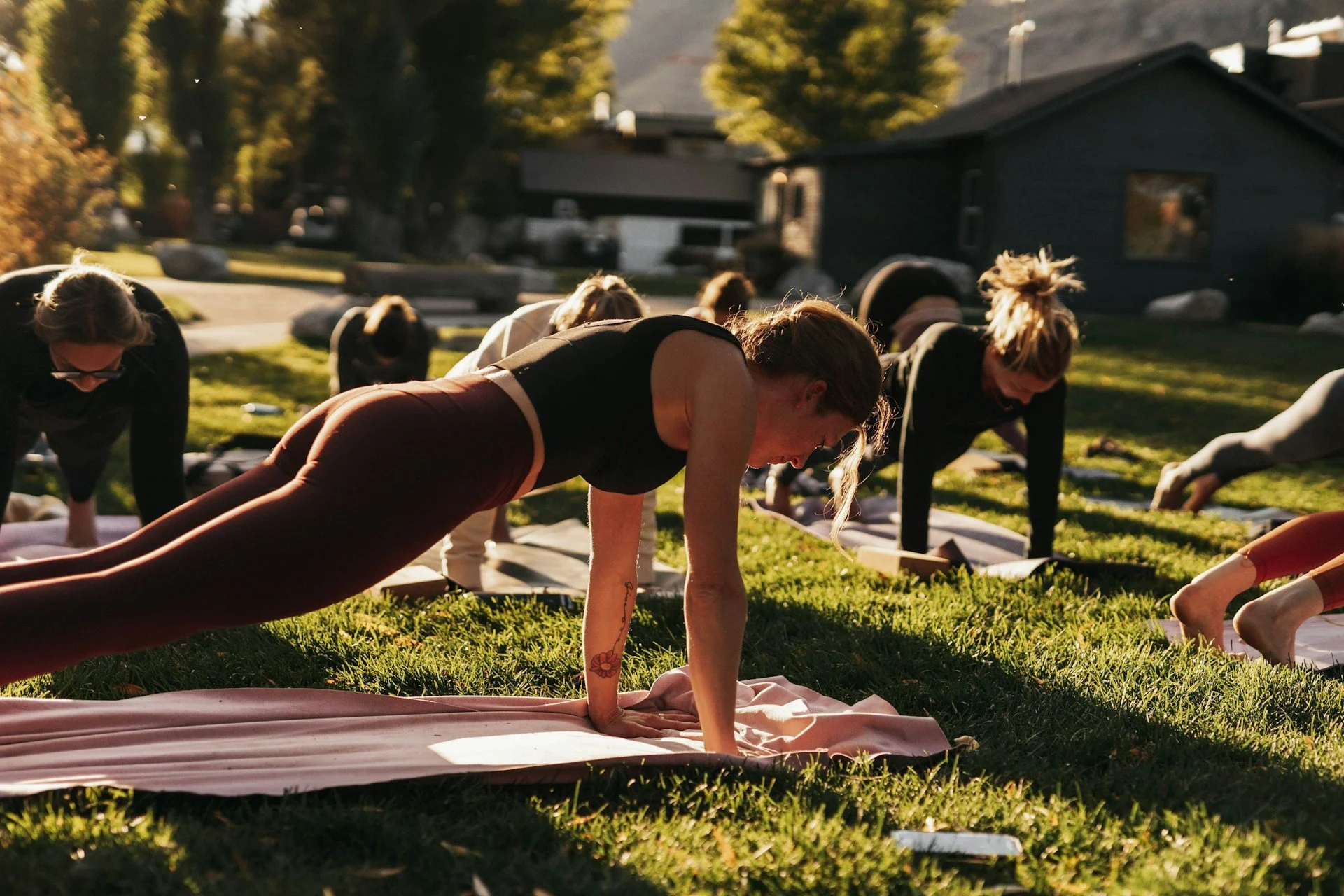
Meditative Yin Yoga: The Difficult Art of Doing Less
From the doorway, Yin Yoga can look suspiciously easy. People are close to the floor. There is no frantic choreography. Nobody appears to be completing a timed round. Then you settle into a position and discover that stillness has its own intensity.
Yin Yoga uses mostly floor-based shapes held for longer periods. Instead of moving quickly from one pose to another, you remain long enough to notice sensation, breath and the impulse to fidget. Props can make a position more supportive and help you find an appropriate amount of intensity.
VIMALIFE’s Meditative Yin Yoga combines longer supported holds, joint mobility, stillness and guided meditation. It can be particularly appealing when the rest of your week has already supplied enough speed.
Consider Yin when you want to:
Slow the pace down
Give mobility a regular place in your routine
Balance running, lifting or higher-intensity classes
Practice patience and focused attention
Spend less time moving and more time noticing
Yin Yoga and restorative yoga are often grouped together, but they are not identical. Yin generally uses longer-held postures with a deliberate, manageable sensation. Restorative yoga usually uses more support so the body can release effort more completely. Neither practice rewards force. You do not need to push deeper simply because you have been in a pose longer. Sharp, electrical or pinching pain is a reason to change the position or come out of it—not evidence that you have reached an especially productive part of class.
Breathwork & Restore Yoga: A Place to Put the Tired Version of You
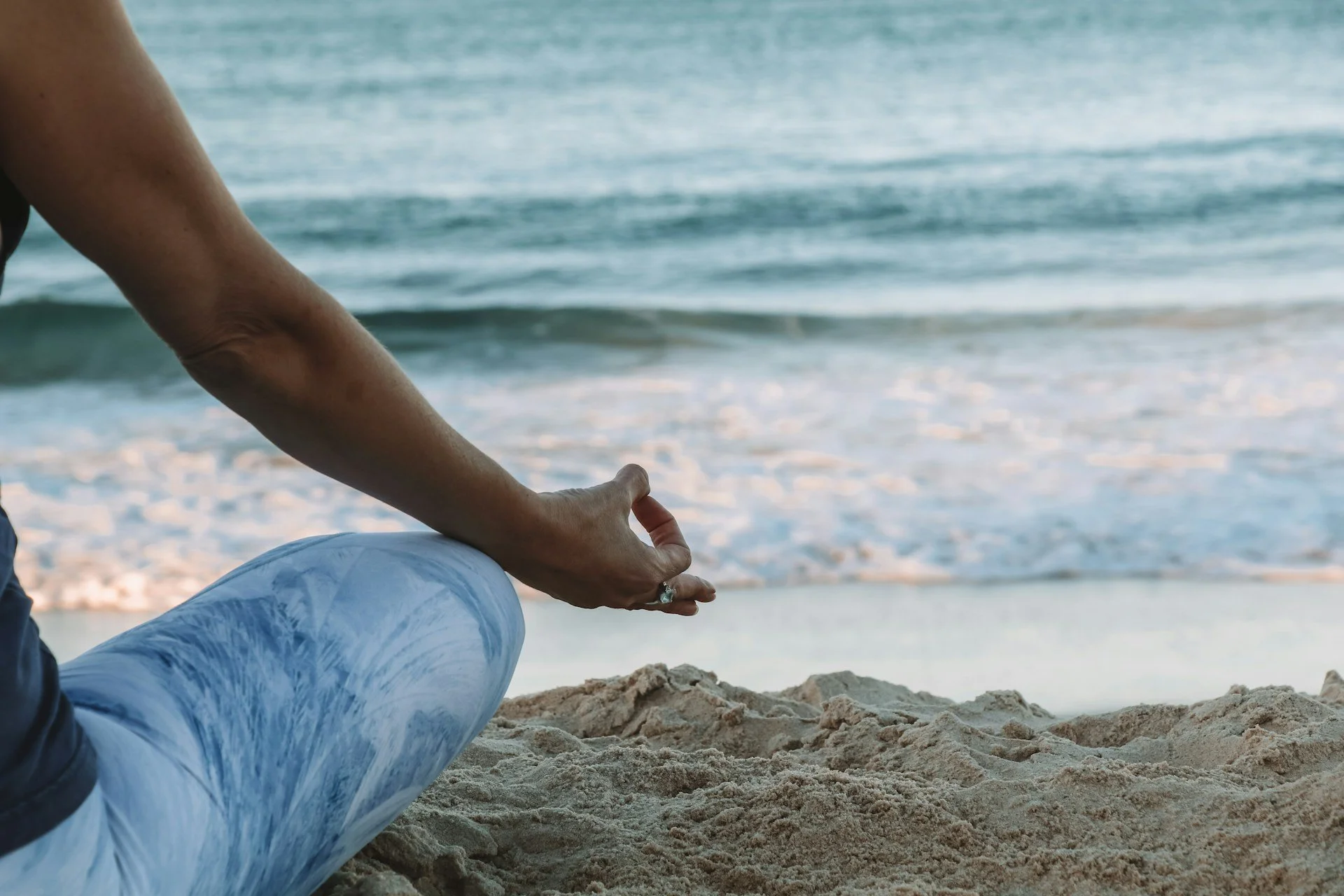
Fitness culture is very interested in what you can add. More weight. More repetitions. More intensity. More discipline. Recovery asks a different question: what can you let go of.
Breathwork & Restore Yoga is a gentler practice built around mobility, stretching and intentional breathing. It does not demand that you manufacture energy you do not have. Instead, it gives your attention somewhere to settle while your pace comes down. This class may feel especially welcome after a week of strength training, running, commuting, sitting at a desk, carrying children, meeting deadlines or participating in the general physical sport of being a person.
Breathwork & Restore may be the right choice when you want to:
Move gently without remaining completely still
Address stiffness after training or prolonged sitting
Focus on mobility and recovery
Practise slower, more intentional breathing
Finish your week with something quieter
It can also be an approachable first yoga class for someone intimidated by faster flows. You are still practising body awareness, breath and purposeful movement, just without needing to remember a long sequence.
Which Yoga Class Is Best for Beginners?
The best yoga class for a beginner is one that matches the person’s current comfort level, health, energy and goals. A beginner who already strength trains may enjoy Power Yoga. Someone returning to movement after a long break may prefer Breathwork & Restore. Another person may find slow holds uncomfortable and feel far more at ease in Vinyasa.
If you have an injury, are pregnant, are returning after surgery or have a health condition that could affect exercise, speak with an appropriate healthcare professional and tell the instructor before class. The NCCIH’s yoga safety guidance also recommends learning under the guidance of a qualified instructor and modifying or avoiding positions when necessary. The purpose of a first class is not to prove that you are good at yoga. It is to gather information. How did the pace feel? Did you enjoy the instructor’s style? Did you leave more energized or more settled? Would you want to do it again?
That is enough for day one.
What Should You Bring to Your First Yoga Class?
You do not need to arrive carrying an entire wellness lifestyle. Wear clothing that allows you to move comfortably, bring water and arrive a little early. Those extra minutes give you time to find the studio, meet the instructor and settle in without beginning your first calming practice in a state of logistical panic.
During class:
Choose the variation you can control.
Use props when they make a pose more accessible.
Rest whenever you need to.
Avoid comparing your flexibility with another person’s.
Breathe normally rather than holding your breath through effort.
Stop if a movement causes sharp or unusual pain.
The person on the next mat may have practised yoga for ten years. They may also be attending for the first time. Either way, their hamstrings are none of your business.
How Often Should You Practise Yoga?
One yoga class per week can be a realistic and useful starting point. Some people practice two or three times weekly, while others use yoga once a week alongside strength training, Pilates, cardio or sports. The best frequency depends on the style of yoga, the intensity of your other workouts, your experience and your ability to recover.
A week might look like:
Monday: full-body strength
Tuesday: Vinyasa or Power Yoga
Thursday: strength and conditioning
Saturday: Breathwork & Restore or Meditative Yin
Sunday: walk, run or complete rest
That is an example, not a prescription. Consistency matters more than designing an impressive routine that cannot survive contact with your actual calendar.
Can You Combine Yoga and Strength Training?
Yes. Yoga and strength training can be performed in the same week and often complement one another.
Yoga can support balance, mobility, muscular endurance, coordination and body awareness. Resistance training provides a structured way to progressively challenge the muscles. They share some qualities, but they are not interchangeable. At VIMALIFE, members can build a routine across two boutique studios and an open gym rather than maintaining separate memberships for yoga, strength training and other fitness classes.
One day can be Power Yoga. Another can be Pilates, barre or a VIMAFIT strength class. When you want to train independently, there is the gym floor. When you want more structure, personal training at VIMALIFE can provide individualized guidance. This is the practical advantage of yoga within a complete fitness and wellness club: your practice can change as your body, goals and week change.
You do not have to decide whether you are a yoga person or a gym person. You are allowed to be a Tuesday Power Yoga person and a Thursday leg-day person. Human beings contain multitudes, and occasionally sore quadriceps.
Where Can You Take Yoga Classes in Leslieville.
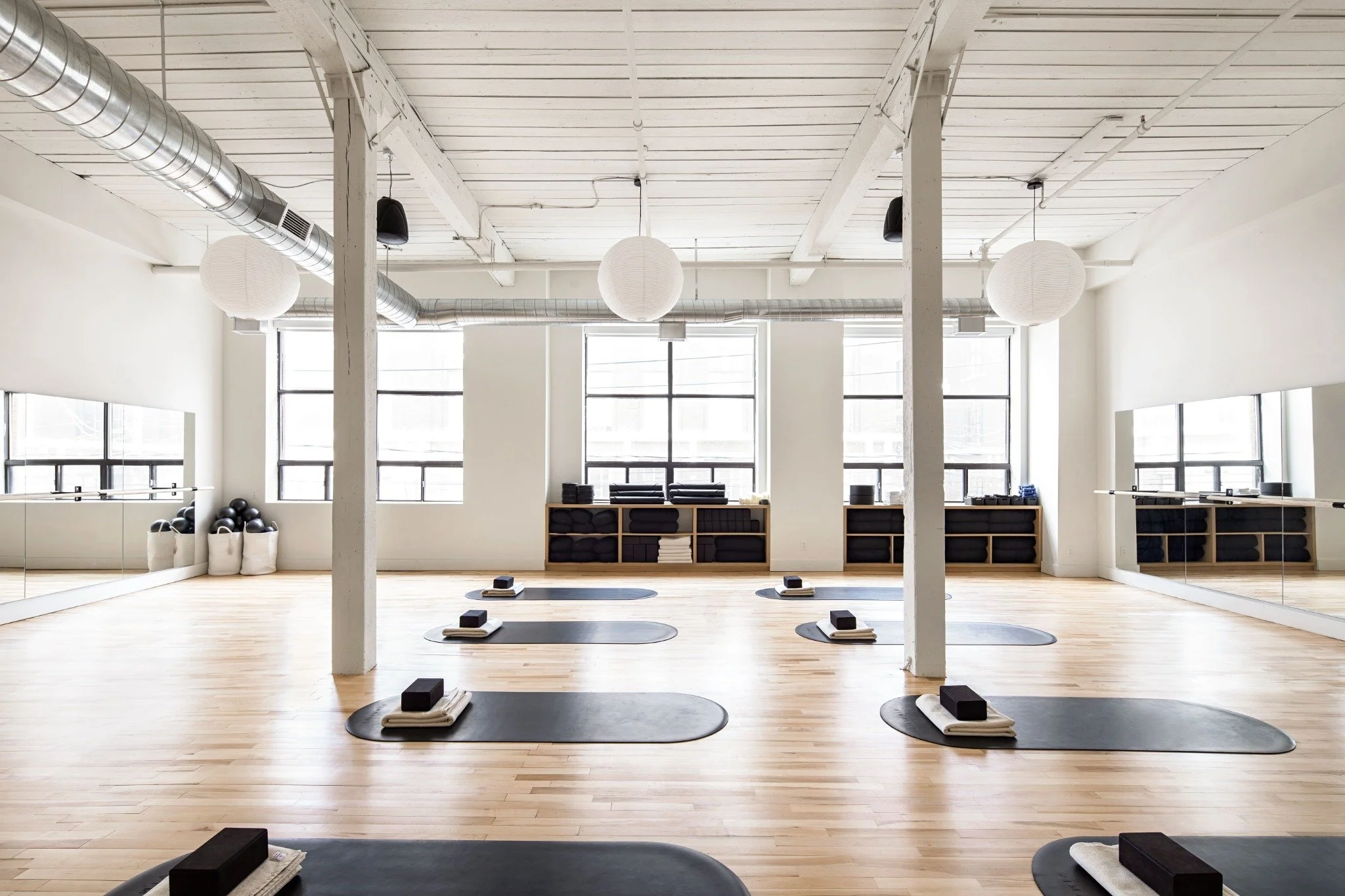
VIMALIFE offers yoga classes at 276 Carlaw Avenue, Unit 101, in Leslieville, Toronto, near Queen Street East and accessible from Riverside, Riverdale, East Harbour, Corktown, The Beaches and other Toronto east-end neighbourhoods. Yoga takes place in VIMAZEN, VIMALIFE’s dedicated mind-body studio. The current offering includes:
Vinyasa Yoga
Power Yoga
Yoga Sculpt
Sweat & Flow Yoga
Meditative Yin Yoga
Breathwork & Restore Yoga
Classes are available across weekday mornings, midday periods, evenings and weekends. Because the schedule can change seasonally, use the live VIMALIFE class schedule to confirm current class times and availability. New guests can also claim a complimentary VIMALIFE guest pass to experience the club before selecting a membership.
Frequently Asked Questions About Yoga Classes in Leslieville
What type of yoga is best for beginners?
Vinyasa, Yin and restorative yoga can all be suitable for beginners. Vinyasa introduces breath-led movement, while Yin and restorative classes move more slowly. The best choice depends on the beginner’s health, fitness experience, mobility and preferred pace.
What is the difference between Vinyasa and Power Yoga?
Vinyasa connects poses through continuous, breath-led sequences. Power Yoga uses a similar flowing structure but generally emphasizes strength, stamina, pace and more physically challenging positions.
Is Yin Yoga suitable for beginners?
Yes, Yin Yoga can be suitable for beginners. It uses mostly floor-based positions and moves slowly, but its longer holds may still feel intense. Beginners should use props, avoid forcing their range of motion and change any position that causes pain.
Is Yoga Sculpt the same as traditional yoga?
No. Yoga Sculpt is a yoga-inspired fitness class that adds light weights and higher-repetition exercises to flowing movement. It is generally more workout-focused than Vinyasa, Yin or restorative yoga.
Do you need to be flexible to start yoga?
No. Flexibility is not a requirement for beginning yoga. Poses can be adjusted to suit different bodies and ranges of motion, and mobility may develop gradually with consistent practice.
Can yoga help with stress?
Research suggests yoga may support stress management and general well-being, although results vary and yoga should not replace professional mental healthcare when it is needed. Breathing, focused attention and intentional movement may all contribute to its calming effects.
How many times a week should a beginner do yoga?
A beginner can start with one yoga class per week. If that feels comfortable and recovery is good, they may gradually add another session. Frequency should account for the intensity of the yoga style and any other exercise performed during the week.
Can yoga and strength training be done together?
Yes. Yoga and strength training can be included in the same weekly routine. Yoga may support mobility, balance and body awareness, while resistance training progressively challenges muscular strength.
Does VIMALIFE offer morning and weekend yoga classes?
Yes. VIMALIFE’s current schedule includes morning and weekend yoga classes, along with select midday and evening practices. Check the current VIMALIFE class schedule because times may change seasonally.
Where is VIMALIFE located?
VIMALIFE is located at 276 Carlaw Avenue, Unit 101, Toronto, Ontario, M4M 3L1, in Leslieville. The club offers yoga, Pilates, barre, strength, HIIT, conditioning, recovery classes, open-gym training and personal training. If you are looking for yoga classes in Leslieville, explore Vinyasa, Power Yoga, Yoga Sculpt, Yin and restorative classes on VIMALIFE’s weekly schedule, or visit us at 276 Carlaw Avenue to experience yoga as part of a complete fitness and wellness routine.