
By the sixth squat, the dumbbell feels considerably heavier than it did a minute ago. You have not changed the weight. You have changed the descent: three slow counts down, a pause, then back up.
That small adjustment can make a familiar exercise feel unfamiliar. It also raises a reasonable question. If slowing down makes a set harder, does it make the workout better?
Sometimes it makes the workout more useful for a particular purpose. A slower repetition can give you time to practise a position. A deliberate pause can make an exercise more consistent. Trying to lift quickly can help develop the ability to produce force rapidly.
For muscle growth, however, research supports a fairly broad range of repetition speeds. You do not need to turn every set into a counting exercise. The useful question is what the pace helps you accomplish.
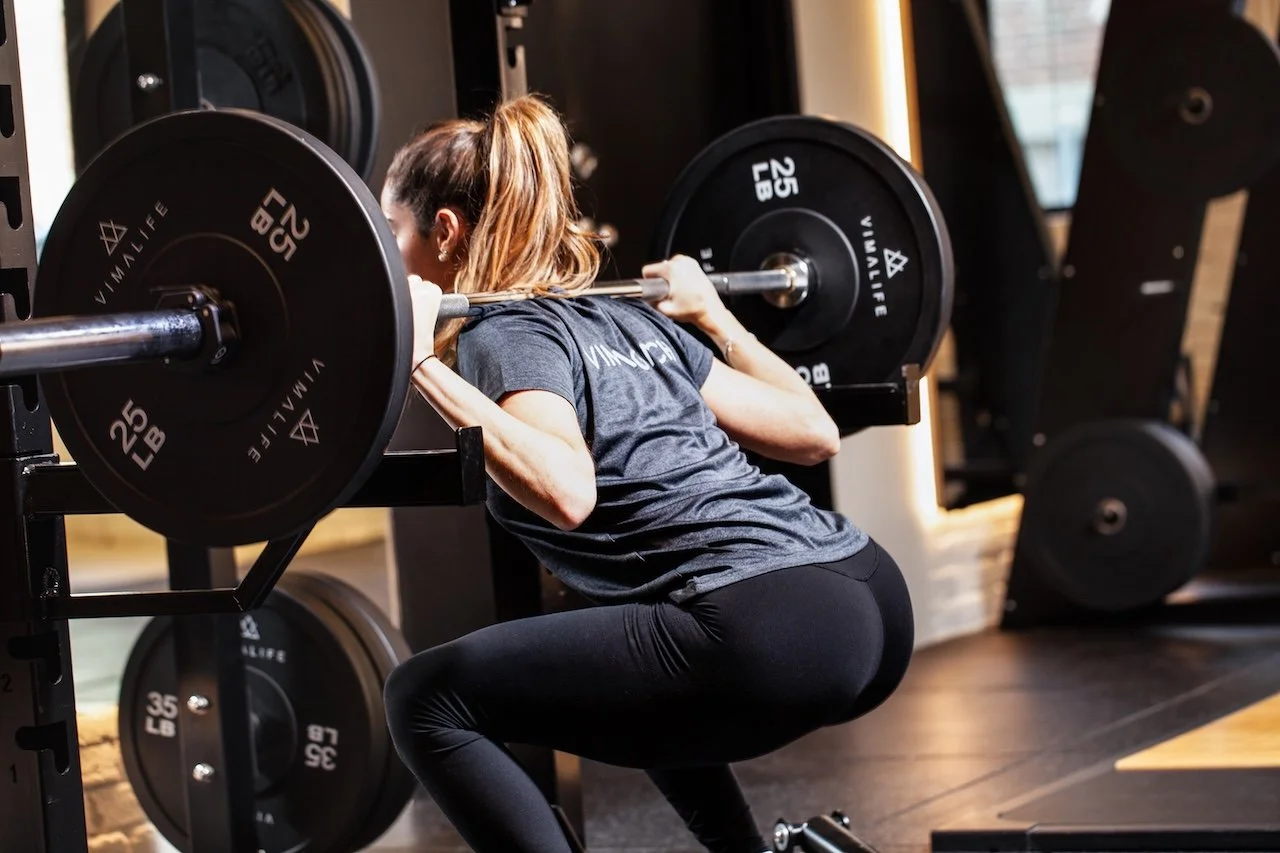
What does rep tempo actually mean?
Tempo describes the timing of a repetition: the lifting phase, the lowering phase and any pauses between them.
In a dumbbell curl, bending your elbow to raise the weight is the concentric phase, when the working elbow flexors shorten. Lowering the dumbbell is the eccentric phase, when those muscles lengthen while resisting the load. A hold at either end adds an isometric component.
You may see a coach write a tempo as 3–1–1–0. Using the common convention of lowering, bottom pause, lifting and top pause, a squat would take three seconds down, pause for one, rise in one and begin the next repetition without a deliberate hold at the top.
The sequence can feel less obvious in an exercise that starts with the lifting phase, so ask how your programme uses the notation. An “X” usually means to lift with the intention of moving quickly, while maintaining the prescribed technique.
Tempo is therefore more specific than “go slowly.” It tells you which part of the movement to change.
Does lifting slowly build more muscle?
A 2015 systematic review and meta-analysis of eight studies found similar muscle-growth outcomes when complete repetitions lasted between roughly half a second and eight seconds. The included programmes took sets to muscular failure, so the finding applies to demanding training rather than effortless repetitions at any speed.
The review also suggested that deliberately very slow repetitions lasting more than ten seconds might be less effective for growth, although the evidence for that comparison was limited.
The practical message is flexibility. There is little reason to assume that a six-second repetition is automatically better than a two-second one, or that every muscle needs a special cadence.
Consider two people performing a chest press. One lowers steadily and presses up smoothly. The other uses a deliberate three-second lowering phase. Both may be doing useful muscle-building work. To compare their programmes, you would also need to know the resistance, effort, sets, progression and how consistently they train.
A slow pace is one way to organise a set. The stopwatch alone cannot rank its quality.
Why “time under tension” can be misleading
Time under tension is the time your muscles spend working during a set. It sounds like a tidy measure: more seconds working should mean more growth. The difficulty is that changing those seconds usually changes something else.
If you make every repetition much slower, you may need a lighter weight or complete fewer repetitions. Sixty seconds with an easy load and sixty seconds with a demanding load describe different experiences, even though the clock shows the same number.
The American College of Sports Medicine's 2026 review of resistance-training evidence found that time under tension did not consistently alter training outcomes across the reviews it assessed. This supports using tempo within the wider programme, without treating a target set duration as a requirement for progress.
For example, slowing your leg press from a natural rhythm to five seconds in each direction may be an interesting challenge. If it forces a large reduction in weight and makes the session unpleasant, ask what you are gaining from that change. Feeling a longer burn is an experience; it is not a direct measurement of new muscle.
For strength, the intention to lift matters
A weight can move slowly for two different reasons. You might deliberately hold back, or you might be pushing hard against a demanding load. Those repetitions can look similar from across the gym while asking different things of you.
In a six-week bench-press study involving twenty participants, researchers compared lifting at maximal intended velocity with deliberately lifting at half that velocity. Both groups improved. The maximal-velocity group increased one-repetition maximum strength by about 18%, compared with about 10% in the slower group.
This was a small, exercise-specific study with measured lifting speeds. It offers a reason to consider intent, rather than a guarantee that faster lifting will double anyone's results.
The broader evidence is less dramatic. A 2017 meta-analysis of fifteen studies found similar overall strength improvements from fast and moderate-to-slow training. At moderate loads, there was a small trend favouring faster movement, but it did not reach conventional statistical significance.
Together, these findings support a practical approach: learn to control the exercise, then produce purposeful effort during the lifting phase. You do not need to artificially slow a challenging press simply to make it look more controlled. Control also includes a stable setup, a consistent path and an appropriate range of motion.
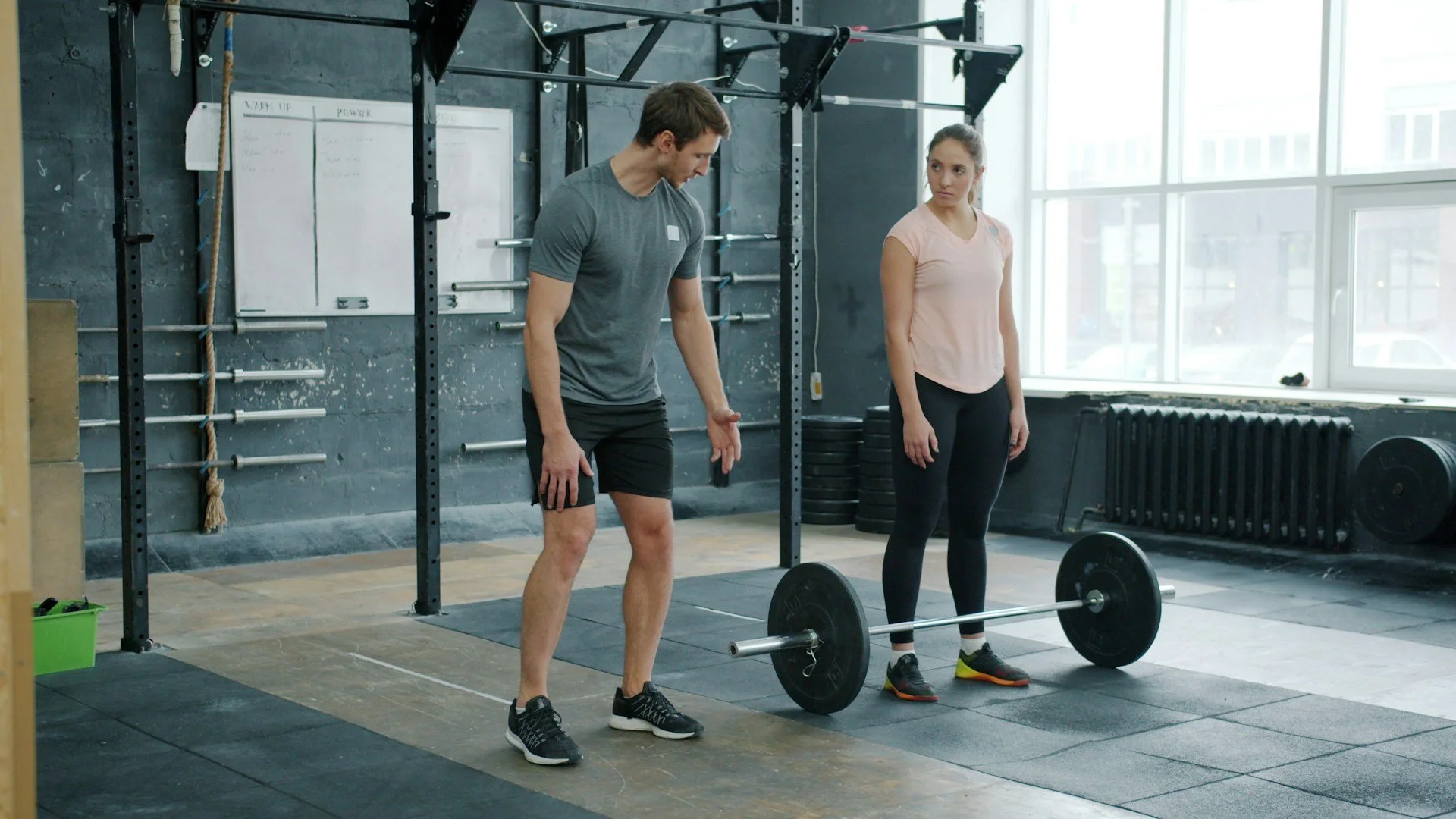
When faster movement becomes the goal
Muscle power involves producing force quickly. Getting up from a chair promptly, climbing a step and responding to a loss of balance involve a time component as well as strength.
A 2020 review of 54 studies on rate of force development found that resistance training improved how quickly participants could generate force. Analyses of peak rate of force development favoured faster movements or the intention to produce force quickly, even when the actual movement was slow. The evidence in women was limited, which restricts how confidently those subgroup findings can be generalised.
This helps explain why a programme may contain both controlled strength exercises and purposeful faster movements. They address related but different abilities.
Power practice needs suitable exercises, manageable resistance and enough recovery to keep the movement crisp. A coach might introduce a faster standing phase in an appropriate sit-to-stand exercise, with a controlled return to the chair. That is a different assignment from racing through the final exhausted repetitions of a heavy squat.
If speed is unfamiliar, learn the movement first and ask for guidance on how to progress it.
A slower pace can still be a useful teaching tool
There are good reasons to slow a repetition that do not depend on claiming extra muscle growth.
Someone learning a squat may rush past the point where their heels begin to lift. A slower descent gives them and their coach more time to notice what happens. In a row, a brief pause can help establish a consistent finishing position. In a push-up, controlling the descent can make it easier to repeat the same depth.
These are coaching applications, rather than proof that a particular tempo prevents injury. The weight and exercise still need to fit the person.
Pauses can also change the difficulty. Holding the bottom of a squat removes some of the easy rhythm of bouncing straight into the next movement. Expect to adjust the load or repetitions when a pause is added.
If an exercise hurts, making it slower is not automatically the solution. Stop and reassess the movement, range and load; seek appropriate advice if the problem persists.
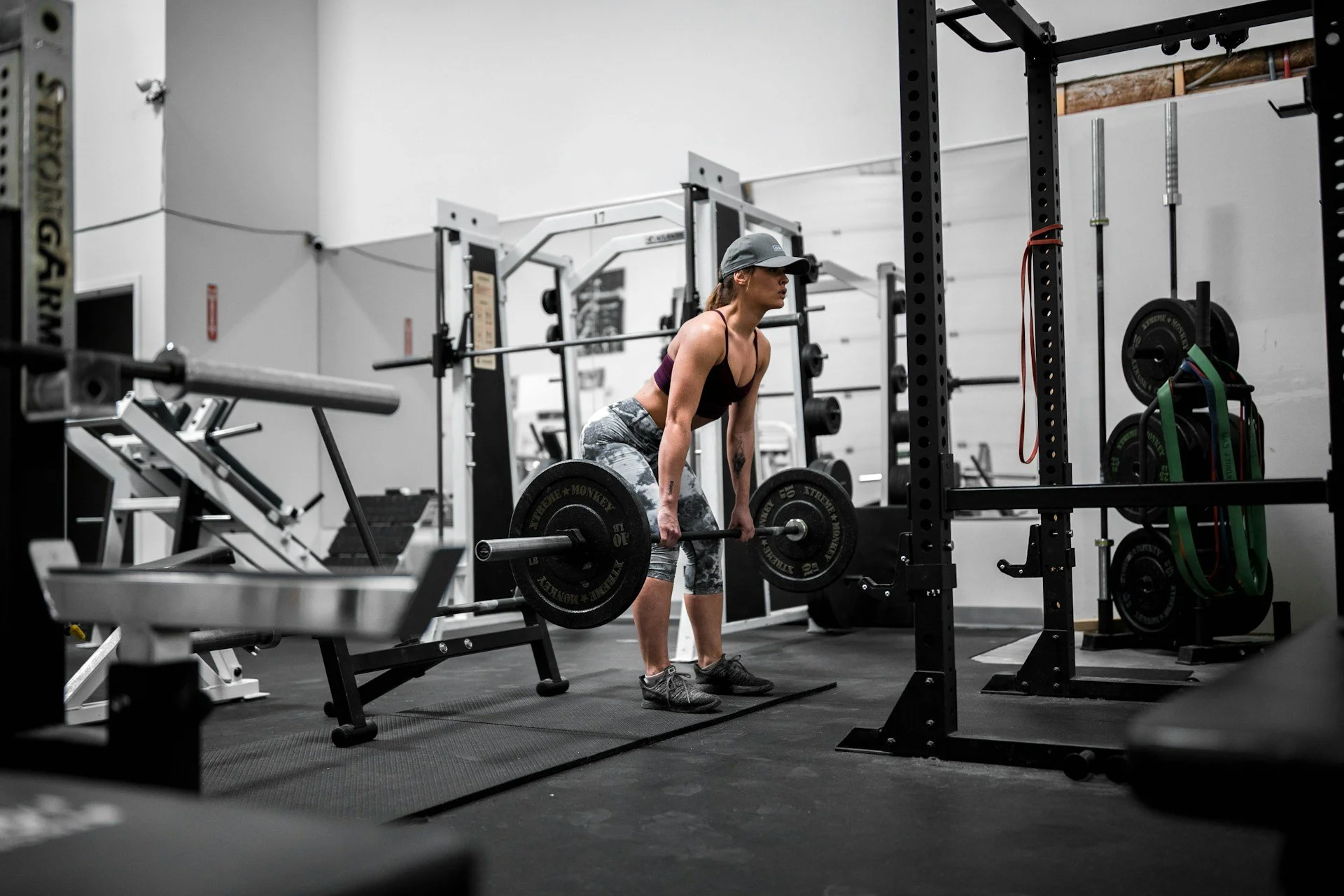
Try one clear cue in your next session
For everyday strength work, begin with a rhythm you can repeat comfortably: lower under control, change direction smoothly and lift with purposeful effort. If you need a starting cue, a roughly two-second lowering phase can help you practise control. It is a coaching option, not a scientifically established ideal.
Keep the experiment small. Choose one familiar exercise and use the same approach for several sessions. Record the weight, repetitions and any intentional pause alongside how difficult the set felt.
If you normally perform ten goblet squats and introduce a three-second descent, you may initially manage fewer. That does not mean you suddenly became weaker; you changed the task. Compare your progress under similar conditions before drawing conclusions.
Avoid changing the pace, weight, exercise and rest interval all at once. A consistent setup makes it much easier to understand what is helping.
A useful tempo should make the exercise clearer
You should be able to explain why a tempo is in your programme. Perhaps it helps you learn a position, makes repetitions consistent or supports a particular strength or power goal. If counting seconds takes all your attention away from the movement, simplify the cue.
At VIMALIFE, personal training in Leslieville offers a way to work through those details with a coach and build a programme around your experience and goals.
To explore the space and talk about your next step, book a complimentary VIMALIFE guest-pass experience.