
Microplastics and Modern Wellness: The Tiny Health Problem Hiding in Plain Sight
There is something almost rude about microplastics. They are too small to see, too common to avoid completely, too new for science to fully understand, and yet somehow already everywhere: in the water bottle on your desk, the dust on the windowsill, the container your leftovers came in, the air inside your home, the fish on a plate, the cutting board under your knife, maybe even the blood moving through your body right now.
For decades, plastic was sold to us as a miracle of convenience. Light, cheap, flexible, waterproof, disposable, durable. The problem is that “disposable” was always a lie. Plastic does not disappear when we are finished with it. It breaks. It flakes. It sheds. It becomes smaller and smaller until it crosses from object into environment, from environment into food and water, from food and water into the body.
That is the uncomfortable shift happening in the science right now. Microplastics are no longer just an environmental story. They are becoming a human story. And once something becomes a human story, it becomes a wellness story.
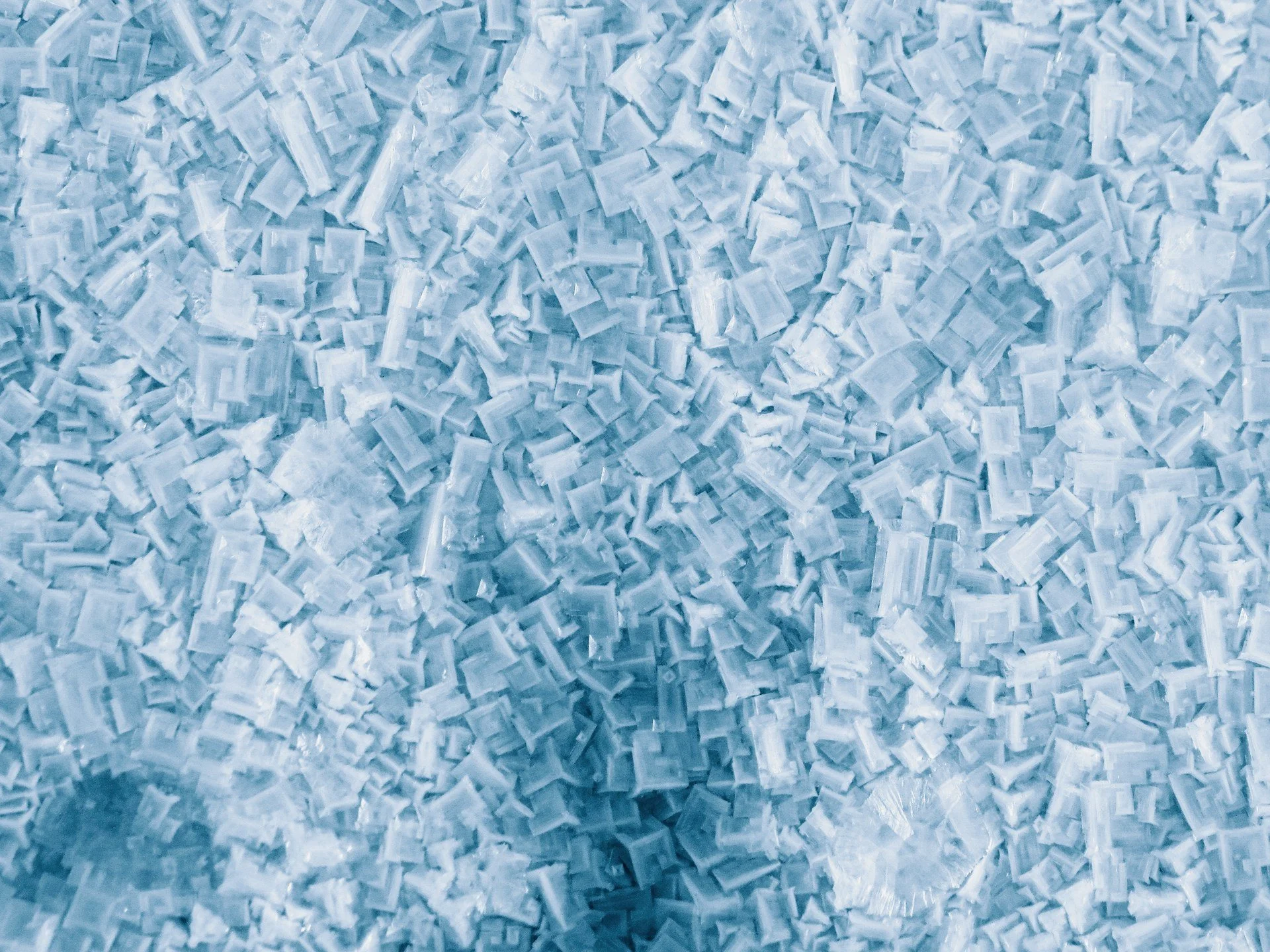
The plastic did not go away. It got smaller.
Microplastics are generally defined as plastic particles smaller than five millimetres. Nanoplastics are smaller still, tiny enough to behave less like the plastic objects we know and more like invisible fragments moving through water, air, dust and biological tissue. According to the National Oceanic and Atmospheric Administration, microplastics are plastic pieces under five millimetres long, while the United Nations Environment Programme explains that many microplastics come from larger plastic products slowly breaking down over time.
That breakdown can come from sunlight, heat, friction, washing, cutting, scraping, weathering or simply time. A plastic bottle does not vanish. A plastic takeout container does not vanish. A plastic cutting board does not vanish. A plastic bag does not vanish. It just enters a slower, stranger afterlife. It becomes particles. This is why microplastics are so difficult to talk about without sounding dramatic. The problem is not one bottle, one lid, one container, one board, one bag. The problem is accumulation. A century of plastic convenience has created a background hum of exposure so ordinary that most of us barely notice it.
Until researchers start finding plastic where plastic was never supposed to be.
They are finding it in us.
In 2022, researchers published one of the first studies measuring plastic particles in human blood. The study was small, but the finding was important: plastic particles were detected in blood, suggesting they are bioavailable for uptake into the human bloodstream.
Then came the placenta.
A 2021 study often referred to as Plasticenta detected microplastics in human placental tissue, including maternal, fetal and amniochorial portions. Think about that for a second. The placenta is not just another tissue. It is the temporary organ that helps sustain a pregnancy. It is a border, a filter, a living exchange system between parent and fetus. Finding microplastics there made the conversation feel much less abstract.
Then researchers kept looking.
A 2024 scoping review on microplastics in human tissues and organs found microplastics in 8 out of 12 human organ systems studied, including the cardiovascular, digestive, endocrine, respiratory, reproductive and urinary systems. The same review also noted microplastics in breast milk, semen, stool, sputum and urine.
They have been detected in human lung tissue, too. A 2022 study analyzed lung tissue samples using micro-Fourier transform infrared spectroscopy and found microplastics in 11 of 13 samples. That finding matters because inhalation is one of the major suspected routes of exposure. We do not just eat and drink the modern environment. We breathe it.
They have also been detected in human testicular tissue, raising new questions about reproductive health, sperm quality and long-term exposure.
They have been detected in carotid artery plaque. A 2024 study published in The New England Journal of Medicine found that patients with microplastics and nanoplastics present in carotid artery plaque had a higher risk of heart attack, stroke or death during follow-up than patients without detected particles. This does not prove the particles caused those outcomes, but it is the kind of finding that makes scientists pay attention.
And then, perhaps most unsettling, researchers reported microplastics and nanoplastics in human brain tissue. A 2025 paper in Nature Medicine found higher concentrations in brain samples than in liver or kidney samples, with polyethylene making up a major share of the particles detected. The researchers did not prove microplastics cause brain disease, but the presence alone was enough to change the tone of the conversation.
It is hard to keep calling this “pollution” when it is showing up in blood, placenta, lungs, arteries, reproductive tissue and brain. Pollution sounds external. This is not external anymore.
Almost no one gets to live outside the plastic age.
It would be neat and comforting if microplastic exposure belonged to one group of people. People who drink bottled water. People who eat a lot of takeout. People who live near factories. People who use too much plastic wrap. People who make the “wrong” choices.
But that is not how this works. Microplastics appear less like a rare exposure and more like a signature of modern life. They are in food systems, indoor environments, drinking water, household dust, consumer products and the air we breathe. The World Health Organization has said more research is needed to properly understand the health risks from dietary and inhalation exposure, which is science’s way of saying: we know enough to keep looking, but not enough to pretend the story is finished.
That uncertainty can be frustrating. People want a clean answer. Is this bad? How bad? How much is too much? Can I test it? Can I remove it? What should I buy? What should I stop doing? The honest answer is less satisfying: the science is still catching up to the exposure. Plastic spread faster than our ability to measure its consequences.
Bryan Johnson and the longevity-world obsession with measuring everything
This is where Bryan Johnson enters the story. Johnson, the entrepreneur behind Blueprint, has become one of the most visible figures in the longevity and biohacking world. His body is not just something he lives in. It is something he measures, studies and audits with unusual intensity. Blood markers, sleep, biological age, diet, exercise, light exposure, fertility, environmental toxins, sperm health, cardiovascular markers. Almost nothing is too small to test. His Blueprint protocol has been described as a data-heavy longevity project overseen with medical input, lab testing and continuous biomarker tracking. In other words, when he talks about microplastics, he is not speaking from a vague “I feel cleaner” place. He is talking about measured lab results from his own body.
So when Johnson publicly shared that he had maintained an 85% reduction in blood microplastics over six months, people paid attention. According to his own published results, his blood microplastic levels dropped from 70 particles per millilitre in October 2024 to 10 particles per millilitre in May 2025, and remained at 10 particles per millilitre in November 2025. He also said this placed him in the lowest 8.12% of people for microplastic contamination. The part people really noticed was what he believes helped move the needle. Johnson pointed to a daily dry sauna protocol 200°F for 20 minutes, with an ice pack used to protect reproductive tissue as the intervention he thinks most contributed to the drop. He also described a broader exposure-reduction strategy: no microwaving food in plastic, no plastic cutting boards, reverse osmosis filtered water at home, minimizing plastic contact with food, drink and heat, improving indoor air filtration with a MERV 13 filter and removing obvious plastic-heavy exposures from his environment.
That is a fascinating result. It is also important to understand what kind of result it is.
Johnson’s microplastic drop is lab-tracked, structured and unusually detailed, but it is still a self-experiment. It is not the same thing as a randomized clinical trial with a large group of people, a control group and one isolated intervention. That means we cannot say sauna alone caused the reduction, or that everyone would see the same result if they copied his exact routine. His results may reflect the combined effect of sauna, water filtration, less plastic touching hot food, removing plastic cutting boards, better air filtration, lower total exposure and other parts of his protocol working together.
And in wellness, signals matter. Johnson’s experiment shows where the longevity conversation is going. It is no longer only about calories, workouts or aesthetics. It is about exposure. It is about what shows up in the blood. It is about the invisible inputs that modern life quietly repeats every day. The old version of fitness asked, “How many calories did you burn?” The newer version asks, “How strong are you? How well do you sleep? How is your metabolic health? How is your stress? How is your recovery?”
The next version asks something more uncomfortable: “What is your body exposed to every day?”
The gym is not separate from the world outside it.
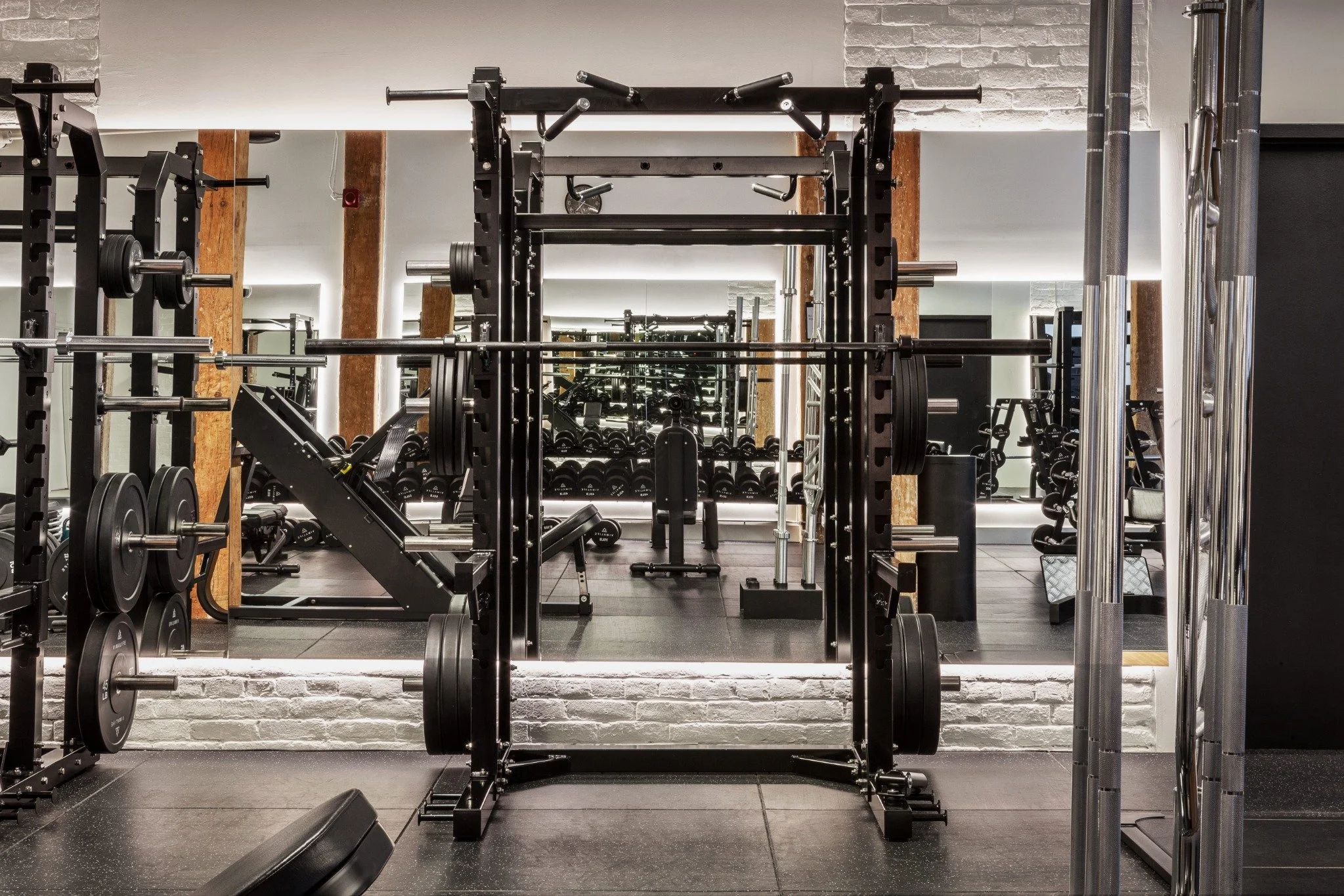
Exercise is still one of the most powerful things a person can do for long-term health. Strength training supports muscle, bone density, glucose regulation, posture and confidence. Cardio supports the heart, lungs and vascular system. Pilates, yoga, barre and mobility help with control, breath, balance, recovery and body awareness. Personal training can help people move better, build consistency and stop guessing.
None of that changes because microplastics exist. If anything, it makes movement more important. A strong body is not a sealed body. You cannot out-train the modern environment. But you can build a body with better cardiovascular capacity, better metabolic function, better muscle mass, better stress regulation and better recovery. Those things matter in a world where the body is constantly negotiating with its surroundings. At VIMALIFE, this is the more interesting version of wellness. Not fitness as punishment. Not wellness as aesthetic. Not health as a collection of products. But a lifestyle that pays attention to the whole system: movement, recovery, hydration, nutrition, environment, consistency and community. VIMALIFE is a boutique fitness club in Leslieville with open gym access, personal training, premium amenities and 200+ monthly classes across strength, conditioning, Pilates, yoga, barre, meditation and recovery-focused movement. That matters because the future of wellness is not only about doing more. It is about noticing more.
The most obvious exposures are boring. That is why they matter.
There is no dramatic villain in the microplastics story. That is part of what makes it unnerving. The villain is the ordinary.
The plastic water bottle. The scratched food container. The takeout bowl. The plastic cutting board. The disposable coffee lid. The “healthy” packaged snack. The dust under the couch. The lunch reheated in the same plastic container it came in. A 2024 study in PNAS found that bottled water contained an average of about 240,000 micro- and nanoplastic particles per litre, with nanoplastics making up the majority of detected particles. A 2023 study in Environmental Science & Technology found that microwave heating could release microplastics and nanoplastics from plastic containers and reusable food pouches, with heating producing higher release than other tested conditions. Another 2023 study identified plastic chopping boards as a source of microplastic particles in food, estimating that normal chopping could produce substantial annual exposure depending on board material, chopping style and use.
Indoor dust is another quiet route. A 2025 study on microplastics in settled indoor dust found microplastics in both homes and workplaces, which matters because most people spend a large portion of life indoors. This is why the solution cannot just be “work out more” or “buy cleaner products.” The solution starts with daily defaults.
The cup. The board. The container. The filter. The air. The heat. The dust.
Not sexy. Very real.
A better way to think about “detox”
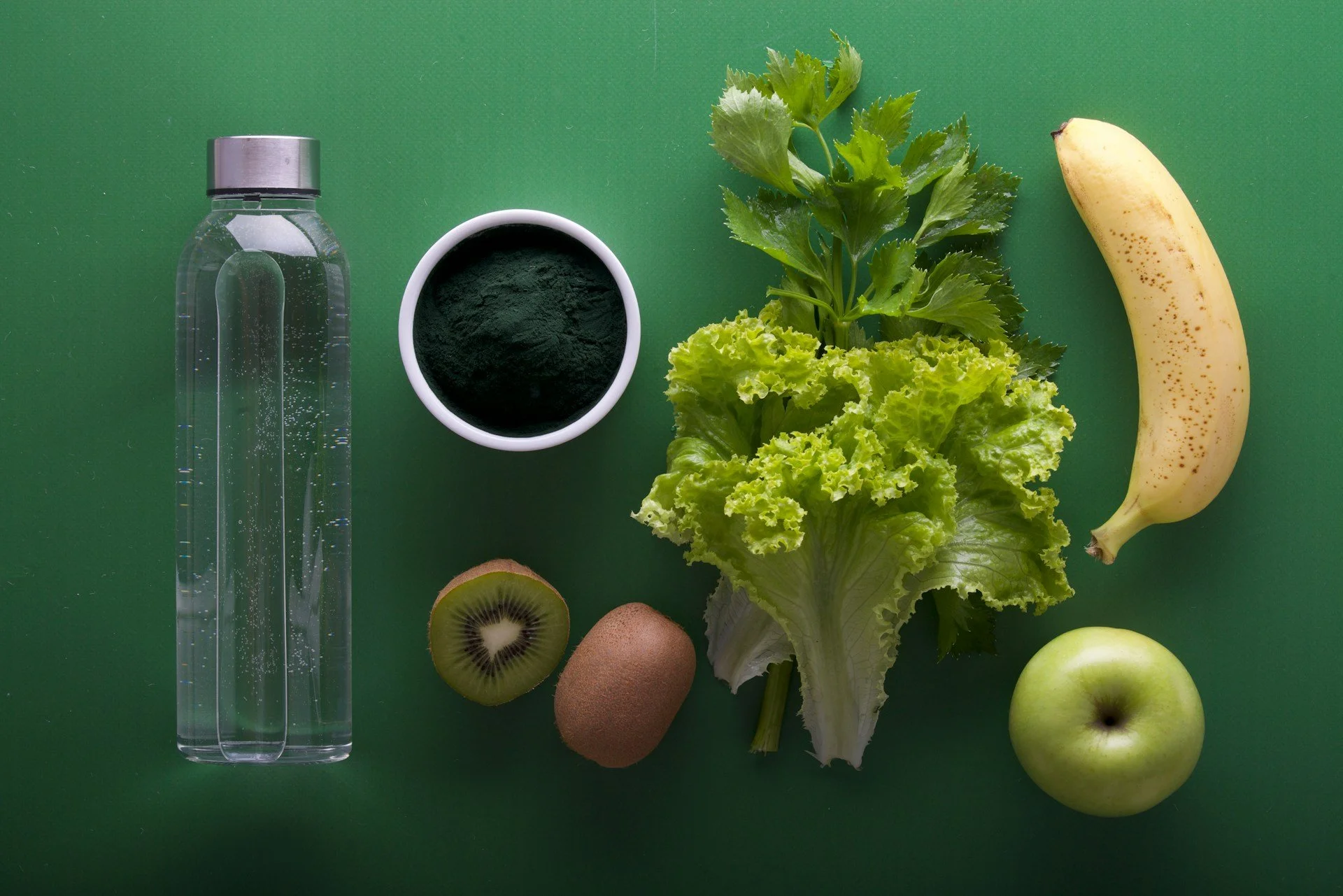
The word detox has been abused almost beyond recognition. It gets used to sell teas, juices, powders, cleanses, sweat wraps and expensive rituals that often do very little beyond making people anxious and slightly poorer. The body already has detoxification systems: liver, kidneys, lungs, gut, skin, lymphatic circulation. They work all day without a marketing campaign.
But microplastics complicate the conversation because they are not just one chemical. They are particles. They may carry additives. They may interact with tissue differently depending on size, shape, polymer type and chemical coating. Researchers are still studying how much is absorbed, where particles go, how long they stay and what they do once inside. Some studies have shown that plastic-related chemicals, such as BPA and phthalate compounds, can appear in sweat, but that is not the same as proving that sweating removes microplastic particles themselves. Research on BPA excretion through blood, urine and sweat suggests sweat may be one route for certain plastic-related chemicals, but the science around microplastic particles is still much less clear.
So the smarter wellness message is this: Do not obsess over “detoxing” what you keep reintroducing. Reduce the obvious exposures first.
That means avoiding heat and plastic together whenever possible. It means not microwaving lunch in plastic. It means switching from plastic water bottles to stainless steel or glass. It means considering a water filter. It means replacing scarred plastic cutting boards. It means storing leftovers in glass. It means reducing single-use packaging when you can. It means cleaning indoor dust instead of letting it become part of the air you breathe. It also means continuing to train, eat well, sleep, recover and manage stress, because health is never one lever. It is the whole machine.
The Leslieville version of this conversation
There is also something very Leslieville about this topic. People here are already thinking about what they buy, where they shop, how they move, what they eat, what kind of spaces they spend time in and what kind of lifestyle feels good long term. The neighbourhood has always had that mix of practical and thoughtful: good coffee, independent businesses, families, creatives, wellness people, dog walkers, runners, Pilates people, strength-training people, people trying to make life feel a little more intentional without becoming ridiculous about it.
Nobody is going to live a zero-plastic life in Toronto in 2026. That is not the point. The point is to stop pretending convenience is neutral.
If you train three times a week but drink from disposable plastic every day, that is worth noticing. If you care about nutrition but heat food in plastic five times a week, that is worth noticing. If you invest in supplements but never think about water quality, indoor air or food storage, that is worth noticing. If you are building a healthier lifestyle, the environment around that lifestyle deserves a seat at the table.
This is exactly the kind of broader wellness conversation we explore on the VIMALIFE Blog, alongside topics like strength training, consistency, longevity, recovery, local fitness and lifestyle health in Leslieville. For a more specific conversation on fabric and movement, you can also read our related piece: Natural Fibre Workout Clothes: Why Your Activewear Fabric Matters.
What to do without spiraling
The worst version of the microplastics conversation makes people feel doomed.
The better version makes people more capable.
You do not need to throw out your whole kitchen, overhaul your life, buy everything at once or become the person who cannot enjoy a coffee because the lid is plastic. That is not health. That is fear wearing a wellness costume. Start where the exposure is obvious and repeated. Use glass or ceramic when heating food. Carry a stainless steel or glass water bottle (we actually give you one here at VIMALIFE).
Stop microwaving plastic. Replace old, scratched food containers. Consider a water filter if bottled water is your default. Use a wood or bamboo cutting board instead of a heavily worn plastic one. Reduce takeout packaging when it is realistic. Wet dust, vacuum well and improve ventilation at home. Choose fewer disposable “wellness” products.
Keep exercising. Keep lifting. Keep walking. Keep doing Pilates, yoga, cardio, mobility and strength training. Keep doing the things that make the body more resilient instead of more fragile.
Small choices repeated often are not small. They are the architecture of a life.

The real takeaway
Microplastics are unsettling because they reveal something most people would rather not think about: the body is not separate from the world. We breathe the world, we drink the world, we eat the world. We carry traces of it in our blood, our organs, our tissues, perhaps even our brains.
That does not mean we should panic. Panic is useless. It burns energy and changes very little. Attention is different. Attention changes what we reach for. What we heat. What we buy. What we keep. What we replace. What we stop normalizing.
At VIMALIFE, we believe wellness is not one perfect routine or one heroic workout. It is the way your daily choices begin to support the body instead of constantly asking the body to compensate. Movement matters. Recovery matters. Strength matters. Sleep matters. Food matters. Water matters. Air matters. Environment matters.
And microplastics, unfortunately, are now part of that conversation. Not because they should scare us into paralysis. Because they should wake us up.