
Picture two people standing up from the same chair. Both can do it without using their hands. One rises comfortably in a moment; the other gets there more slowly, with a noticeable effort halfway up. They have both completed the task. But the time it takes tells us something that a simple yes-or-no strength test might miss.
That is where muscle power enters the conversation. Strength helps you produce force. Power involves how quickly you can put that force to work.
For years, power training has sounded like something reserved for sprinters and athletes lifting weights overhead. Research on ageing gives it a much more ordinary relevance: getting out of a seat, climbing stairs and keeping everyday movements manageable. You do not need to start jumping onto boxes to take that research seriously.
The main things to know
Strength and power overlap, but they describe different aspects of muscle performance.
Power tends to decline faster with age, making movement speed worth paying attention to.
Both conventional strength training and training with a quicker lifting phase can help. The right starting point depends on your current ability and control.
What is the difference between strength and power?
Muscle strength describes the force you can produce. A heavy leg press, for example, tests your ability to push against substantial resistance.
Power describes the rate of doing work. In a moving exercise, it depends on both force and velocity: how much force you produce and how quickly the movement happens.
Imagine carrying the same bag up the same flight of stairs. Taking twenty seconds and taking forty seconds involve a similar amount of mechanical work against gravity, but completing it in less time requires greater average power. That does not make rushing up stairs a workout recommendation. It explains why someone can retain the ability to do a task while finding that it takes longer. Strength training and power training are also not separate worlds. A conventional strength exercise can improve power, particularly when someone is starting out. Power-focused training adjusts the load and movement intention to give speed more attention.
Why does power matter more as we age?
A review of muscle power and physical function in older adults described an important pattern: power tends to decline earlier and more steeply with advancing age than maximum strength. Lower power is also associated with greater functional limitations.
Ageing affects more than muscle size. A review of the ageing neuromuscular system describes changes in muscle fibres, motor units and the nerve signals that activate them. Together, these can affect force, contraction speed and the consistency of movement.
That helps explain why maintaining muscle involves more than maintaining its appearance. Two legs can look much the same while performing differently when asked to produce force quickly.
These are population patterns, not a timetable for an individual person. Your activity history, health and training experience all belong in the discussion. Turning a particular age does not suddenly make a movement inappropriate, nor does it tell a trainer what load you should use. The practical question is what you can do comfortably now, and which abilities you want to maintain or improve.
The connection with chairs, stairs and everyday movement
In a study involving 79 middle-aged and older adults, researchers examined the contributions of force and movement velocity to leg power. Among the older participants with mobility limitations, movement velocity was associated with performance on repeated chair rises and stair climbing. The relationship was different in the healthier groups, suggesting that speed can become particularly relevant when mobility is already limited.
Because this study compared people at one point in time, it cannot establish that faster exercise will improve every person's stair climbing. It does show why measuring strength alone may miss part of the picture. Consider someone who can rise from a dining chair but struggles to keep up when a group gets up and starts walking. A useful goal might include making that familiar transition smoother and quicker. Adding more weight to an exercise is one way to progress; improving how readily they can perform the movement may be another.
Does power training work better than strength training?
A 2022 systematic review of 20 randomised trials compared power training with traditional strength training in 566 community-living older adults. Power training generally meant lifting the resistance quickly and lowering it under control. Across the trials measuring physical function, it produced a modest advantage over conventional strength training.
The certainty of that evidence was low, partly because studies were small and had methodological limitations. The result supports including power work, but it does not establish that everyone should replace slower strength exercises. Individual trials also offer useful perspective. In a twelve-week trial of 57 older adults with mobility limitations, both faster and slower resistance-training programmes improved lower-body power. The researchers concluded that their overall increases in power were similar, although some specific measures favoured faster training.
That is reassuring if you are still learning the basics. Building strength with controlled repetitions is productive work. Power training can add another emphasis once an exercise feels familiar.
What does power training look like in an ordinary gym?
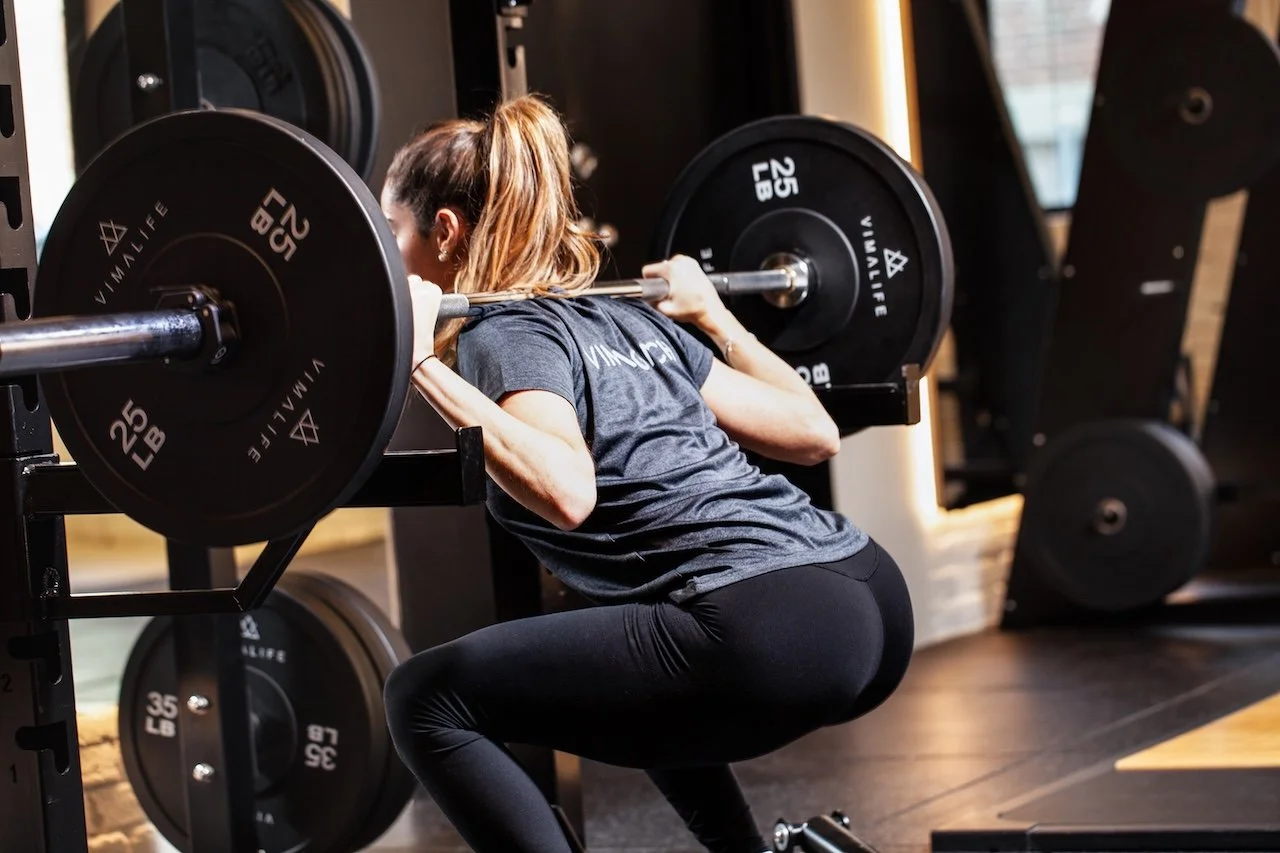
Often, it looks less dramatic than the name suggests. A person who already stands comfortably from a chair might practise rising with a quicker, deliberate effort, then sitting down slowly. Someone using a leg press might push the platform away briskly through a controlled range and return it smoothly, following coaching on the machine's setup and limits.
Neither example requires a jump, a thrown weight or an uncontrolled finish. The American College of Sports Medicine's 2026 evidence review found that moderate loads and a fast lifting phase can enhance power. Heavier loading was more favourable for maximising strength. These are broad findings across healthy adults, rather than instructions to choose a particular weight without learning the exercise.
The useful cue is to move the lifting phase promptly while keeping control of the equipment and your position. If trying to move faster makes you bounce, lose balance or shorten the movement unintentionally, reduce the difficulty and reassess. Speed is something to practise. It is not permission to skip technique.
A simple way to introduce it
Start with an exercise you already perform comfortably. If that is not yet the case, spend time learning it at a controlled pace first.
Here is an illustrative starting point for someone who can stand independently and has no symptoms during the movement. It is not a universal protocol:
Place a sturdy chair against a wall and warm up with a few comfortable repetitions.
Stand up with a brisk, controlled effort. Stay balanced at the top.
Sit down slowly, avoiding a drop onto the seat.
Try a short set of around five repetitions, ending earlier if the movement slows markedly or control changes.
Rest until you feel ready to repeat the same quality of movement. A second short set may be enough to begin.
A higher seat or assistance can make the movement more accessible. If balance, pain or a health condition complicates it, a trainer or physiotherapist can help select an appropriate alternative. The aim is to practise a good movement while relatively fresh. It should not become a race to accumulate as many repetitions as possible.
Keep strength, cardio and balance in the week
Power work can sit near the start of a strength session, after warming up, while you have the energy to concentrate on speed and control. Continue with your usual exercises afterwards, adjusting the total work to your ability. For example, two weekly strength sessions could each begin with one brief, coached power exercise. The remaining session might include a squat or leg press, a pulling exercise, a press and other movements suited to your goals. Walking, cycling or swimming can fill out the aerobic side of the week. Balance practice deserves its own attention where relevant; producing force quickly does not cover every skill involved in staying steady.
The World Health Organization's guidelines recommend regular aerobic activity and strengthening major muscle groups on at least two days weekly. For older adults, they also recommend multicomponent activity emphasizing functional balance and strength on three or more days. You can build towards that gradually. A useful routine should have room to grow without making the first week overwhelming.
Common questions about getting started
Do I need to jump?
No. A faster lifting phase can be practised with suitable machines or familiar movements such as standing from a chair. Jumping is a separate progression that depends on your ability, experience and goals.
Should every repetition be fast?
No. A power emphasis usually concerns the lifting phase, followed by a controlled return. Your other strength exercises can retain their usual pace.
How do I know when to progress?
Look for repeatable control before adding difficulty. If each repetition remains purposeful and comfortable, a coach can help adjust resistance or movement demands. More repetitions are not always better when the aim is speed.
Train for the movements you want to keep
There is value in being able to lift something heavy. There is also value in standing up without a long effort or moving through everyday tasks more readily. A thoughtful programme can make room for both. To explore a routine that suits your starting point, book a VIMALIFE guest pass and speak with our team in Leslieville about your training goals.