
There is a particular kind of disbelief that arrives halfway through a wall sit. You have barely moved, yet your legs are making a convincing case that this counts as exercise. It does. Holding a position against resistance asks your muscles to work even when there is no visible movement at the joint. That is the basic idea behind isometric exercise.
Planks and wall sits are familiar examples, but the category is broader than a timer at the end of a class. Isometrics also appear in strength programmes, rehabilitation and research on blood pressure. Those uses involve different exercises, intensities and goals. Understanding the differences helps you decide what a hold belongs in your workout for, rather than simply trying to survive it for longer.
The main things to know
Isometric exercises can build strength by producing force in a held position.
Results depend on the exercise, position and difficulty. A longer hold is not automatically a better one.
Research on blood pressure and tendon pain uses specific protocols. It does not turn every plank into a treatment.
What makes an exercise isometric?
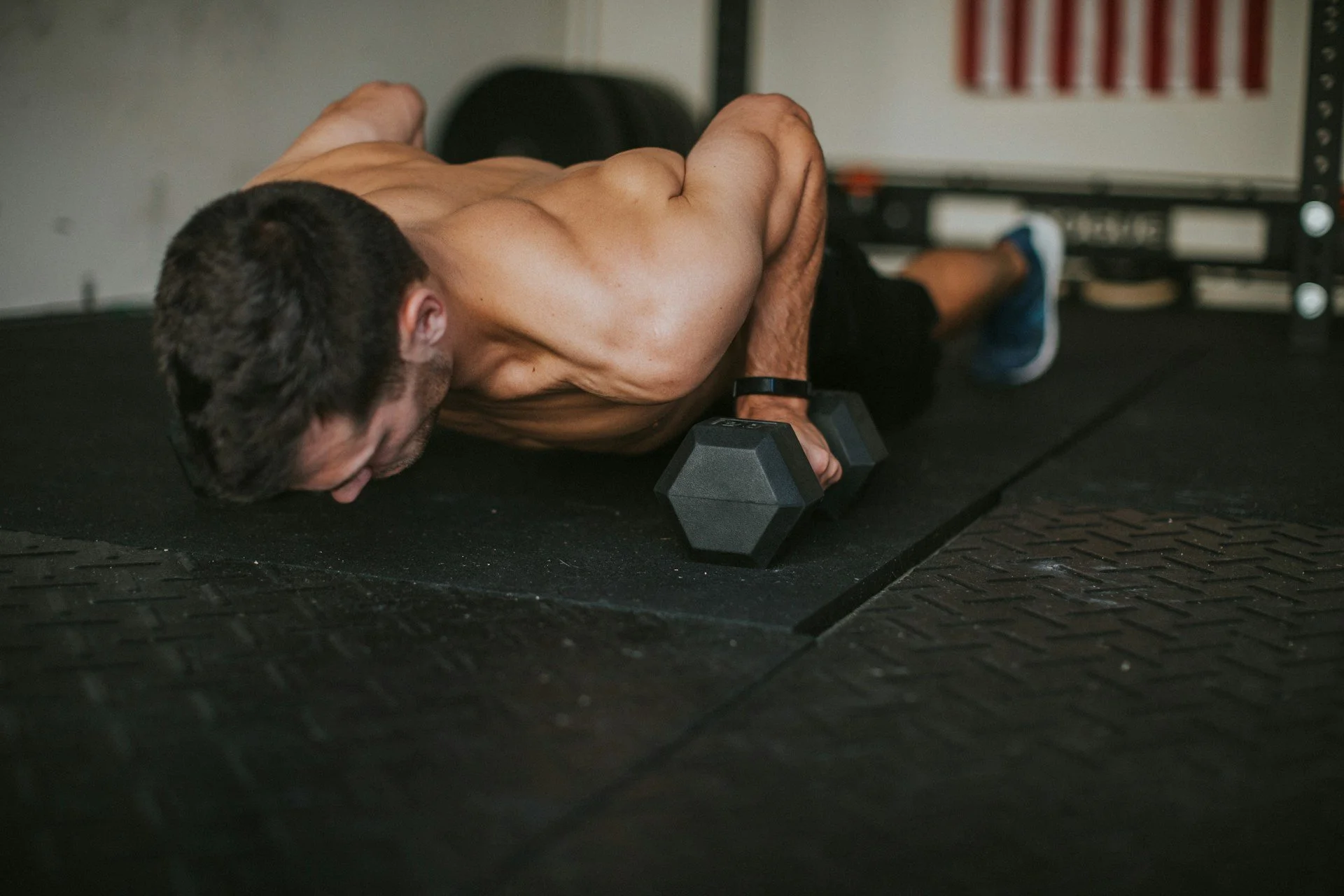
During a dumbbell curl, your elbow bends and straightens as you move the weight. During an isometric curl hold, you keep the elbow in one position while resisting the weight's pull. In both cases, the muscles are producing force. The difference is whether the joint is moving through a range of motion.
You can create an isometric effort by holding against a load or by pushing against something that will not move. A plank is the first kind: you maintain your position against gravity. Pushing steadily into an immovable bar is the second. Exercises can also combine types of muscle action. Pause halfway through a squat and the pause introduces an isometric component; the descent and ascent still involve movement.
That makes holds easy to integrate. They can be a complete exercise or a short part of a repetition, depending on what you are trying to practise.
Can holding still actually make you stronger?
Yes, although the way researchers test strength matters. A 2025 systematic review of 32 studies involving 621 adults compared isometric training with dynamic resistance training or no training. The participants were aged 18–45.
Isometric training produced greater gains than dynamic training on tests of isometric strength. When strength was tested during movement at a controlled speed, however, the review found no significant difference between the two training approaches. The practical lesson is that training a hold is particularly useful for getting stronger at holding. Improvements may carry over to movement, but the result should not be turned into a claim that static exercises beat moving exercises in every situation.
An increasingly confident plank and a heavier squat represent different accomplishments. Both can be worthwhile, and neither tells you everything about your strength.
The position matters as much as the stopwatch
A systematic review of longer-term isometric training found that joint position, intensity and the intention behind the effort affected adaptations. Training at longer muscle lengths generally produced greater muscle growth than equal amounts of training at shorter lengths in the studies reviewed. This is a useful reminder that “hold for thirty seconds” is an incomplete exercise description. What you hold, where you hold it and how demanding it feels all matter.
It is not a reason to force yourself into the deepest position possible. The studies examined particular exercises and loading arrangements; they do not provide a universal rule that a deeper wall sit is always better. For everyday training, choose a repeatable position that you can maintain comfortably. Then adjust the challenge deliberately. If the position changes substantially as you tire, the stopwatch is no longer measuring the same task.
What does a plank add to a workout?
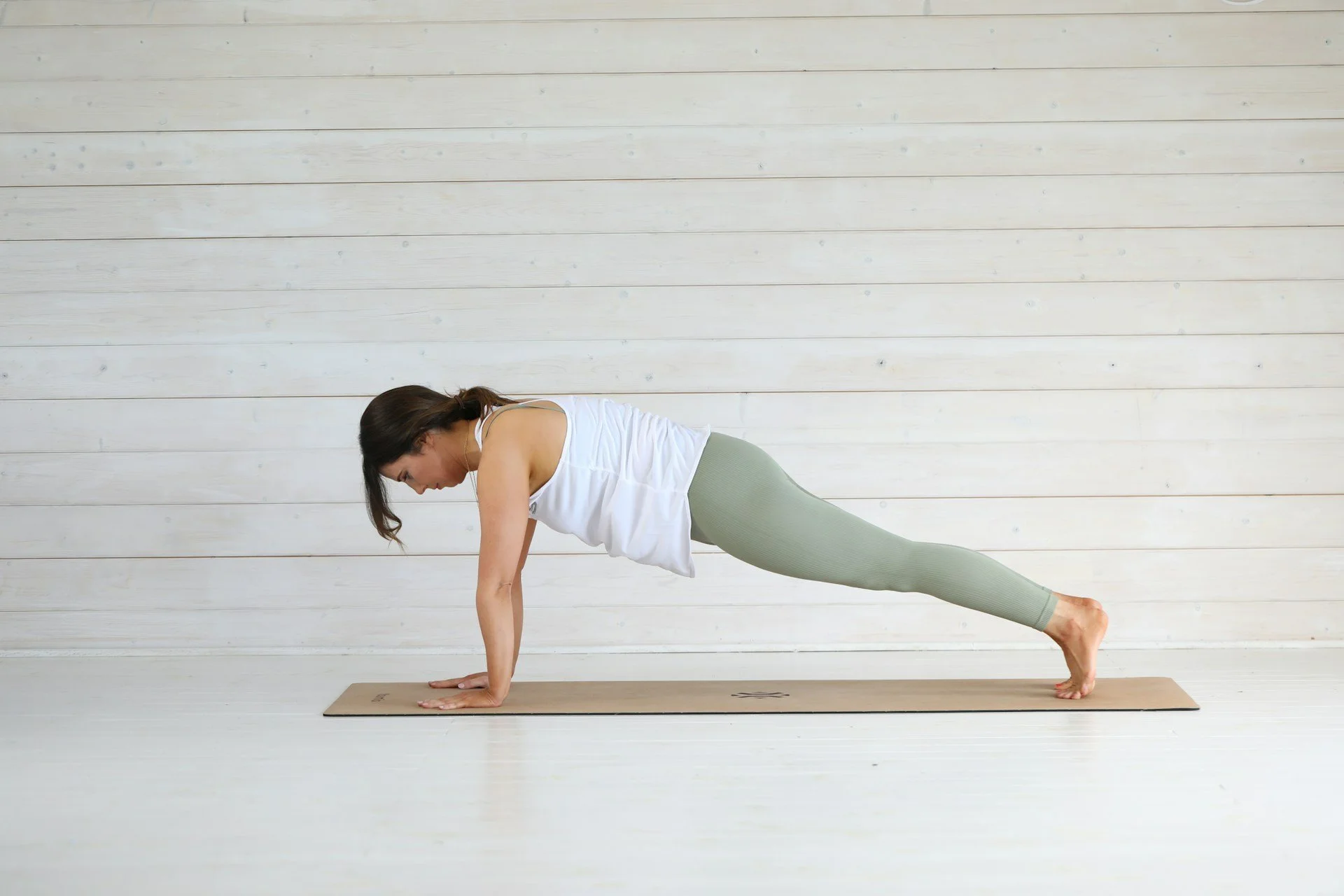
A plank asks you to maintain your trunk position while your arms and legs support you. You are practising resisting movement, which is a different task from repeatedly bending or extending the trunk.
In a six-week study of 24 healthy young men, isometric core training increased passive torso stiffness more than dynamic training. Here, stiffness meant mechanical resistance to bending, not the uncomfortable feeling of being tight. Active stiffness did not improve. This small study helps describe a possible adaptation to core holds. It does not establish that planks prevent back injuries or treat back pain.
For someone learning a plank, the useful question is whether the chosen version allows a steady position and regular breathing. Hands on a stable bench may be a better starting point than a floor plank that quickly turns into a sagging struggle. An easier variation performed well is still training.
What about the headlines on blood pressure?
The research is promising, but the distinction between a session and a training programme is essential. A 2023 analysis of 270 randomised exercise trials found reductions in resting blood pressure across several exercise categories. Isometric training produced the largest average reductions in the comparisons analysed.
Those 270 trials covered multiple forms of exercise, not just holds. The findings concern programmes lasting at least two weeks, rather than blood pressure immediately falling while someone performs a wall sit.
A separate review of 24 trials in adults with elevated blood pressure also found reductions in resting office measurements. Most included studies used handgrip training. The researchers rated the evidence as low or very low certainty. That matters when translating the result to a gym floor. A structured handgrip protocol and an all-out plank are not interchangeable. Blood pressure can rise during a hard effort, even when regular training improves resting measurements over time.
If you have hypertension or a heart condition, ask your healthcare professional about appropriate exercise intensity. Avoid treating a hold as a replacement for prescribed care, and keep breathing rather than straining with your breath held.

Are isometrics useful for tendon pain?
They can be part of rehabilitation, but immediate pain relief is less predictable than some early headlines implied. A 2015 study involving six volleyball players with patellar tendinopathy found substantial pain relief after an isometric exercise session, with effects still present forty-five minutes later.
That was an interesting result in a very small, specific group. A 2026 systematic review of thirteen trials found limited support for isometrics being superior to other exercise approaches for tendinopathy. Most included studies were rated as poor quality, and longer-term benefits remained uncertain. The sensible application is individual. A physiotherapist may choose a hold because it allows useful loading that a person can tolerate. That does not mean a wall sit is the answer to every sore knee, or that pain must disappear for the exercise to be doing something worthwhile.
Persistent pain deserves an assessment and a plan suited to the problem.
How to add holds without rebuilding your routine
Choose a purpose first. You might want to practise maintaining trunk position, add a manageable challenge to a familiar movement or follow a rehabilitation plan. For a generally healthy beginner, the following is one simple illustration, rather than a research-established dose for every goal:
Choose one or two comfortable exercises, such as an elevated plank and a shallow wall sit.
Try holding each position for ten to twenty seconds while breathing regularly.
Stop earlier if you cannot maintain the position or the exercise causes pain.
Rest until you feel ready to repeat the same quality of effort, then try a second set.
You could include this in two weekly workouts and adjust according to how you respond. A rehabilitation or blood-pressure programme requires its own instructions rather than this general example. Keep your moving exercises in the picture. A hold challenges a particular position; squatting, pulling and pressing through a suitable range let you practise producing force as positions change.
Progress the exercise, not just the time
Once a hold feels manageable, you have options. You might use a slightly more demanding angle, change the support, add a modest load or extend the time a little. Change one thing at a time. An elevated plank on a lower surface can be a meaningful progression even if you hold it for fewer seconds.
The American College of Sports Medicine's 2026 review supports progressive resistance training while finding that time under tension did not consistently determine outcomes. That is a useful check on the idea that the longest possible set must be the most effective. Record the variation as well as the duration. “Bench plank, two controlled twenty-second holds” tells you more than “forty seconds of core.” It also gives you something clear to repeat next time.
Two questions worth asking
Should I hold until I cannot continue?
You do not need to turn every set into a maximum-duration test. For a beginner practising control, stop while you can still maintain the intended position and breathe regularly.
Can holds replace a whole workout?
They can contribute to strength training, but a few holds do not automatically cover every muscle group, movement skill or aerobic goal. Include them where they serve a purpose within your week.
Give the hold a job to do
A plank does not need to become a personal endurance record to earn its place. Choose a manageable version, give it a clear purpose and progress it as you would any other exercise. For help finding exercises that suit your starting point, book a VIMALIFE guest pass and explore your training options with our team in Leslieville.