
Why Are You Sore Two Days After a Workout? DOMS Without the Myths
The workout felt fine. The next morning, your legs were a little heavy. Then day two arrived and sitting down became surprisingly difficult. That delayed ache has a name: delayed-onset muscle soreness, or DOMS. It is a common reason for muscle soreness after a workout, especially when the workout was new, more demanding than usual or full of movements your body had not done recently.
The timing can make DOMS feel mysterious, but it is usually not a sign that something suddenly went wrong overnight. It is also not trapped lactic acid, proof that you built muscle or a bill every effective workout must collect.
The short answer: If you feel sore one or two days after a workout, DOMS is a common explanation. It often follows unfamiliar or high-volume exercise, particularly movements that load a muscle while it lengthens. The soreness usually settles over several days. Soreness can accompany a productive workout, but it is not required for strength, fitness or muscle growth.
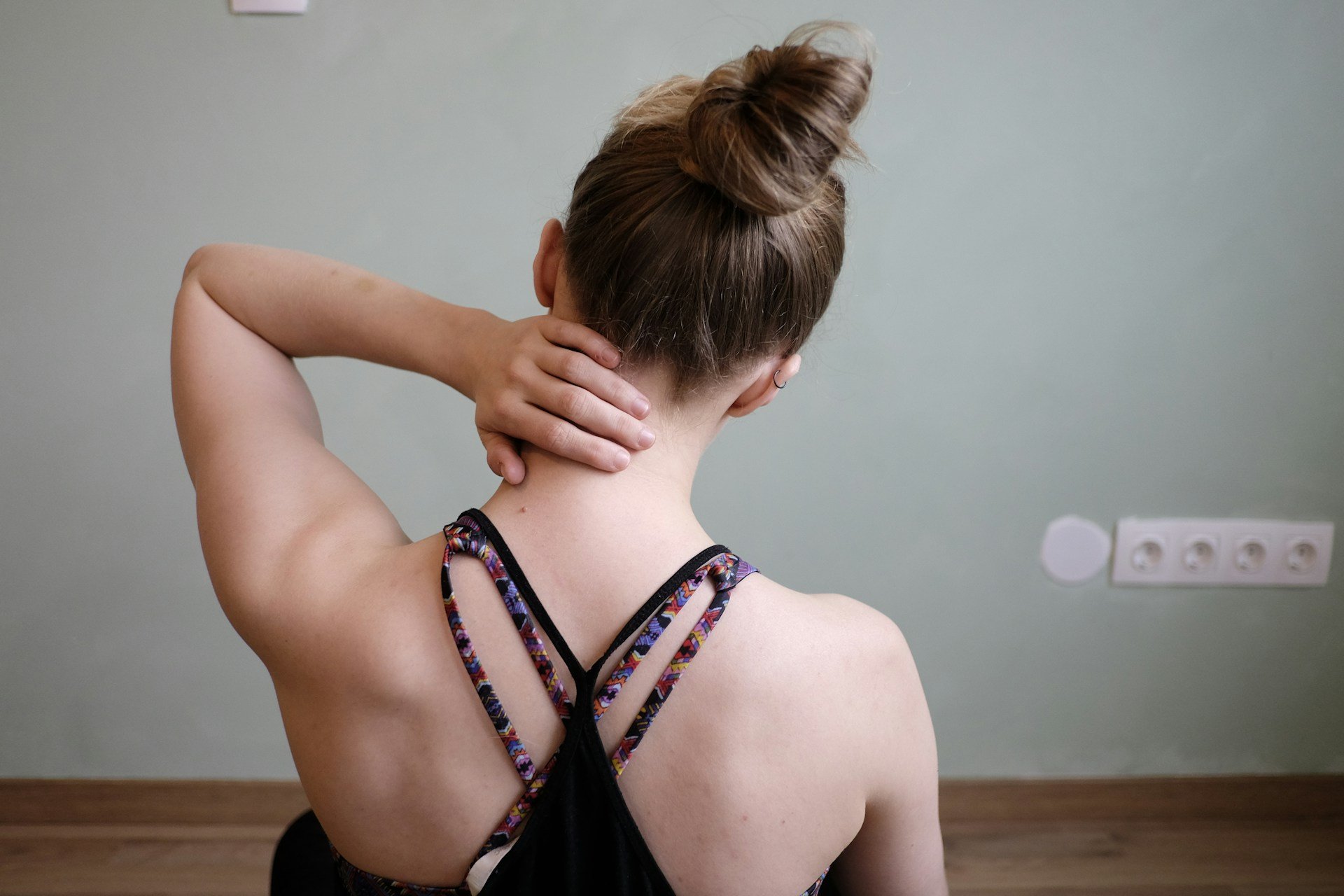
Why Does Muscle Soreness Show Up Two Days After a Workout?
DOMS is delayed by definition. Unlike the burning or fatigue you might feel during a hard set, it tends to become noticeable later and often feels strongest roughly 24 to 72 hours after exercise.
That is why Monday's lunges can wait until Wednesday to introduce themselves.
Researchers have studied DOMS for decades, but there is still no single, perfectly complete explanation for it. Unaccustomed exercise can create mechanical stress in muscle and surrounding connective tissue. That stress is followed by inflammatory activity and chemical signals that make local nerve endings more sensitive. The result can be tenderness, stiffness, a temporary reduction in range of motion and less strength than usual.
The familiar explanation that DOMS comes from tiny muscle tears contains part of the story, but it is too simple on its own. Tissue disruption may occur, particularly after demanding exercise, yet soreness and measurable muscle damage do not always move together. A modern review of DOMS also describes the possible contribution of connective tissue, inflammation and pain-sensitizing pathways. DOMS is a response involving more than one tissue and more than one signal.
It is especially common after eccentric exercise. An eccentric contraction happens when a muscle produces force while lengthening. Think about:
lowering into a squat or lunge
walking or running downhill
lowering a dumbbell after a curl
controlling the descent from a step
landing from a jump
None of these movements is bad. Eccentric training is useful for building strength and capacity. It is simply very good at creating soreness when the dose or movement is unfamiliar. A classic review found that DOMS commonly follows strenuous exercise with an eccentric bias and may arrive with temporary strength loss and reduced range of motion (read the review on PubMed).
Lactic Acid Has a Good Alibi
One of the most persistent fitness myths is that lactic acid sits in the muscles after exercise and causes soreness for the next few days.
The timeline does not work.
Lactate rises during certain kinds of hard exercise and then moves back toward baseline relatively soon after the workout. DOMS arrives much later. In a particularly clear experiment, level running produced higher blood lactate without meaningful later soreness, while downhill running produced significant soreness without elevated post-exercise lactate. The researchers concluded that lactic acid was not related to delayed muscle soreness.
The burning sensation during a hard interval and the stiffness you feel two mornings later are different experiences. Your body is not waiting for a foam roller, sauna or stretch to flush yesterday's lactate away.
Soreness Is Feedback, Not a Score
There is a reason people learn to equate soreness with success. It is tangible. You cannot see your nervous system becoming more efficient or your technique improving, but you can certainly feel your quads when you take the stairs.
Still, soreness is not required for progress.
DOMS is often strongest when an exercise is new. Repeat a similar workout over time and the body usually becomes less sore from it. This is known as the repeated-bout effect. It is not evidence that the workout stopped working. It is evidence that your body became better prepared for that particular stress.
Research on resistance training makes the distinction even more useful. In one study, muscle damage was greatest early in a training program and then decreased, while meaningful muscle growth accumulated as training continued. The researchers found that the early spike in muscle protein synthesis appeared to be directed partly toward repair, not simply new muscle growth (read the study).
In plain language, being wrecked by week one is not the same thing as making more progress than you will in week eight.
Better markers of a productive training plan include:
gradually lifting more weight or completing more quality work
moving with better control and confidence
improving endurance, balance or range of motion
recovering well enough to train consistently
noticing that everyday tasks feel easier
Some soreness is normal. Chasing it is unnecessary. If every workout leaves you unable to move comfortably for days, the program may be creating more disruption than your current routine can absorb.

How Long Does DOMS Last?
For many people, delayed-onset muscle soreness begins within the first day, peaks over the next day or two and then fades. Mild DOMS may be little more than tenderness when you press the muscle or use it through a large range. A harder bout can leave the area stiff and temporarily weaker for several days.
The exact timeline depends on the person and the workout. New exercises, sudden increases in volume, long downhill walks, a return after time away and high-effort eccentric training can all produce more soreness than a familiar session.
What matters is the direction. Ordinary DOMS should gradually improve. Pain that is severe, sharply localized, getting worse or not beginning to settle deserves more attention.
Can You Work Out When You Are Still Sore?
Sometimes. The useful question is not simply, "Am I sore?" It is, "Can I move normally and train this safely?"
If the soreness is mild, spread through the muscles you trained and eases as you warm up, a lighter session may feel fine. You could reduce the load, lower the volume, train a different area or choose easy cardio and mobility instead.
If soreness changes your technique, limits your range of motion or comes with a noticeable loss of strength, repeating the same hard workout is less appealing. A recovery day is not lost time. It may be what allows your next training session to be useful.
This is where good programming matters. A VIMALIFE personal trainer in Leslieville can help adjust exercise selection, volume and progression so training is challenging without turning every week into a recovery emergency.
What Actually Helps Muscle Soreness After a Workout?

There is no instant off-switch for DOMS. The most reliable strategy is time, paired with a training dose your body can adapt to. Still, a few things can make the next day or two more comfortable.
Gentle movement often feels better than staying completely still. An easy walk, relaxed cycle or low-intensity movement session can warm the area and reduce the sense of stiffness for a while. This is symptom management, not proof that you are speeding every part of tissue repair.
Mobility work can also help you explore comfortable range, but DOMS is not simply a flexibility problem. A few controlled movements may feel good. Forcing a deep stretch into a very tender muscle usually adds discomfort without solving the cause. A Cochrane review found that stretching before or after exercise does not produce a clinically important reduction in DOMS (read the evidence summary). Stretch because it serves your movement goals or feels good, not because you need to drain soreness out of the tissue.
Massage and foam rolling may reduce how sore you feel. A systematic review and meta-analysis found that post-exercise massage reduced reported soreness in the studies examined (read the massage review). A more recent review found a modest benefit from foam rolling, particularly after the first 24 hours, although protocols and results vary (read the foam-rolling review). Neither technique erases the workout or flushes toxins. They are options, not obligations.
A sauna after a workout can be a pleasant way to relax, but current evidence is not strong enough to promise faster muscle repair or reliable DOMS prevention. If you enjoy heat, treat it as an optional ritual and pay attention to hydration, especially after a sweaty workout.
Then there are the unglamorous foundations: sleep, enough food, adequate protein, fluids and a sensible gap between demanding sessions for the same muscles. They do not make dramatic content, but they make repeatable training possible.
VIMALIFE's guide to physio, massage and recovery in a well-rounded fitness routine looks more closely at how these pieces can complement strength, Pilates, yoga, cardio and everyday movement.
DOMS or Something Else?
DOMS is usually a dull, tender or stiff feeling in muscles that worked hard. It tends to be fairly predictable, appears after the workout rather than during a specific traumatic moment and improves with time.
Not every pain after exercise is DOMS. Consider getting assessed if you notice:
sharp, sudden or highly localized pain
a pop, snap or clear moment of injury
significant swelling, bruising or joint instability
numbness, tingling or unusual weakness
pain that changes your gait or prevents normal daily movement
symptoms that continue to worsen instead of gradually improving
recurring pain in the same place each time you train
There is also a rare but serious condition called rhabdomyolysis, in which damaged muscle tissue releases substances into the blood that can harm the kidneys. The CDC lists severe muscle pain, unusual weakness or fatigue, and dark tea- or cola-coloured urine as important warning signs. Seek urgent medical care if those symptoms occur. You cannot confirm rhabdomyolysis by how sore you feel alone.
When pain falls outside the familiar DOMS pattern, guessing is rarely the best recovery plan. A qualified healthcare professional can help distinguish an expected training response from an injury or medical problem. This article is educational and is not a diagnosis.

The Goal Is Not to Avoid Soreness Forever
You do not need to fear DOMS. Trying a new class, returning after a break or increasing a training challenge may leave you sore, even when the session was appropriately coached.
The better goal is to stop using soreness as the only receipt for a worthwhile workout.
Progressive training introduces enough challenge to create adaptation, then gives the body a chance to meet it. The first week of a new strength block may be sore. By week four, the same movement pattern may feel familiar. That is a win. You can continue progressing load, control, range or volume without needing to recreate the shock of day one.
At VIMALIFE, that balance can include independent strength training, conditioning, Pilates, yoga, personal training and mobility and recovery-focused classes. The point is not to leave every session feeling demolished. It is to build a body that can keep showing up.
If you are sore two days after a workout, your body is probably responding to an unfamiliar demand. Give it time, keep the myths out of the diagnosis and pay attention to the difference between a normal ache and a warning sign. Soreness may be part of training. It does not have to be the purpose of it.
Frequently Asked Questions About Muscle Soreness After a Workout
Why am I more sore 48 hours after a workout?
Delayed-onset muscle soreness often becomes strongest one or two days after unfamiliar or demanding exercise. Mechanical stress, inflammatory activity and increased sensitivity in the exercised area develop over time, so the soreness does not necessarily peak immediately after the workout.
Is DOMS caused by lactic acid?
No. Lactate produced during exercise returns toward baseline long before DOMS typically peaks. Research comparing level and downhill running found no relationship between blood lactate and later muscle soreness.
Does being sore mean you are building muscle?
Not necessarily. Soreness can happen after a muscle-building workout, but it does not measure growth. You can gain strength and muscle with little soreness, especially once your body is accustomed to the exercises.
Should I stretch sore muscles?
Gentle stretching may feel pleasant, but research does not show that pre- or post-workout stretching meaningfully prevents DOMS. Avoid forcing a painful range. Light movement and comfortable mobility are often more practical.
How can I reduce muscle soreness after a workout?
Give the area time, use gentle movement, sleep well, eat and hydrate normally, and adjust your next workout if soreness affects your technique. Massage or foam rolling may modestly reduce soreness for some people. Severe or unusual symptoms should be assessed rather than treated as routine DOMS.