
Zone 2 Cardio Is Everywhere. Is It Actually the Best Way to Train?
For a while, cardio culture seemed interested in only one question: how hard can you go?
Then Zone 2 arrived with a gentler proposition. Slow down. Keep your breathing under control. It was a welcome correction to the idea that every useful workout should leave you flattened. It was also almost inevitable that a sensible training method would become an internet commandment.
Zone 2 cardio is now credited with improving endurance, protecting metabolic health, building mitochondria, increasing fat oxidation and supporting longevity. In some corners of the wellness world, it is presented less like one option and more like the intensity everyone has been missing. The truth is more interesting. Zone 2 is useful. It may be enjoyable, repeatable and easy to fit around strength training or harder cardio. What the current evidence does not show is that Zone 2 is uniquely effective, or that everyone should organize an entire fitness routine around it.
The short answer: Zone 2 cardio is steady aerobic exercise performed below your first lactate or ventilatory threshold. In practical terms, it should feel purposeful but sustainable, with enough breath available to speak in full sentences. It can improve aerobic fitness and help you accumulate more movement without excessive fatigue. It is not proven to be the best intensity for every goal, and it does not need to replace moderate cardio, HIIT or strength training.
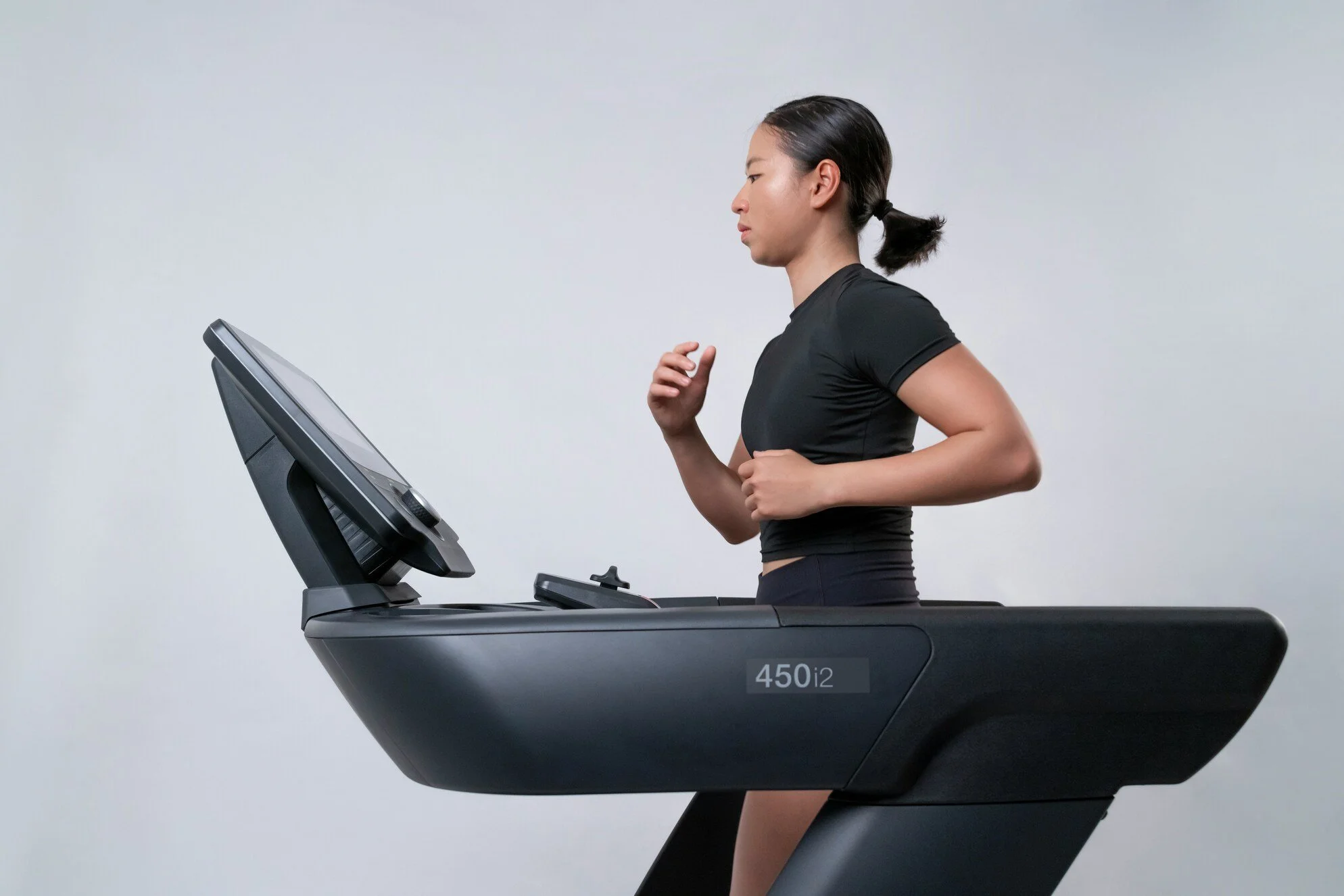
What Does Zone 2 Cardio Actually Mean?
The first complication is that “Zone 2” does not always mean the same thing. Exercise scientists, endurance coaches and fitness watches can divide intensity into three, five or even seven zones. Zone 2 in one system may not match Zone 2 in another. This is why two devices can look at the same workout and label it differently, and why a number found in an online chart may not describe what is happening in your body.
In exercise physiology, the clearest definition places Zone 2 immediately below the first lactate threshold or first ventilatory threshold. This is the point where the demands of the work begin to change more noticeably. Below it, your breathing and energy use remain relatively steady, and you can usually sustain the effort for a long time.
A 2025 expert viewpoint on the definition of Zone 2 training reached a similar consensus: Zone 2 is best understood as work performed immediately below the first lactate or ventilatory threshold, rather than as one universal percentage of maximum heart rate. Consumer wearables often need a simpler answer. Many use a five-zone model and place Zone 2 somewhere around 60 to 70 percent of an estimated maximum heart rate. That range can be a convenient starting point, but it is not a direct measurement of your metabolic threshold. It is a prediction layered on top of another prediction.
The Talk Test May Be More Useful Than Chasing a Perfect Number
If Zone 2 is supposed to be easy, how easy is easy?
The most practical answer is the talk test. At an appropriate low aerobic intensity, you should be able to speak in complete sentences without repeatedly stopping for breath. You are clearly exercising. Your breathing is deeper and your body is warming up. But the effort still feels controlled, and you are not watching the clock because you desperately need the interval to end. A review of the talk test for prescribing exercise intensity found it to be a useful, practical way to monitor effort, with the transition from comfortable to difficult speech tending to occur around important physiological thresholds.
Think of it as a conversation between your breathing and your pace. If you can deliver a monologue without noticing that you are exercising, you may be below the intended effort. If you can only get out a few words, you have probably moved above it. Somewhere between those two is the steady, conversational work most people mean when they talk about Zone 2 cardio. This can be more useful than repeatedly speeding up and slowing down because a watch says you have crossed an invisible border by two beats per minute.

Why Your Watch and Your Body May Disagree
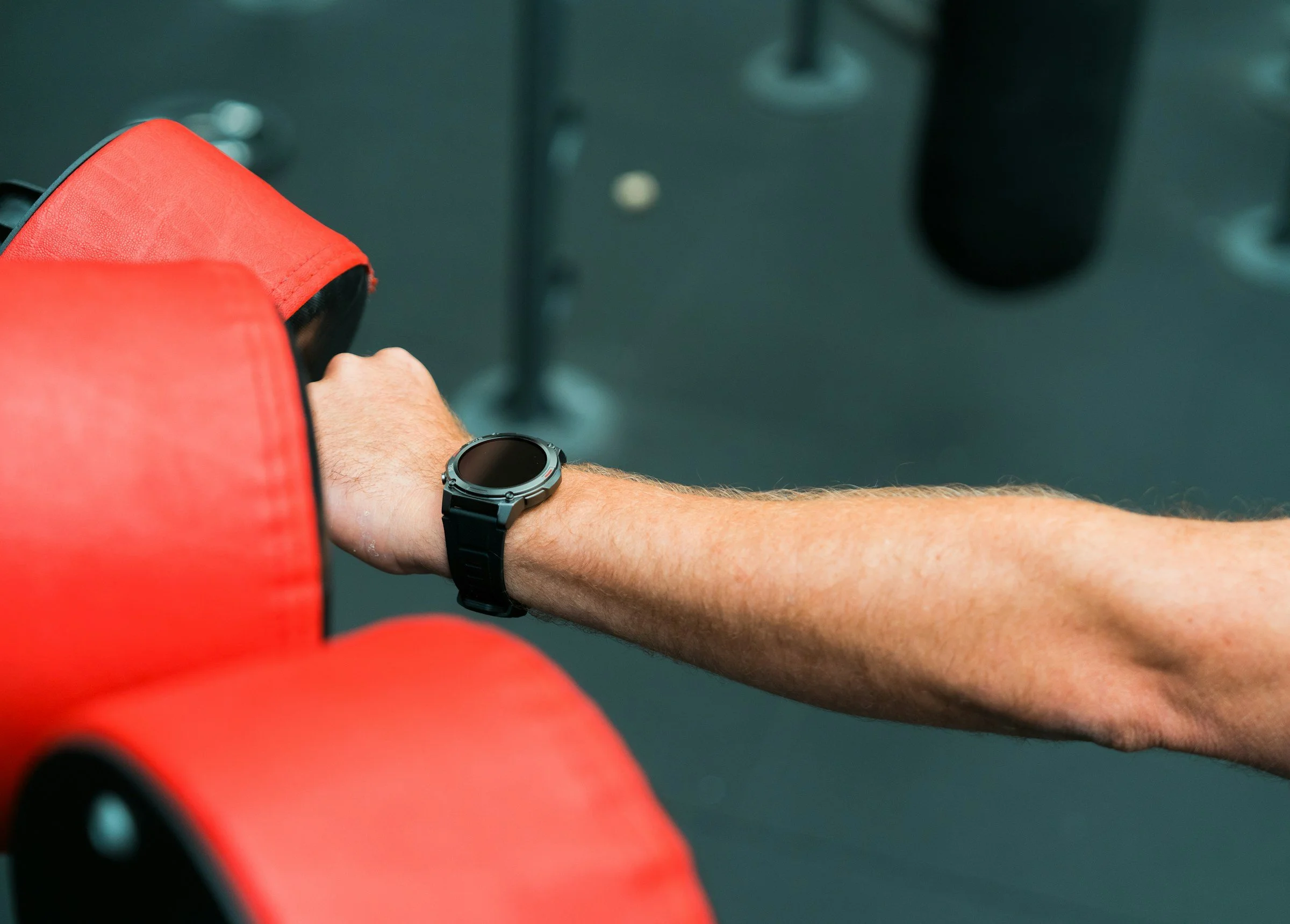
Your fitness tracker can be accurate about your pulse and still be wrong about your zone.
Those are two separate questions:
Did the device measure your heart rate correctly?
Did it use the right boundaries to interpret that heart rate?
Most wrist wearables estimate heart rate using optical sensors that detect changes in blood flow under the skin. Many perform reasonably well during steady exercise, but accuracy can change with the device, fit, wrist position, movement pattern and activity. A systematic review of wrist-wearable activity trackers found that heart-rate accuracy varied across devices, even though some performed well in the studies examined.
The zone calculation introduces another layer of uncertainty. A watch may estimate your maximum heart rate from your age, infer it from past workouts or use a default formula. It may define zones as a percentage of maximum heart rate, heart-rate reserve or another internal method. Another brand may make a different choice.
Even common maximum-heart-rate formulas describe population averages, not personal limits. Two people of the same age can have different maximum heart rates and reach their first threshold at different percentages of that maximum. A 2025 comparison of methods used to identify Zone 2 in trained cyclists found substantial disagreement among common markers, reinforcing why a fixed heart-rate percentage cannot be assumed to locate the same physiological zone in every person.
Your heart rate can also change at the same pace because of heat, dehydration, caffeine, stress, poor sleep, illness, medication or accumulated fatigue. During a longer session, heart rate may gradually rise even when speed or resistance stays the same. The watch sees the number. It does not always know the reason.
This is why wearable data is best treated as context rather than a verdict. If you want a deeper explanation of what your device measures well and where estimates become less certain, read How Accurate Are Fitness Trackers? What Your Watch Gets Right and Wrong.
What Are the Benefits of Zone 2 Training?
Zone 2 cardio has several advantages.
It makes aerobic work easier to repeat
Because the intensity is controlled, many people can complete Zone 2 sessions without the recovery demands of harder intervals. That can make it easier to add cardiovascular training to a week that also contains strength work, classes, sport or a busy life.
It helps build an aerobic foundation
Steady aerobic exercise challenges the cardiovascular system and working muscles to become better at delivering and using oxygen. Over time, this can support endurance and make everyday movement or longer workouts feel more manageable.
It allows more time in motion
Hard work is limited by how long it can be sustained. Easier work can usually continue for longer. This is one reason endurance athletes perform a large volume of low-intensity training. They are not avoiding intensity altogether. They are using easier sessions to accumulate work while preserving the ability to complete demanding sessions too.
It can feel approachable
Not everyone enjoys intervals, performance targets or the atmosphere of an all-out workout. Zone 2 can be done through brisk walking, cycling, jogging or steady cardio equipment. The effort leaves enough mental space for music, a podcast, an outdoor route or a conversation.
It teaches restraint
One of the less discussed benefits of Zone 2 is that it gives people permission not to turn every workout into a test. Learning to keep an easy day easy can be valuable, particularly for someone whose usual approach is to train at an uncomfortable middle intensity every time.
What the 2025 Zone 2 Review Actually Found
A 2025 narrative review published in Sports Medicine challenged the idea that Zone 2 is the best intensity for improving mitochondrial capacity and fat oxidation.
The authors did not conclude that Zone 2 is useless. They found that current evidence does not prove it is better than higher-intensity exercise for these outcomes. Read the 2025 Zone 2 review.
Zone 2 is not the only way to improve aerobic fitness. Higher-intensity exercise can also produce strong mitochondrial and cardiorespiratory adaptations, sometimes in less training time.
The review also questioned comparisons with elite endurance athletes. Although these athletes complete a great deal of low-intensity training, they also perform demanding intervals, train at unusually high volumes and organize their lives around recovery. Their routines may not be ideal for someone exercising only a few hours per week.
The “fat-burning zone” can also be misleading. Lower-intensity exercise may use a greater proportion of fat for energy, but that does not guarantee greater long-term fat loss or a unique body-composition benefit.
The fairest conclusion is not that Zone 2 has been debunked. Zone 2 is useful, but it has not earned the crown the internet gave it.
Zone 2 Versus Moderate Cardio Versus HIIT
These categories are often presented as rivals, but they are tools with overlapping uses.
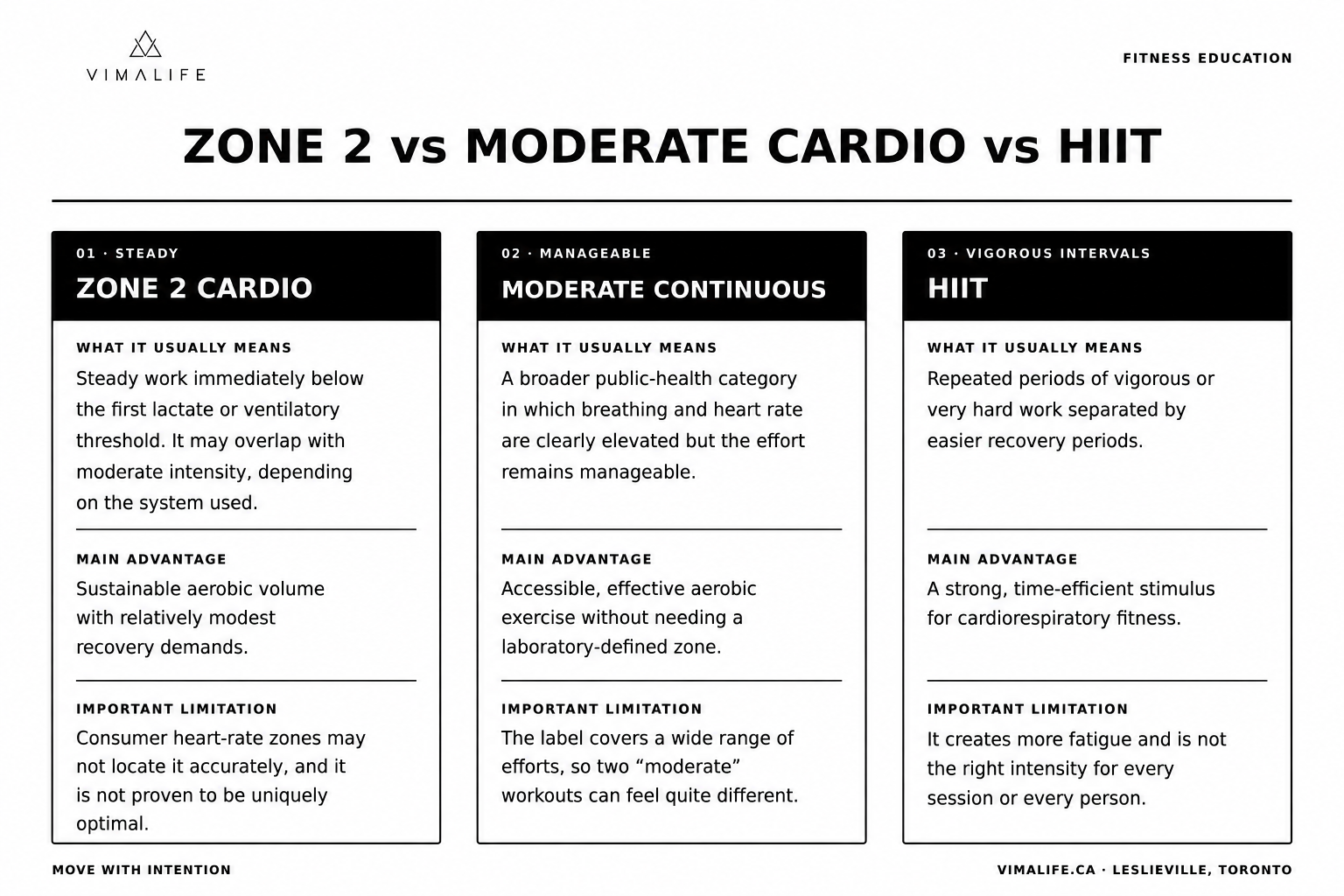
Research comparing high-intensity intervals with continuous endurance training generally finds that both can improve cardiorespiratory fitness. Some analyses show a larger improvement in VO2 max with HIIT, although the result depends on the people studied and how the training is designed. One widely cited systematic review and meta-analysis comparing interval and endurance training found large improvements with both approaches, with an advantage for high-intensity intervals in VO2 max.
That does not make HIIT “better” in every practical sense. A workout only works if it can be completed safely, recovered from and repeated often enough to matter. Someone who dislikes hard intervals may be more consistent with steady cardio. Someone with limited time may value a shorter, more intense session. Someone training for an endurance event may need a large base of easier work as well as strategically placed intensity. The useful question is not which method wins. It is what job each session is meant to do.
Who Might Enjoy Zone 2 Cardio?
Zone 2 may be a particularly good fit for:
People who enjoy walking, cycling, jogging or steady cardio more than intervals
Beginners learning how different exercise intensities feel
People returning to a regular routine who want a manageable place to begin
Endurance-focused exercisers who need to accumulate training without making every session hard
Strength trainees who want to add aerobic work with more modest recovery demands
Anyone who wants a session that feels productive without feeling punishing
It may be less appealing to someone who finds steady cardio monotonous, has very little training time or prefers sport and classes. That person does not need to force an hour of Zone 2 simply because a podcast made it sound essential. Heart-rate targets also deserve extra care when a medical condition or medication affects the cardiovascular response to exercise. In that situation, generalized watch zones may be especially unhelpful, and guidance from a qualified healthcare or exercise professional is more appropriate.

Do You Need to Train Exclusively in Zone 2?
No. The larger body of exercise research supports variety, not loyalty to one zone.
The World Health Organization’s physical activity guidelines recommend that adults accumulate 150 to 300 minutes of moderate-intensity aerobic activity per week, 75 to 150 minutes of vigorous activity, or an equivalent combination. The guidelines also recommend muscle-strengthening activity on at least two days per week. They do not identify one heart-rate zone as the only worthwhile way to move.
A balanced week might include steady aerobic work, strength training, some vigorous activity, everyday walking and enough recovery to keep the whole routine sustainable. The exact mix can change with experience, goals, schedule and preference. Not everyone needs formal HIIT, and not everyone needs long Zone 2 sessions.
This is also where an all-in-one approach can be useful. At VIMALIFE, a boutique fitness club in Leslieville, members can use the open gym for independent cardio and strength training, join strength, HIIT, conditioning, Pilates, yoga and recovery-focused classes, or work with a personal trainer in Leslieville to build a routine with more individual structure.
The point is not to collect every type of workout. It is to give different forms of movement different roles.
How to Try Zone 2 Without Overcomplicating It
Start with a mode of cardio you can sustain comfortably. Walking can count if the pace or incline raises your breathing enough. So can cycling, jogging or steady work on cardio equipment. If you want to explore the wider value of walking, read Walking Is Having a Rebrand: 10K Steps, Gait and the Science of Low-Impact Cardio.
Begin gradually, then settle into an effort where you can speak in full sentences. Use your watch as a reference, but do not let it override obvious signals from your breathing and perceived effort. If your device repeatedly places conversational work outside Zone 2, check how it calculates your zones before assuming your body is doing something wrong.
There is no scientifically established magic duration at which Zone 2 suddenly becomes effective. Many recreational sessions last somewhere between 20 and 60 minutes, but shorter bouts still contribute to weekly activity. Choose a duration that fits your current capacity and leaves you able to recover for the rest of your training.
Most importantly, finish with the sense that you could have continued. Zone 2 is not a disguised threshold workout. Its value depends partly on keeping the effort honest.

The Best Cardio Intensity Is Not a Universal Number
Zone 2 became popular for a good reason. It restored some dignity to the ordinary, sustainable cardio session. It reminded people that exercise can improve health without becoming a daily act of exhaustion. It gave endurance training a language that felt precise and modern. But precision can become theatre when the number on the screen is treated as more authoritative than the person doing the work.
Zone 2 is one useful place on the intensity spectrum. HIIT is another. Moderate continuous cardio, walking, sport, strength training and recovery all contribute something different. The most effective routine is rarely built by asking one method to do every job. So, is Zone 2 cardio the best way to train? It is an excellent way to train when it suits the purpose of the day. That is a more modest answer than the internet usually offers, but it is also a more useful one.
If you want to build a fitness routine that includes cardio, strength, classes and recovery in one place, explore VIMALIFE membership options or claim a complimentary guest pass to experience the club at 276 Carlaw Avenue in Leslieville, Toronto.
Frequently Asked Questions About Zone 2 Cardio
What is Zone 2 cardio?
Zone 2 cardio is steady aerobic exercise performed immediately below the first lactate or ventilatory threshold. It should feel controlled and sustainable, with enough breath available to speak in complete sentences.
What should my Zone 2 heart rate be?
There is no universal Zone 2 heart rate. Wearables often estimate it from a percentage of maximum heart rate, but individual thresholds vary. A laboratory assessment can locate the threshold more precisely, while the talk test offers a useful practical estimate for most recreational exercisers.
Is Zone 2 better than HIIT?
Neither is universally better. Zone 2 makes it easier to accumulate steady aerobic work with less fatigue. HIIT provides a stronger intensity stimulus in less time but usually requires more recovery. Many routines can use both, depending on goals and preference.
Can walking count as Zone 2 cardio?
Yes. Brisk walking or incline walking can count as Zone 2 when it raises your breathing and heart rate while still allowing comfortable conversation. The required pace will differ from person to person.
Do I need a fitness tracker for Zone 2 training?
No. A watch can help monitor trends, but the talk test and perceived effort can guide a practical Zone 2 session. A tracker should support awareness, not replace it.
How long should a Zone 2 workout be?
There is no magic minimum. Many people use sessions of 20 to 60 minutes, but shorter periods of aerobic activity still count toward a weekly total. Duration should reflect current fitness, schedule and recovery.